0%

Choosing among China’s leading Pallet Rack Systems manufacturers takes more than comparing catalog prices. A warehouse with narrow aisles, uneven floors, or frequent forklift traffic has different needs from a facility storing uniform cartons. Beam dimensions, upright profiles, load ratings, and connection details all affect safe, practical operation. Details matter.

This guide introduces ten manufacturers associated with China’s pallet racking sector. It is a starting point, not a certified ranking or an endorsement. Company capabilities, product ranges, and export support can change, so buyers should verify current specifications directly. Ask for engineering drawings, documented load capacities, material details, finish options, and clear installation guidance. If seismic design or local inspection requirements apply, confirm those needs with qualified professionals before placing an order.

A low quotation may not include freight, installation, replacement parts, or after-sales support. Not always. Compare quotations line by line, and check whether the proposed system fits your actual pallet sizes and handling equipment. Sample inspections and reference checks can reveal issues that polished brochures miss. The information here aims to help readers ask sharper questions, rather than promise one universal best choice. Some manufacturers may be stronger in customization, while others may suit standard projects better. The right decision depends on your site, budget, and operating plans—and sometimes the available information leaves room for doubt.
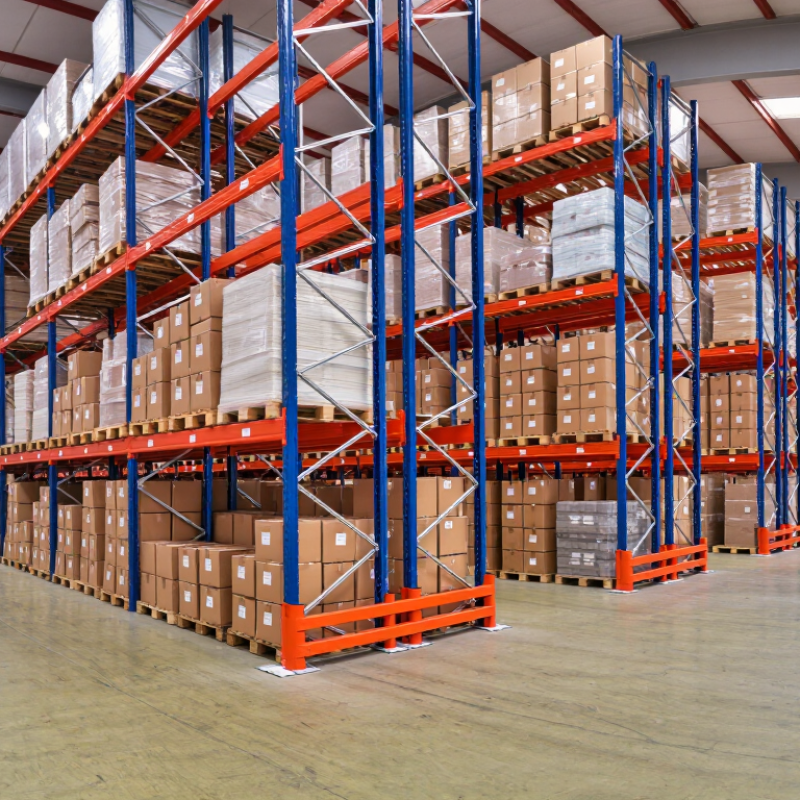
China Top 10 Pallet Rack Systems Manufacturers?

What Pallet Rack Systems Are and How They Support Warehousing

China Top 10 Pallet Rack Systems Manufacturers?
What Pallet Rack Systems Are and How They Support Warehousing

Pallet rack systems are steel storage structures designed to hold palletized goods above the warehouse floor. Upright frames and horizontal beams create adjustable levels, while forklifts place and retrieve loads. The basic idea is simple. Use vertical space, keep stock accessible, and leave clear travel paths for people and equipment.

Different layouts support different workflows. Selective racks provide direct access to many pallets, which suits warehouses handling varied products. Drive-in designs can store larger quantities of similar items, though access to individual pallets is more limited. A site assessment should consider pallet dimensions, load weights, forklift turning space, and how quickly stock needs to move. Measurements matter here.

Safe, dependable performance depends on more than the rack itself. Loads must stay within stated capacities, beams should be secured, and damaged components need prompt inspection. Clear labels help operators identify limits. Keep aisles clear. Even a strong layout can cause delays if incoming goods block picking routes or fast-moving items sit far from dispatch. No plan is perfect; demand changes, and early forecasts can be wrong. Regular reviews help teams adjust storage locations and spot wear before small problems become costly.

Common Types of Pallet Racking Used in China

Common Types of Pallet Racking Used in China

Chinese warehouses use several pallet rack systems, selected according to inventory, space, and forklift access. Selective pallet racking is common where staff need direct access to each pallet. It works with standard forklifts and suits varied stock. Drive-in racking stores similar products in deep lanes, reducing aisle space but limiting access to individual pallets. Double-deep systems place pallets two positions deep and need compatible reach equipment. Pallet-flow racks use rollers to move stock forward, often supporting first-in, first-out handling. Push-back racks store pallets on nested carts and generally follow last-in, first-out handling. No system fits every operation.

Tips: Check pallet dimensions, actual load weights, forklift turning space, and floor capacity before choosing a layout. Ask a qualified engineer to review rack loads and applicable site-specific seismic requirements. Small measurement errors can become costly.

Think about daily work, not just storage density. A dense layout may slow replenishment or make inspections harder. Keep aisles clear, protect rack uprights from forklift impacts, and post load limits where operators can see them. Inspect beams, connections, and anchors regularly; damaged parts need prompt assessment. These details sound basic, but they are easy to overlook during busy shifts.

How to Assess Pallet Rack System Manufacturers

How to Assess Pallet Rack System Manufacturers

Assess the engineering before comparing prices. Ask for load tables, frame and beam specifications, connector details, and the assumptions behind each capacity rating. Confirm that the design matches your pallet dimensions, load weights, forklift clearances, and floor conditions. A polished brochure is not proof. Request drawings, material specifications, quality-control records, and references for installations with similar storage demands. Check whether the manufacturer offers clear guidance on installation, inspection, and replacement parts.

Safety support matters. The U.S. Bureau of Labor Statistics reported 4.8 recordable injury and illness cases per 100 full-time workers in warehousing and storage in 2023, compared with 2.4 across private industry. This is not a rack-specific measure, but it shows why operational safety deserves close attention. Ask how the supplier handles damage assessments and design changes. One detail is easy to miss: a small change in pallet size can affect beam spacing and usable capacity.

Tips: Send every candidate the same site plan and load data. Compare written engineering assumptions, not just quoted capacity. Ask for a sample inspection checklist. If an answer feels vague, pause and verify it with a qualified rack designer.

China Top 10 Pallet Rack Systems Manufacturers? - How to Assess Pallet Rack System Manufacturers
A practical, evidence-based scorecard for comparing manufacturers. It is an assessment framework, not a verified ranking of companies.
Assessment Dimension Suggested Weight What to Evaluate Evidence to Request and Verify
Engineering and design compliance 18% Confirm that rack design calculations address the intended configuration, loads, clearances, stability, and applicable local requirements. Project-specific drawings and calculations; identify the design standards used, such as EN 15512 or ANSI MH16.1 where applicable. Check that the proposed standard suits the destination market.
Load capacity and testing 15% Check that beam and upright capacities are documented for the offered components and configuration, rather than presented as generic ratings. Load tables, test reports, component specifications, and written confirmation of the assumptions behind rated capacities. Verify that the tested components match the quotation.
Manufacturing quality and welding 12% Review process controls for forming, welding, dimensional consistency, and inspection of finished components. Process inspection records, sample inspection results, welding procedures, and relevant personnel qualifications. ISO 3834 may be used as a reference for welding quality requirements.
Material traceability 10% Determine whether incoming steel grades and thicknesses are controlled and can be linked to production batches. Mill test certificates, purchase records, incoming inspection records, and batch or heat-number traceability for a sample order.
Corrosion protection and finish 8% Match the coating system to the operating environment, including indoor conditions, humidity, and any exposure to corrosive agents. Coating specification, thickness inspection records, surface-preparation details, and sample parts. For hot-dip galvanized coatings, check whether ISO 1461 is relevant to the specified product and application.
Product documentation and safe use 10% Assess whether the supplier provides clear installation, loading, inspection, and maintenance information for the delivered system. Installation instructions, load notices, inspection guidance, and maintenance documentation. EN 15629 and EN 15635 are relevant references for specification and use/maintenance of storage equipment where applicable.
Quality management system 8% Check whether documented procedures cover purchasing, production, inspection, nonconformities, and corrective actions. Current quality-management certificate and its scope, issuing body, and validity. ISO 9001 certification concerns a management system; it is not, by itself, proof that a rack design or product is certified.
Production capacity and delivery control 7% Evaluate whether the factory can meet the required quantities, production schedule, packaging needs, and shipment plan. Current production schedule, capacity information for the relevant product line, lead-time breakdown, packaging specifications, and a process for communicating schedule changes.
Installation and after-sales support 7% Confirm the availability of technical support for installation questions, replacement parts, damage claims, and future system changes. Written service scope, response process, spare-parts policy, warranty terms, and details of local installation or inspection support where required.
References and commercial reliability 5% Assess relevant project experience, communication quality, contract clarity, and the supplier’s ability to support the project through delivery. Permission-based customer references, comparable project details, a clear quotation and contract, defined acceptance criteria, and transparent payment and delivery terms.
Total suggested weighting 100% Apply the same evidence requirements to every shortlisted manufacturer. Treat missing or unverifiable documents as items requiring further review.
The weights are suggested buyer-evaluation priorities, not published market statistics. Standards and certification requirements depend on the project, product configuration, and destination jurisdiction; verify the applicable editions and requirements before purchase.

China’s Top 10 Pallet Rack Systems Manufacturers

China’s Top 10 Pallet Rack Systems Manufacturers should be compared by engineering capability, production consistency, and support after installation. A ranking is only useful when its criteria are clear; product photos alone cannot confirm weld quality or load performance. Ask for drawings, material specifications, and test documentation for the exact rack configuration. Details matter.

Strong manufacturers can explain how upright thickness, beam connectors, and bracing affect a system’s rated capacity. They should also adapt layouts to pallet dimensions, forklift clearance, floor conditions, and local operating routines. For example, a warehouse handling mixed cartons may need different beam levels from one storing uniform pallet loads. Check whether samples, inspections, and replacement parts are available before placing a large order. Fit varies.

For China’s leading ten suppliers, buyers can compare manufacturing experience, quality-control procedures, customization, delivery planning, and technical communication. Request references for installations with similar loads and warehouse conditions, then verify the details independently where possible. A polished quotation is helpful, but it is not evidence of reliable production. Some projects still reveal gaps only during installation; that deserves honest review. Clear documentation and practical engineering answers are better signs of dependability than broad claims about being the best.

Comparing Manufacturers by Products, Capacity, and Services

Comparing China’s leading pallet rack system manufacturers works best when buyers look beyond catalog photos. Product ranges differ: selective racks, drive-in systems, push-back designs, and mezzanines suit different picking patterns. A warehouse with mixed cartons may need accessible bays, while dense pallet storage can favor deeper lanes. Fit matters.

Compare rated load per beam and per upright frame, but check the exact configuration behind each figure. Beam length, rack height, floor conditions, and forklift clearance can change the safe working capacity. Ask for layout drawings, load calculations, installation guidance, and replacement-part availability. Good service should include clear technical replies, not just quick quotations. Ask for drawings. A factory’s production capacity matters too: confirm realistic lead times, quality checks, packaging, and how changes are handled during a project. References from similar warehouse installations can help verify claims. I would not choose a supplier on price alone; a low quote may omit installation or after-sales support. Even a careful comparison has limits, since site conditions often reveal details that a catalog cannot.

China Top 10 Pallet Rack Systems Manufacturers? — Comparison Criteria

A practical framework for comparing manufacturers by products, capacity, and services—not a company ranking.

The percentages are suggested evaluation weights, not reported manufacturer data. Use product catalogs, engineering specifications, safety documentation, and service terms to score individual suppliers.

FAQS

What is a pallet rack system?

It is a steel structure with upright frames and horizontal beams. Forklifts place pallets on adjustable storage levels.

How do pallet racks help warehouses?

They use vertical space and keep goods accessible. Clear aisles also help people and forklifts move safely.

Which rack type suits varied inventory?

Selective racking gives direct access to each pallet. It works well when products change often.

When might a warehouse use drive-in racking?

It stores large quantities of similar goods in deep lanes. Individual pallets are less accessible.

What should teams check before choosing a layout?

Measure pallet sizes, actual load weights, forklift turning space, and floor capacity. Small measurement errors can become costly.

How can warehouses support safe rack use?

Follow posted load limits and secure beams. Keep aisles clear, protect uprights from forklift impacts, and inspect connections and anchors regularly.

How do pallet-flow and push-back racks handle stock?

Pallet-flow racks often support first-in, first-out handling. Push-back racks generally use last-in, first-out handling.

How should buyers assess rack suppliers?

Request drawings, material specifications, and test documents for the exact configuration. Check similar project references and replacement-part support. A polished quotation is not proof. Some gaps appear only during installation.

Conclusion

This article explains how Pallet Rack Systems help warehouses store goods safely, use floor space efficiently, and support smoother inventory handling. It introduces common racking options used in China, including selective, drive-in, push-back, pallet-flow, and mezzanine systems, and describes how different layouts suit different storage needs.

The guide also outlines how to assess manufacturers by considering product range, load capacity, material quality, customization, installation support, and after-sales service. Its overview of China’s top ten manufacturers is intended to help readers compare capabilities and identify suitable suppliers, rather than relying on a single factor such as price. By weighing products, capacity, and services together, warehouse operators can make more informed choices for their facilities.

Elliot

Elliot

Elliot is a professional marketing specialist with a deep understanding of the company’s products, services, and customer needs. Through regular contributions to the company’s website, he shares clear, practical insights that help readers understand product features, compare available solutions,......