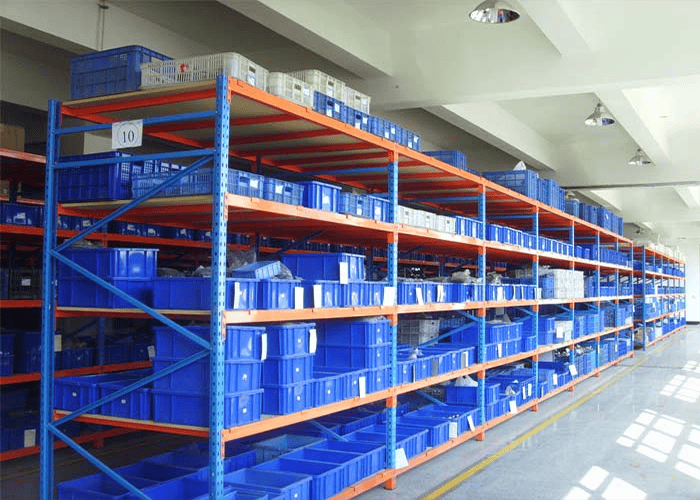
Selectivity: 100% Immediate Access Steel Grade: Q355B / S350MC High Yield Standards: DIN EN 15512 & FEM 10.2.02 Safety Factor: 1.55 Structural Reserve
1. Structural Architecture and Load Mechanics of Selective Pallet Racking
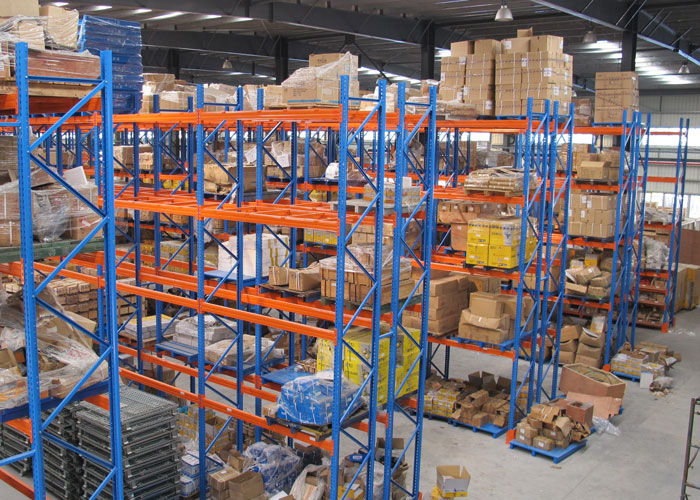
Selective Pallet Racking remains the structural backbone of modern supply chain infrastructure due to its unparalleled operational versatility. Unlike high-density semi-automated systems (such as Drive-In or Radio Shuttle Racking), Selective Pallet Racking offers immediate, 100% direct selectivity to every single pallet position without requiring item relocation. This direct accessibility renders it indispensable for logistics operations handling high-SKU diversity, fast inventory turnover (FIFO/LIFO), and dynamic order-picking environments.
From a structural mechanics standpoint, a heavy-duty selective racking system engineered by StahlRack Intralogistics GmbH relies on a statically indeterminate spatial frame assembly composed of vertical upright frames, horizontal load-bearing beams, diagonal and horizontal bracing trussing, and structural floor anchor baseplates. Frame stability is governed by cold-formed omega-profile upright columns manufactured from high-tensile structural steel grades (such as S350MC or Q355B), featuring continuous perforation patterns at 50 mm or 75 mm pitch increments to facilitate precise beam level adjustability.
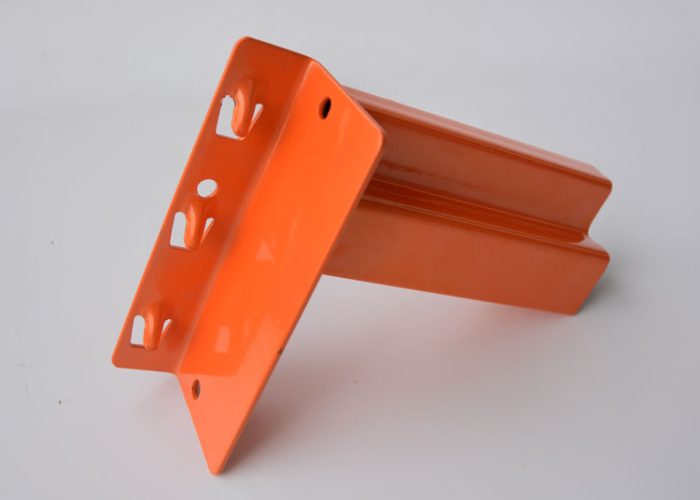
When evaluated under European standard DIN EN 15512:2020 (Steel static storage systems - Adjustable pallet racking systems - Principles for structural design), the beam-to-upright connection is critical. StahlRack utilizes heavy-duty cast or stamped steel connectors with multi-claw mechanical engagement and integrated safety locking pins. This positive engagement creates a semi-rigid joint that effectively resists rotational bending moments caused by asymmetrical pallet placement, dynamic forklift loading, and localized seismic acceleration vectors.
Upright Frame Profile Engineering
- Omega profile geometry with up to 12 cold-rolled bending stiffeners for optimal moment of inertia.
- Frame depth options: 800 mm, 1000 mm, 1100 mm, 1200 mm optimized for EPAL-1 (1200x800mm) and ISO pallets.
- Column section widths ranging from 80 mm to 120 mm with material thickness from 1.8 mm to 3.0 mm.
- High-durability hot-dip galvanizing (HDG) or electrostatic epoxy-polyester powder coating (70–90 µm thickness).
Load-Bearing Beam Profile Selection
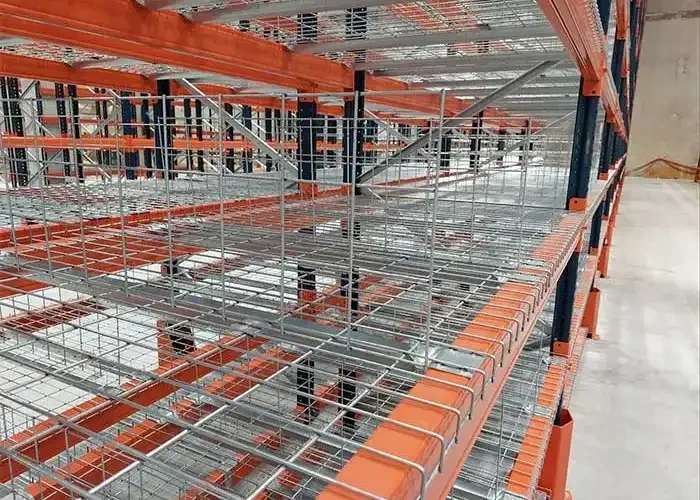
- Box beams (twin C-profiles interlocking) and step beams for wire mesh deck placement.
- Beam clear spans: 1829 mm (2 pallets), 2700 mm (3 Euro pallets), 3600 mm (4 Euro pallets), up to 4500 mm extra-wide.
- Uniformly Distributed Load (UDL) capacities up to 4,500 kg per beam level under L/200 deflection limits.
- Dual-drop automatic safety pins ensuring visual inspection verification during mandatory DGUV audits.
Structural Baseplates & Anchoring
- Heavy-duty stamped and welded baseplates designed for uniform floor pressure distribution on C20/25 concrete slabs.
- M10 to M16 mechanical expansion anchors or chemical anchor bolts tailored to floor slab structural thickness.
- Precision leveling shims (1.0 mm to 5.0 mm zinc-plated) ensuring strict compliance with DIN EN 15620 verticality tolerances.
- Integrated heavy-gauge corner and end-of-row collision guards for forklift impact absorption.
2. Dimensional Clearance Metrics & Safety Compliance (DIN EN 15620 & DGUV 108-007)
Global procurement teams frequently inquire about exact dimensional tolerances required when specifying selective pallet racking for new fulfillment centers. Engineering a safe selective racking layout requires strict adherence to vertical and horizontal clearances defined by DIN EN 15620 (Tolerances, deformations and clearances) and operational guidelines set by German accident prevention regulation DGUV Regel 108-007.
For standard counterbalanced forklift or reach truck operations (Class 400 operational handling), vertical clear height ($H_3$) between the top of the pallet load and the bottom of the overhead beam level must maintain a minimum clear clearance of 100 mm for lift height up to 6.0 meters, and 150 mm for lift heights exceeding 6.0 meters. Horizontally, a 2700 mm beam designed to hold three EPAL-1 Euro pallets (800 mm width x 1200 mm depth stored wide-side handling) provides 75 mm side clearance between adjacent pallets and 100 mm clearance between outer pallets and vertical upright columns.
Additionally, back-to-back racking rows must incorporate a minimum flue space clearance of 100 mm to 150 mm (increased to 200 mm where overhead fire sprinkler drops or vertical cross-bracing bays are installed). These rigorous engineering clearances eliminate pallet snagging during high-speed forklift maneuvers, preventing catastrophic structural rack frame collapse and drastically reducing long-term maintenance costs.