Choosing a storage system can change how smoothly a warehouse runs. A forklift turning into a narrow aisle, a pallet waiting near a loading door, and stock needed before the next shift all reveal whether a layout works in practice. The best choice depends on more than available floor space. Inventory turnover, pallet size, handling equipment, ceiling height, and access requirements all matter.
Pallet Racking systems offer different ways to balance storage density and product access. Selective racks provide direct access to individual pallets, while drive-in and push-back designs can store more goods in less aisle space. Pallet flow racks use gravity to move loads forward, and cantilever racks suit long items such as timber or pipe. Each option has trade-offs. Higher density may reduce selectivity, while tighter aisles can require different trucks and careful traffic planning.
This guide examines ten common types of warehouse pallet racking and explains where each may fit. It also considers practical details, such as beam levels, load labels, aisle width, and access for routine inspections. Small details matter. A rack that looks efficient on a floor plan may create delays when workers replenish fast-moving stock. No single design suits every operation, and the right answer may change as inventory changes. Even a careful comparison can miss something; a site review and qualified design input help confirm that a system fits the building, loads, and daily workflow.
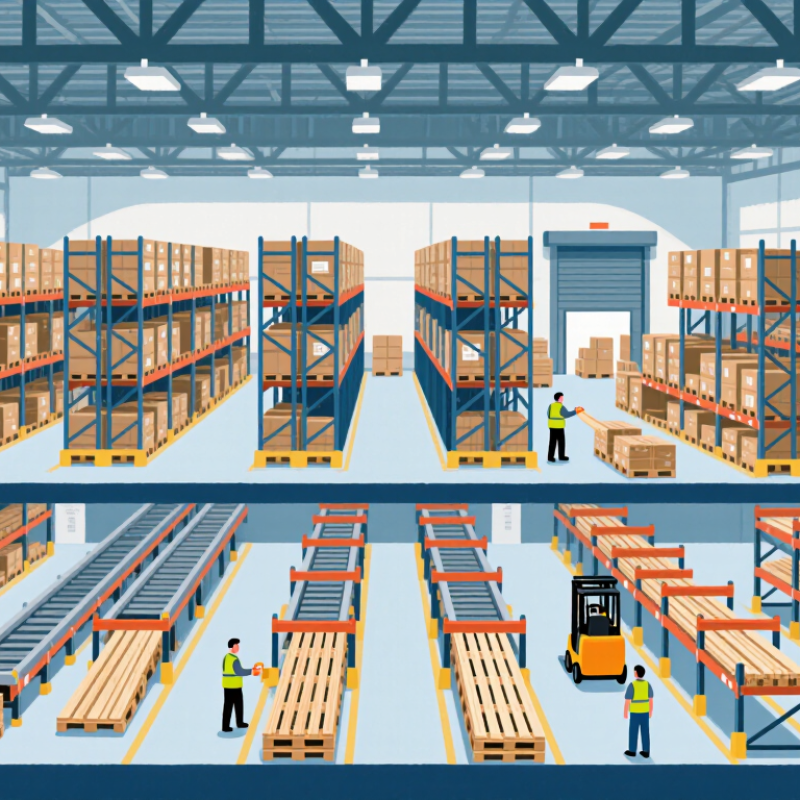
Selective and double-deep racking both store pallets on beams, but they offer different levels of access. Selective racks give forklift operators direct access to each pallet position. This suits warehouses with many product types, frequent picking, or changing stock levels. Need one specific carton quickly? The operator can reach its pallet without moving another load.
That convenience uses space. Wider aisles and single-deep storage can limit pallet capacity in a busy warehouse. Double-deep racking places two pallets behind each other, reducing aisle requirements and increasing storage density. But the rear pallet is not directly accessible. The front load must move first. A compatible reach truck, suitable aisle dimensions, and careful placement are essential.
The choice depends on how inventory moves, not just how much floor space is available. Double-deep works best when pallets are stored in pairs, with similar products or steady rotation. Selective racks are often easier when orders call for varied items throughout the day. Small details matter: pallet condition, beam capacity, forklift turning space, and clear labels. Check the load chart. A dense layout can look efficient on paper, yet create delays if workers repeatedly relocate front pallets. That trade-off deserves a real workflow trial before installation.
Drive-in racking uses deep lanes, with forklifts entering each lane to place and retrieve pallets. It suits operations holding many pallets of the same product. Access is usually last-in, first-out, so older stock can remain behind newer loads. The trade-off is reduced selectivity. A damaged pallet near the back can disrupt access to the lane. Dense, but demanding.
Drive-through racking has openings at both ends. Loads can enter from one side and leave from the other, supporting first-in, first-out rotation when the workflow is managed consistently. Push-back racking uses carts on inclined rails; each new pallet pushes earlier pallets deeper into the lane. Retrieval follows the reverse order, so it is generally last-in, first-out. Operators can work from the aisle without driving into the rack. Convenient, though not magic. A layout may look efficient on paper yet create awkward turns or slow replenishment during busy shifts. Before selecting a system, check pallet dimensions, load ratings, forklift clearances, and inventory rotation needs with a qualified rack designer. Even small clearance errors matter. A modest trial lane can reveal practical problems before a full installation.
Pallet flow and pallet shuttle racks help warehouses move dense pallet loads while keeping stock rotation more deliberate. Pallet flow lanes use inclined rollers, allowing pallets to move forward by gravity. Operators load one end and pick from the other, supporting first-in, first-out rotation. That matters. It can help reduce aging stock, though lane depth and product consistency affect performance. Pallet shuttle systems use a powered shuttle to move pallets within storage lanes. Depending on the layout and operating method, they can support last-in, first-out or first-in, first-out handling.
Tips: Check pallet dimensions, load weights, and bottom-board condition before selecting either system. Uneven pallets can slow flow or create jams. Test representative loads, not just ideal ones.
These systems suit different workflows. Flow racks can work well when products move steadily and replenishment is predictable. Shuttle racks can reduce forklift travel inside deep lanes, but operators still need clear procedures for loading, retrieval, and shuttle charging. Keep a record of lane use and any damaged rollers or rails. Small problems often show up as slower movement before they become bigger interruptions. Avoid choosing by storage density alone; access frequency, stock rotation needs, and maintenance capacity matter too. A site assessment by a qualified rack professional can confirm whether the floor, rack design, and handling equipment match the planned loads.
Mobile and cantilever racks solve different storage problems. Mobile systems mount rack rows on powered or manual carriages, moving them along floor rails to open one access aisle at a time. This can reduce fixed aisles, but retrieval depends on controls, aisle clearance, and reliable equipment. There is a catch. A blocked aisle or maintenance issue can disrupt access to several rows.
MHI’s 2024 Annual Industry Report found that 87% of surveyed supply chain professionals expected to increase technology and innovation investment over the following two years. That signals growing interest in automation, not proof that mobile racks suit every warehouse. Before specifying them, measure floor flatness, check slab capacity, and test how picking patterns affect access. A busy operation may find that fewer aisles create a bottleneck instead of a benefit.
Cantilever racking fits long, awkward loads such as pipes, timber, and metal profiles. Its open front makes loading easier, while arm length and spacing must match the actual load dimensions. Uneven bundles can shift; inspect arms, braces, and connections, and follow rated capacities. Keep a clear travel path for handling equipment. The practical choice is sometimes less elegant: conventional aisles may serve faster-moving stock better, while mobile or cantilever systems handle specific space or load constraints.
When floor space is tight, a mezzanine can add a working level above picking or packing areas. Its columns, beams, deck, and access points must be designed around the building’s slab and expected loads. Space gains height. That extra level may hold cartons, light assembly, or office functions, but it also changes how people and goods move below. Stairs, gates, handrails, and clear paths need to fit daily operations, not just a floor plan. A mezzanine can look simple on paper; its support points may tell a different story.
Structural pallet racking uses heavier steel sections and is often selected for demanding loads or tougher warehouse conditions. Uprights, beams, anchors, and rack protection should match pallet dimensions, handling equipment, and stated load limits. Details matter. Before installation, a qualified designer should review slab capacity, point loads, aisle widths, and any planned connection to a mezzanine. Posted load information helps operators avoid unsafe configurations, while regular checks can catch bent uprights or loose anchors early. Even a careful layout may leave awkward corners or create congestion near stairs. That trade-off deserves a real walk-through with warehouse staff before the system is built.
It gives forklift operators direct access to every pallet position. It suits varied products, frequent picking, and changing stock levels.
It stores two pallets deep and can reduce aisle needs. The front pallet must move before operators can reach the rear one. Not always convenient.
Check reach-truck compatibility, aisle dimensions, turning space, and beam capacity. A dense plan can still slow workers if pallets need frequent relocation.
Drive-in racks are accessed from one end and commonly use last-in, first-out handling. Drive-through racks have openings at both ends and can support first-in, first-out rotation.
Each new pallet pushes earlier pallets deeper onto inclined carts. Retrieval happens in reverse order, so the system generally follows last-in, first-out handling.
Inclined rollers move pallets forward by gravity. Operators load one end and pick from the other, supporting first-in, first-out handling.
Check pallet dimensions, load weights, and bottom-board condition. Uneven pallets can slow movement or cause jams. Test real loads.
Match the system to access frequency, stock rotation, maintenance capacity, and handling equipment. Try a lane or workflow first. Paper plans can be misleading.
Pallet Racking systems help warehouses make better use of floor space, improve access to inventory, and support different storage needs. Selective racking provides direct access to every pallet, while double-deep racking stores pallets in two positions to increase capacity, with some reduction in immediate access. Drive-in and drive-through systems place forklifts within storage lanes for dense block storage, whereas push-back racking uses inclined carts to store multiple pallets per lane and retrieve them from the front.
For operations focused on stock rotation, pallet flow racking moves loads along rollers, while pallet shuttle systems use a powered shuttle to transfer pallets within deep lanes. Mobile racking moves shelving to open access aisles when needed, and cantilever racking accommodates long or unusually shaped goods. Mezzanine and structural racking add usable vertical space or provide robust support for demanding loads. Choosing the right system depends on inventory characteristics, handling equipment, available space, and the balance between storage density and pallet accessibility.