China Best Industrial Racking And Shelving Factories & Exporter
Engineered High-Density Heavy-Duty Storage Systems | ISO 9001 Certified, FEM 10.2.02 & DIN EN 15512 Structural Compliance | Direct Factory OEM & Global Intralogistics Export
Explore our top-tier certified warehouse racking solutions manufactured in China to meet demanding European FEM, German DIN EN, and US RMI safety standards.
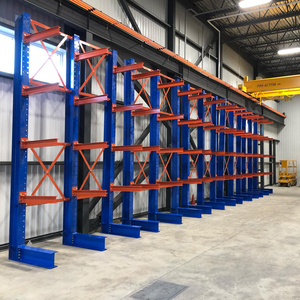
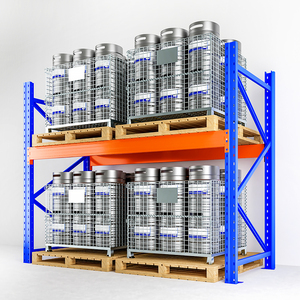
Engineered for lumber, steel pipes, profiles, and bulky non-standard items. Features freestanding column uprights with adjustable load arms and hot-dip galvanizing option.
Load: Up to 1500kg/ArmSingle/Double SidedQ235B/Q355B Steel
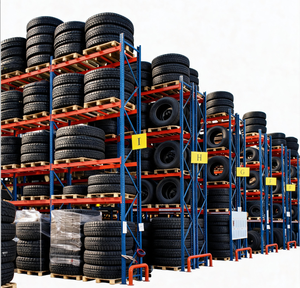
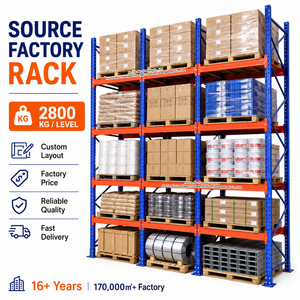
The benchmark solution for universal palletized warehousing. Features 50mm pitch beam adjustment, robotic welded connectors, and high impact safety locking pins.
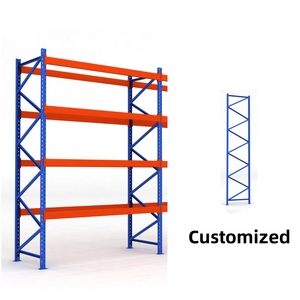
Heavy-duty interlocking beam racking system optimized for high throughput distribution centers. Precision cold-rolled structural upright profiles ensure dynamic stability.
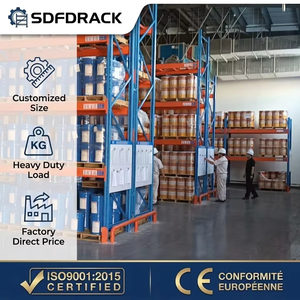
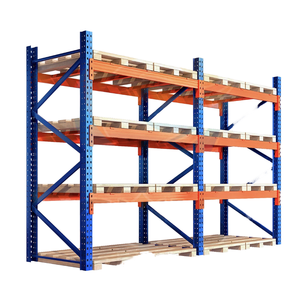
Vertical cube utilization racking maximizes cubic storage meters. Multi-tier high bay structural design guarantees rigidity under heavy reach-truck handling.
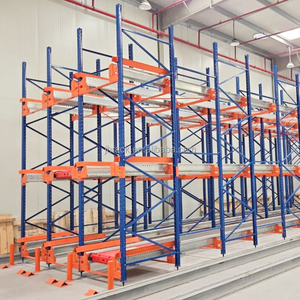
Next-generation semi-automated deep-lane storage system driven by motorized radio carts. Delivers up to 85% warehouse space utilization and faster pallet throughput.
Automated Pallet CartFIFO & LIFO ReadyCold Store -30°C
As one of China's premier industrial racking and shelving exporters, we combine top-grade structural steel mill sourcing with European static engineering compliance to deliver unmatched ROI.
30,000m² Automated Factory Base
Equipped with automated continuous roll-forming lines, OTC robotic welding stations, and automated Swiss Gema powder coating equipment ensuring precision steel profile tolerances within ±0.5mm.
FEM 10.2.02 & DIN EN Standards
Full static and dynamic load structural engineering under European FEM 10.2.02, German DIN EN 15512, DIN EN 15620, and US RMI structural specifications with complete calculation books.
24-Hour Free CAD & 3D BIM Design
Our qualified in-house intralogistics engineering team delivers detailed CAD layout drawings, 3D warehouse simulations, and load optimization studies within 24 hours of inquiry.
Rigorous Raw Material Selection
We source high-strength Q235B and Q355B cold-rolled structural steel strictly from top-tier state-owned mills (Baosteel, Shougang) complete with official Mill Test Certificates (MTC).
Global Export & Custom Packaging
Over 25 years of international export expertise across Europe, Americas, Middle East, and Asia-Pacific. Steel-strapped seaworthy export packing minimizes transit friction.
Comprehensive Lifecycle Support
From site layout planning and structural static testing to installation guidance and DGUV 108-007 inspection readiness, we offer single-point project accountability.
In contemporary global intralogistics, selecting the optimal industrial racking and shelving systems is a critical capital expenditure (CapEx) decision that directly impacts operational throughput, warehouse safety metrics, structural durability, and long-term return on investment (ROI). As logistics networks expand and supply chain complexity increases, enterprise procurement directors, project managers, and logistics consultants are looking to China's leading manufacturing factories to source engineered storage infrastructure. However, evaluating supplier capabilities requires a deep technical understanding of steel metallurgy, cold-roll forming profile physics, structural deflection mechanics, safety factors, and international compliance frameworks.
Technical Insight: Structural integrity in heavy-duty racking relies on strict compliance with yield strength ($\sigma_y \ge 235\text{ MPa}$ for Q235B steel) and finite element stress verification under combined dead loads, live loads, impact loads, and seismic acceleration forces.
1. Metallurgical Excellence & Raw Material Quality Assurance
The structural safety of any industrial racking system begins with raw material selection. Leading Chinese factories utilize certified prime hot-rolled coils subsequently cold-reduced into cold-rolled structural steel sheets (Q235B and Q355B grades according to GB/T 700 and GB/T 1591 specifications). Q235B carbon structural steel provides an ideal equilibrium of ductile workability and tensile strength ($\text{tensile strength } \sigma_b: 370\text{--}500\text{ MPa}$), rendering it perfectly suited for standard selective beam profiles and upright frames. For high-bay vertical racking exceeding 10 meters or extreme heavy-duty loading requirements ($\gt 4000\text{ kg per level}$), Q355B low-alloy high-strength steel is engineered to provide an elevated yield threshold ($\sigma_y \ge 355\text{ MPa}$), significantly reducing section dead weight while preserving structural safety margins.
Full traceability is maintained via official Mill Test Certificates (MTC) detailing chemical composition (Carbon $C \le 0.22\%$, Silicon $Si \le 0.35\%$, Manganese $Mn \le 1.40\%$, Phosphorus $P \le 0.045\%$, Sulfur $S \le 0.045\%$) and mechanical tensile test data. Substandard factories frequently substitute secondary grade steel or reduce wall thickness (e.g., supplying 1.35mm nominal steel when 1.5mm is specified). Verified OEM exporters enforce ultrasonic thickness gauging and optical emission spectrometry to guarantee specification compliance prior to cold-roll forming.
2. Engineering Structural Standards: FEM 10.2.02, DIN EN 15512 & RMI MH16.1
Global industrial pallet racking must adhere to precise structural engineering codes depending on the target destination:
European Union & DACH Region: Designed according to DIN EN 15512 (Steel static storage systems - Adjustable pallet racking systems - Principles for structural design) and FEM 10.2.02 guidelines. Deflection limits under full uniform load are strictly capped at $L/200$ (where $L$ represents clear beam length), preventing permanent deformation or beam disengagement. Installation tolerances follow DIN EN 15620, and operational compliance aligns with DGUV Regel 108-007 / DIN EN 15635 annual rack safety audit rules.
North American Market: Engineered under ANSI/RMI MH16.1 (Specification for the Design, Testing and Utilization of Industrial Steel Storage Racks) and AISC cold-formed steel design manuals. Upright column punchings feature standard 2-inch pitch teardrop patterns compatible with legacy US teardrop beam connectors.
Australian Market: Compliant with AS 4084-2012 (Steel storage racking) governing frame design, baseplate anchoring shear stresses, and rack beam safety lock retention forces.
Top-tier Chinese racking factories deploy automated continuous 18-to-24 pass cold-roll forming machines. Upright columns feature multi-fold omega cross-sections (e.g., 80x60, 90x70, 100x70, 120x95 profile dimensions with 11-13 distinct bending ribs). These complex cold-formed geometries dramatically increase column moment of inertia ($I_x, I_y$) and torsional rigidity, resisting axial compressive loads and preventing local buckling under eccentric weight distribution.
Automatic robotic OTC/Fanuc welding stations execute gas metal arc welding (GMAW/MIG) on beam end connectors (3-claw or 4-claw heavy duty connector brackets), ensuring complete weld penetration ($t \ge 4.5\text{mm}$ fillet welds) without porosity or micro-cracking. Following structural fabrication, component surfaces undergo a 7-stage pre-treatment wash: alkaline degreasing, water rinse, acid pickling rust removal, water rinse, surface conditioning, zinc-phosphate conversion coating, and final deionized rinse.
Coating application takes place in fully enclosed automatic Swiss Gema powder coating booths utilizing thermosetting epoxy-polyester resin powder. Cured at 180°C--200°C for 20 minutes, the resulting dry film thickness (60--90$\mu\text{m}$) delivers superior cross-hatch adhesion (Class 0 under ISO 2409), salt-spray corrosion resistance ($>500\text{ hours}$ under ISO 9227 / ASTM B117), and scratch resistance in demanding industrial distribution environments.
4. Industrial Racking System Selection Matrix
Selecting the correct structural configuration requires balancing storage volume density against individual SKU selectivity. The table below outlines technical operational parameters across primary industrial racking configurations:
Racking Architecture
Storage Density
Pallet Selectivity
Stock Rotation
Aisle Width (Meters)
Typical Load Capacity
Selective Pallet Racking
Standard (40-50%)
100% Direct Access
FIFO / LIFO Flexible
3.0m - 3.5m (Reach Truck)
1,000 - 4,500 kg / Level
Double-Deep Pallet Racking
High (60-65%)
50% Direct Access
LIFO (Last In First Out)
3.1m - 3.6m (Pantograph)
1,500 - 3,000 kg / Level
Drive-In / Drive-Through Racking
Very High (75-85%)
Low (Per Lane)
LIFO (Drive-In) / FIFO (Through)
Lane Integrated (N/A)
1,000 - 1,500 kg / Pallet
Radio Shuttle Racking
Ultra High (85-90%)
Medium (Per Lane)
Software Configurable FIFO/LIFO
2.8m - 3.2m (Front Aisle)
1,500 - 2,000 kg / Pallet
Very Narrow Aisle (VNA)
Very High (70-80%)
100% Direct Access
FIFO Flexible
1.6m - 1.9m (Turret Truck)
1,000 - 3,500 kg / Level
Cantilever Racking System
Specialized (Long Goods)
100% (For Arm Level)
Open Access
Side-Loader Dependent
500 - 1,800 kg / Arm
5. Future Procurement & Technology Trends in Intralogistics (2025-2035)
The global material handling equipment (MHE) and structural racking industry is experiencing unprecedented structural evolution driven by automation, sustainability directives, and real-time operational intelligence:
Automated Shuttle & AS/RS Integration: Conventional static racking is rapidly giving way to semi-automated Radio Shuttle channels and fully automated Automated Storage and Retrieval Systems (AS/RS). High-bay self-supporting rack-clad buildings (where the racking frames form the exterior building wall and roof support structure) reduce civil engineering construction timelines by up to 30%.
Digital Twin & IoT Structural Monitoring: Smart upright frame monitors equipped with wireless strain gauges, accelerometer impact sensors, and inclination sensor nodes are beginning to log forklift collision impacts in real time. Integrated WMS platforms immediately flag compromised uprights, preventing catastrophic collapse and automating DIN EN 15635 compliance reporting.
Sustainable Powder Coating & Green Steel Sourcing: Environmental, Social, and Governance (ESG) compliance mandates zero-VOC electrostatic powder coatings and closed-loop water recycled pre-treatment wash plants. Supply chain audits increasingly evaluate cradle-to-gate carbon footprints, favoring electric arc furnace (EAF) recycled green steel sourcing.
Enhanced Seismic Engineering (ISO 13000 / Eurocode 8): Modern rack designs incorporate nonlinear push-over dynamic stress simulations and energy-dissipating baseplate anchor shock dampeners to protect high-density inventory in active seismic zones (e.g., Japan, Chile, New Zealand, California).
6. Sourcing Strategy: Evaluating Chinese Factory OEM/ODM Exporters
When procuring industrial racking and shelving systems from Chinese export factories, procurement officers must conduct thorough technical due diligence beyond reviewing FOB unit prices:
Verify that factory static load calculations account for concrete floor slab load-bearing capacities ($\text{N/mm}^2$), anchor bolt expansion pull-out forces, and column baseplate pressure distribution. Demand third-party inspection validation (SGS, TÜV Rheinland, Bureau Veritas) covering steel raw material grade verification, dry film coating thickness, weld non-destructive testing (NDT), and component dimensioning. Leading suppliers maintain ISO 9001 quality management, ISO 14001 environmental management, and ISO 45001 occupational health certification.
Procurement Knowledge Base
Frequently Asked Questions (FAQ)
Expert answers to common engineering, regulatory compliance, factory production, and global shipping questions regarding industrial racking imports from China.
Q: What is the typical production lead time for bulk industrial racking orders?
Standard pallet racking and industrial longspan shelving orders are produced within 15 to 20 business days following final CAD layout approval and deposit receipt. Complex automated radio shuttle racks or multi-tier mezzanine floors requiring structural calculations typically require 25 to 30 days depending on raw material coil schedules.
Q: Which steel raw material standards do your Chinese factories use?
We use certified high-tensile Q235B and Q355B cold-rolled structural steel compliant with Chinese national standard GB/T 700 / GB/T 1591 (equivalent to European S235JR and S355JR structural steel under EN 10025, or US ASTM A36 / ASTM A572 Grade 50). Every production batch is delivered with full Mill Test Certificates (MTC).
Q: How do your racking systems ensure compliance with European FEM 10.2.02 and DIN EN 15512?
Our in-house structural engineering team utilizes specialized structural calculation software to perform finite element analysis (FEA) under worst-case combined load conditions (dead load, dynamic beam placement impact, seismic factors). All racking layouts meet DIN EN 15512 static design rules and DIN EN 15620 clearance tolerances.
Q: Do you provide free CAD and 3D BIM layout design services?
Yes. We provide complete complimentary 2D CAD layout drawings, 3D floor plan visualizations, and loading capacity calculations within 24 hours of receiving your warehouse architectural drawing, clear ceiling height, pallet dimensions, and forklift specification data.
Q: Are your racking components compatible with EPAL Euro Pallets?
Absolutely. Our standard racking dimensions are optimized around standard EPAL Euro pallets (800mm x 1200mm) and UK/Industrial pallets (1000mm x 1200mm). Standard 2700mm beam spans comfortably accommodate three 800mm Euro pallets with standard 100mm safety clearance margins.
Q: How are industrial racking components packaged to prevent ocean freight transit damage?
All upright columns and horizontal beams are bundled on steel-framed pallets with heavy-duty plastic film wrapping, cardboard corner edge protectors, and high-tensile steel strapping. Small components (baseplates, safety locking pins, shims, bolts) are packed in heavy-duty reinforced wooden crates or corrugated boxes.
Q: Can your factory accommodate OEM custom colors and custom profile punching?
Yes. Our fully automated Swiss Gema powder coating lines can apply any custom RAL color (standard colors include RAL 5015 Blue, RAL 2004 Orange, RAL 7035 Light Grey). We also support custom OEM column punching profiles, teardrop styles, and branded end-frame labeling.
Q: What documentation is provided to support local DGUV or rack safety inspections?
Every project delivery includes a comprehensive documentation binder containing: Approved As-Built CAD Drawings, Structural Calculation Books, Mill Test Certificates (MTC), Surface Powder Coating Test Reports, Load Signage Plates (in English or local language), and Step-by-Step Installation Manuals.
Ready to Optimize Your Warehouse Storage Capacity?
Connect with our certified intralogistics structural engineers today. Receive a customized 2D/3D CAD warehouse layout plan, structural static calculation, and factory-direct price proposal within 24 hours.