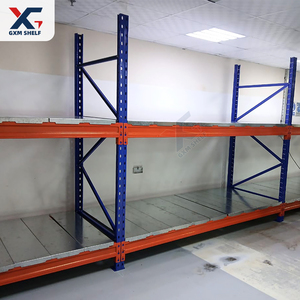
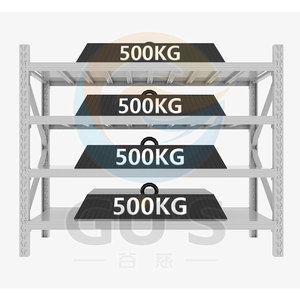
GXM Adjustable Stainless Steel Pallet Rack System Boltless Rack Storage Warehouse Heavy Duty Shelving
- Grade 304/316 Steel
- Cold Room Ready
- Boltless Framing
Manufactured using certified structural steel (Q235B / Q355B) and compliant with European FEM 10.2.02 and ANSI/RMI MH16.1 international design codes.
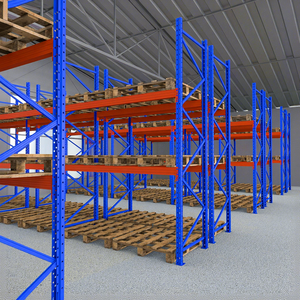
An in-depth analysis of structural integrity, steel metallurgy, load distribution calculations, and procurement strategies for industrial logistics hubs.
Executive Summary: As modern supply chains move toward higher vertical clearance, automated inventory retrieval, and denser footprint optimization, selecting a top-tier warehouse pallet racking manufacturer in China has evolved from simple steel purchasing to dynamic structural engineering. This report breaks down critical structural standards, future automation trends, and factory verification metrics.
The structural backbone of any high-bay or industrial warehouse racking system relies on cold-rolled structural steel profiles. Leading Chinese racking manufacturers utilize high-grade Q235B and Q355B structural carbon steel, engineered to deliver yield strengths ranging from 235 MPa to over 355 MPa depending on frame load geometry.
To ensure structural compliance across European, American, and Asia-Pacific markets, heavy-duty racking frames undergo finite element analysis (FEA) based on established international codes:
Different supply chain operations demand distinct racking architectures. Choosing the ideal configuration directly impacts operational throughput, SKU selectivity, and long-term operational expenditure (OPEX).
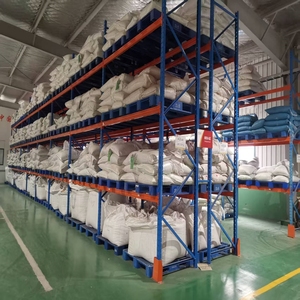
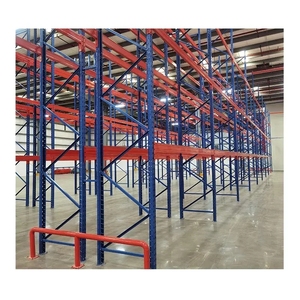
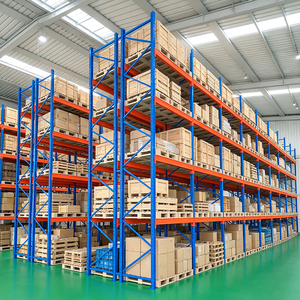
Selective pallet racking remains the dominant global baseline due to its 100% direct pallet accessibility. Engineered with adjustable beam connectors on 50mm, 75mm, or 76.2mm (3-inch) pitch increments, selective racking allows logistics operators to reconfigure beam levels effortlessly as inventory profiles change.
Designed primarily for the North American retail, distribution, and 3PL market, US Teardrop pallet racks feature slide-in teardrop connection slots paired with automatic spring-loaded safety locks. This boltless assembly allows rapid layout installation while remaining fully compatible with standard teardrop components across the industry.
For pharmaceutical distribution centers, food processing facilities, and deep-freeze logistics (-30°C to -40°C), standard powder coatings can risk micro-cracking due to thermal contraction. Grade 304 and 316 stainless steel racking systems—or hot-dip galvanised structural components—provide immune corrosion resistance, resisting aggressive wash-down chemicals and moisture condensation.
Capable of integrating Radio Shuttle cars and automated high-density channels, boosting floor space utilization by up to 85% compared to standard layouts.
Reinforced heavy-duty column guards, frame corner protectors, and aisle end-barriers designed to absorb forklift impact energy and satisfy safety standards.
Formulated with recyclable structural steel alloys and finished with zero-VOC electrostatic epoxy powder coating, minimizing overall environmental footprint.
To assist procurement managers and warehouse engineers in selecting the optimal structural format, the matrix below details operational specs across major racking types:
| Racking System Type | Storage Density | Pallet Accessibility | Stock Rotation | Max Level Load | Optimal Industry Application |
|---|---|---|---|---|---|
| Selective Pallet Racking | Moderate (40-50%) | 100% Direct Access | FIFO / LIFO | Up to 4,500 kg | General 3PL, FMCG, Multi-SKU Distribution |
| US Teardrop Racking | Moderate (45-50%) | 100% Direct Access | FIFO / LIFO | Up to 4,000 kg | Retail Logistics, E-commerce, North America Export |
| Double Deep Racking | High (60-65%) | 50% Immediate Access | LIFO | Up to 3,500 kg | Cold Storage, Homogeneous Bulk Goods |
| Radio Shuttle Racking | Very High (80-85%) | Channel Selective | FIFO / LIFO | Up to 2,000 kg/pallet | Frozen Food, High-Throughput Beverage Hubs |
| Very Narrow Aisle (VNA) | High (70-75%) | 100% Direct Access | FIFO / LIFO | Up to 4,000 kg | High-Bay Distribution Centers, Space-Constrained Halls |
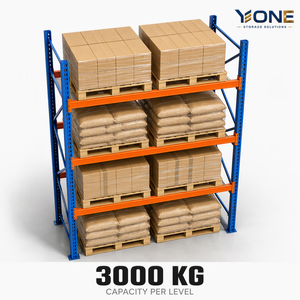
| Stainless Steel Heavy Duty | Moderate (40-50%) | 100% Direct Access | FIFO / LIFO | Up to 3,000 kg | Pharma, Cleanrooms, Harsh Chemical Environments |
Global warehousing is undergoing a profound structural shift driven by automation, labor cost escalation, and rapid e-commerce expansion. Procurement directors looking to source racking from China must align their technical specifications with future-ready logistics paradigms:
Traditional pallet racking was designed solely around human-operated forklift clearances. Next-generation warehouse racking demands strict installation tolerances (ref. DIN EN 15620 Class 300/400) to ensure Autonomous Mobile Robots (AMRs) and Automated Guided Vehicles (AGVs) can pick and deposit pallets without mechanical interference. Upright alignment, floor anchor torque consistency, and laser-measured aisle floor flatness (FF/FL numbers) have become essential procurement criteria.
High-bay rack-clad buildings—where the racking system itself forms the structural frame supporting the warehouse roof and wall cladding—represent the pinnacle of automated space efficiency. Rising industrial land costs across North America, Europe, and East Asia make AS/RS racking systems, reaching heights of 30 to 45 meters, the preferred choice for mega-distribution hubs.
Sustainability mandates across global enterprises now require suppliers to disclose Environmental Product Declarations (EPDs). Leading Chinese rack manufacturers are transitioning to eco-friendly powder coating technology, using automated 18-stage pre-treatment washing processes that eliminate toxic heavy metals while reducing volatile organic compounds (VOCs) to zero.
Sourcing directly from a premier Chinese manufacturer provides immense cost advantages, provided the manufacturing facility operates under strict quality management frameworks.
Continuous automated cold roll-forming mills ensure precision profile dimensions, preventing internal stress concentrations and maintaining uniform wall thickness across 12-meter upright columns.
Robotic welding arms execute multi-pass welds on beam connector claws and baseplates, eliminating human welding flaws and guaranteeing 100% penetration weld strength.
In-house quality control labs conduct hydraulic column compression tests, beam deflection under 150% overload, and salt-spray corrosion chamber testing exceeding 500 hours.
Factory Direct Advantage: Operating from a dedicated 30,000+ square meter production facility, our enterprise delivers end-to-end support—from initial CAD site layout and structural calculation to container loading optimization and OEM component customisation.
Need a structural CAD layout, factory-direct wholesale pricing, or structural load calculations for your facility expansion? Connect with our senior engineering team today.
Get a QuoteKey technical answers addressing common procurement, compliance, and logistics questions raised by international logistics buyers and facility engineers:
Partner directly with China's leading warehouse pallet storage racks manufacturer. Request a factory-direct quote and structural engineering review today.
Get a Quote