Featured Wholesale Heavy-Duty Pallet Racking Systems
Direct factory manufacturing certified to ISO 9001, FEM 10.2.02, and ANSI/RMI MH16.1 standards
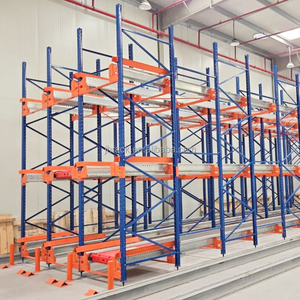
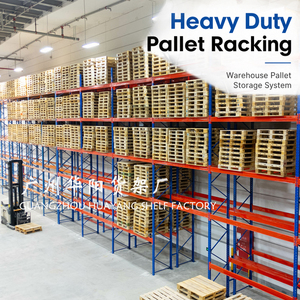
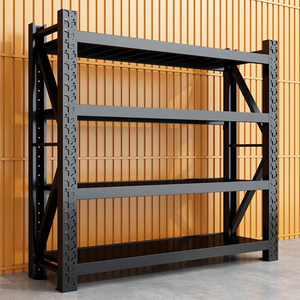
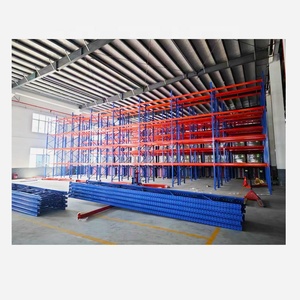
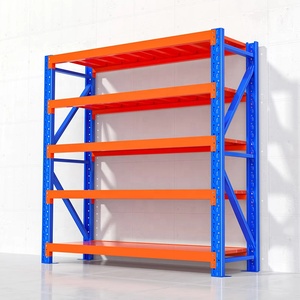
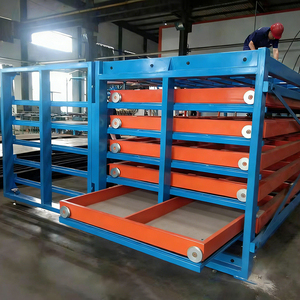
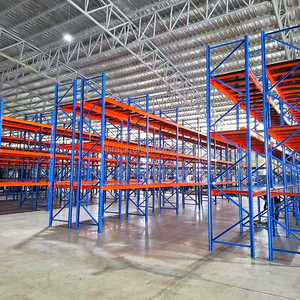
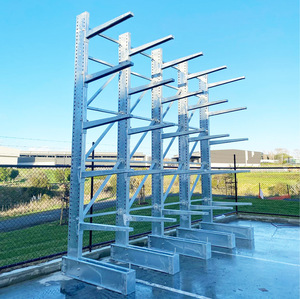
Factory-Direct Manufacturing Excellence & Global Engineering Capabilities
Why Tier-1 logistics companies, 3PL providers, and industrial distributors partner directly with our OEM manufacturing hubs in China
30,000 m² Automated Facility
Equipped with continuous automated cold roll-forming lines, robotic continuous welding cells, and electrostatic powder coating systems to guarantee uniform structural integrity.
International Compliance
Racking systems engineered under strict European FEM 10.2.02, DIN EN 15512, Australian AS4084-2012, and American RMI safety parameters for total compliance.
24-Hour Free CAD Layouts
Our in-house structural engineers turn around 2D floor plans, 3D spatial models, and finite element stress analysis within 24 hours of receiving site dimensions.
1997
Established Year
30,000 m²
Production Hub
15-20 Days
Standard Lead Time
80%+
Global Repeat Orders
Structural Engineering & Raw Material Metallurgical Specifications
When sourcing bulk pallet racking systems from China manufacturers, understanding the raw material composition and structural mechanics is critical for operational safety, shelf stability, and long-term ROI. Modern heavy-duty racking relies on specialized cold-rolled steel profiles engineered to maximize yield strength while minimizing cross-sectional weight.
Our production facilities utilize high-grade Q235B and Q355B structural steel coil sourced directly from top-tier state mills (such as Baosteel and Shougang). Q355B steel, with a yield strength of ≥355 MPa and tensile strength ranging between 470–630 MPa, provides optimal performance for heavy-duty upright frames exceeding 12 meters in height or handling seismic vibration criteria.
1. Cold-Formed Upright Column Geometry
The vertical load-bearing capacity of an upright frame depends on its profile profile complexity. Standard cheap single-bend profiles flex under heavy loads. Advanced Chinese factories utilize multi-ribbed profiles with up to 13–17 bending edges. These structural folds significantly increase the moment of inertia ($I_x, I_y$) and radius of gyration, preventing localized torsional buckling under maximum rated loads up to 25,000 kg per bay.
2. Beam Profile Engineering & Connector Claw Locking
Horizontal box beams are fabricated by interlocking two cold-rolled C-channels together through automated continuous seam welding. This forms a structural box section capable of handling heavy flexural bending moments. Connector claws (typically 3-hook, 4-hook, or 5-hook cold-stamped brackets) are micro-welded to the beam ends. An safety lock pin made of galvanized spring steel automatically drops into position upon insertion, preventing accidental dislodgement caused by forklift mast errors.
3. Surface Treatment & Powder Coating Standard
Corrosion protection dictates the lifespan of steel racking, especially in cold storage rooms or high-humidity tropical fulfillment centers. Our automated surface treatment pipeline includes a 9-stage pre-wash process:
- Degreasing & Rust Removal: Chemical bath removes mill scale and surface grease.
- Zinc Phosphate Conversion Coating: Creates a microscopic crystalline barrier for superior paint adhesion.
- Electrostatic Powder Application: Epoxy-polyester powder thermosetting coat applied at 60–90 microns thickness.
- Thermal Curing Oven: Baked at 180°C to 200°C for complete polymer cross-linking, yielding high scratch resistance (ISO 2409 Class 0).
Strategic Procurement Trends: The Next Era of Pallet Rack Sourcing
The global material handling equipment (MHE) industry is undergoing a systemic shift driven by e-commerce fulfillment dynamics, rising labor costs, and land scarcity. Purchasing managers and logistics engineers can no longer view pallet racks simply as static metal shelves. Future procurement strategies require alignment with the following market developments:
Trend A: Rapid Transition to Automated Radio Shuttle & ASRS Integration
Traditional Selective Racking and Drive-In Racking are increasingly being replaced by Four-Way Radio Shuttle Systems and Automated Storage and Retrieval Systems (AS/RS). Radio shuttles eliminate the need for forklifts to enter storage channels, reducing rack damage by over 80% while improving SKU storage density by up to 200%. China wholesale manufacturers are leading this shift by integrating precision-machined guide rails (with tolerance limits within ±0.5mm) designed specifically for autonomous shuttles and AMR (Autonomous Mobile Robot) fleets.
Trend B: Demand for Modular VNA (Very Narrow Aisle) High-Bay Racks
As urban industrial land prices escalate globally, logistics operators are expanding vertically up to 15 to 22 meters. Very Narrow Aisle (VNA) racking systems reduce forklift aisle widths down to 1.6–1.8 meters. Chinese manufacturers are adapting to this trend by producing ultra-flat floor guide rails and top-tie bracing architectures that satisfy stringent DIN EN 15620 Class 300A verticality standards.
Trend C: Eco-Friendly "Green Steel" & Sustainable Manufacturing Audits
European and North American buyers are increasingly factoring ESG (Environmental, Social, and Governance) benchmarks into their OEM supplier selections. Leading Chinese factories are adopting solar-powered manufacturing, closed-loop water treatment for phosphate pre-treatment lines, and low-VOC powder coatings to deliver carbon-neutral product lines for corporate sustainability compliance.
Pallet Racking System Technological Evolution Matrix
Engineers continuously refine system designs to enhance structural load safety and lower Total Cost of Ownership (TCO). Below is an overview of how traditional racking technologies compare against modern high-density solutions manufactured in Chinese hubs:
| Storage Racking System | Storage Density Ratio | Selectivity (Direct Access) | Forklift Aisle Requirement | Optimal Application Scenario | Relative Cost Per Pallet |
|---|---|---|---|---|---|
| Selective Pallet Racking | Baseline (100%) | 100% Direct Access | 3.0m – 3.8m Aisle | High SKU variety, fast-moving consumer goods (FMCG) | Economic / Low |
| Double Deep Racking | Increased (+30%) | 50% Direct Access | 3.1m – 3.3m Aisle | Multiple pallets per SKU, restricted floor space | Moderate |
| Drive-In / Drive-Through | High Density (+60%) | Low (LIFO / FIFO per lane) | Internal Storage Lanes | Cold storage, homogeneous seasonal inventory | Moderate |
| Pushback Cart System | High Density (+55%) | Moderate (2-6 pallets deep) | Standard Forklift Aisle | Medium turn-rate items, multi-lane bulk storage | Moderate - High |
| Radio Shuttle Racking | Ultra High Density (+80%) | Programmed LIFO / FIFO | Single Loading & Access Aisle | Cold chain logistics, high volume per SKU bulk storage | High ROI / Automated |
| VNA (Very Narrow Aisle) | High Vertical (+50%) | 100% Direct Access | 1.5m – 1.8m Narrow Aisle | High-bay warehouses, order fulfillment centers | Moderate - High |
*Note: Precise storage gains and structural dynamic calculations are tailored by our engineering department based on specific building layouts, floor slab PSI ratings, and local seismic zones.
Step-by-Step B2B Procurement & Quality Verification Checklist
Direct procurement from China wholesale factories offers substantial cost savings—often between 30% to 50% compared to local domestic rack integrators. However, executing a seamless international procurement strategy requires systematic quality control at every phase:
Step 1: Structural Brief & Cad Layout Approval
Provide the factory with accurate building drawings (including column locations, clear height under roof trusses, slab flatness class, and floor loading capacity in kN/m²), alongside pallet unit load dimensions ($W \times D \times H$) and gross weight per pallet. Ensure the manufacturer returns signed structural calculations detailing maximum beam deflection ($\delta \le L/200$).
Step 2: Steel Mill Test Certificates (MTC) & Raw Material Inspection
Require the supplier to provide raw material MTCs verifying chemical composition and mechanical yield testing according to EN 10025 or GB/T 1591 standards before roll-forming begins.
Step 3: Third-Party In-Line Quality Audits (SGS / Intertek / TÜV)
Organize an independent pre-shipment inspection focusing on four critical quality metrics:
- Dimensional Tolerances: Pitch hole spacing accuracy within ±0.5mm across the total length of the upright.
- Weld Seam Integrity: Ultrasonic or magnetic particle inspection of beam connector claw welds to verify full penetration without porosity or undercut defects.
- Coating Thickness Measurement: Magnetic gauge check confirming 60–90$\mu m$ powder layer depth.
- Cross-Hatch Adhesion Test: Confirming paint film adhesion resistance to prevent chipping under forklift impact.
Step 4: Container Loading & Export Packaging Optimization
Heavy steel items can suffer scratch damage or structural deformation if improperly packed. Our factory uses heavy-duty steel strapping, wooden saddles, plastic stretch wrap, and corrugated corner protectors. Upright frames and beams are bundle-packed to optimize 40ft High Cube (40HQ) container weight limits (typically 26,000–28,000 kg per container).
Frequently Asked Procurement Questions (FAQ)
Clear, direct answers for logistics executives, purchasing agents, and warehouse engineers
What is the typical production lead time for bulk pallet rack orders?
Standard pallet racking orders (such as Selective or Medium Duty Systems) are produced within 15 to 20 business days following technical CAD drawing sign-off. Highly customized automated projects, such as Radio Shuttle or multi-tier mezzanine floors, generally range from 25 to 35 days.
Which international safety standards do your rack designs meet?
Our pallet rack systems are engineered to strictly comply with European FEM 10.2.02 / DIN EN 15512 specifications, American ANSI/RMI MH16.1 codes, and Australian Standard AS4084-2012. Complete structural engineering reports can be provided for local building permit applications.
Can you manufacture custom teardrop or compatible upright profiles?
Yes. In addition to our proprietary structural beam and upright designs, we offer OEM/ODM production for North American Teardrop styles, European 50mm pitch patterns, and Australian 76.2mm pitch profiles to seamlessly integrate into your existing racking infrastructure.
Do you provide layout planning and engineering structural support?
Yes, we provide 100% free CAD layout design, 3D spatial renderings, and seismic load capacity calculations within 24 hours of receiving your warehouse floor plans and operational pallet metrics.
What minimum order quantities (MOQ) apply to wholesale purchases?
We maintain highly flexible MOQ guidelines. While full container loads (FCL 20GP or 40HQ) offer the lowest freight cost per pallet position, we routinely accommodate smaller trial orders, prototype samples, or expansion components for existing facilities.
How do you prevent shipping damage and rust during ocean transit?
All component bundles are wrapped in heavy-duty waterproof plastic film, reinforced with corner edge guards, and secured onto custom steel skids. Small structural hardware (such as bolts, baseplates, and safety pins) is packed in heavy wooden crates with desiccant packs.