Direct-from-Factory Industrial Storage Systems Engineering
As a global benchmark among China wholesale rack storage warehouse manufacturers, our 30,000 m² automated production plant integrates high-precision cold-roll forming, robotic laser welding, and automated electrostatic powder coating. Operating since 1997, we deliver fully compliant FEM 10.2.02, DIN EN 15512, and ANSI/RMI MH16.1 structural racking systems engineered for high-density logistics, cold chain operations, and global automated distribution hubs.
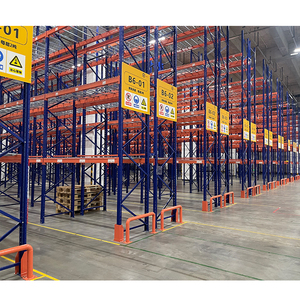
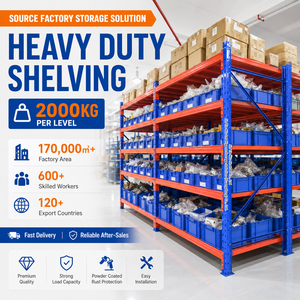
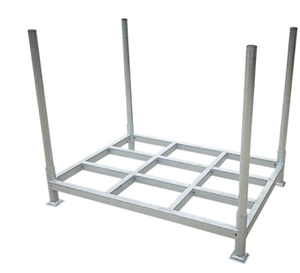
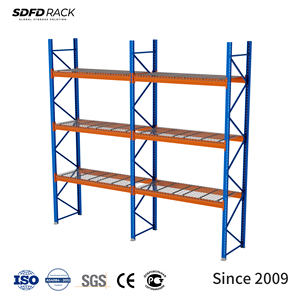
Featured Industrial Warehouse Racking Systems
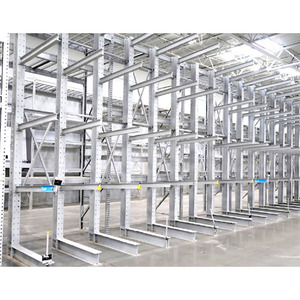
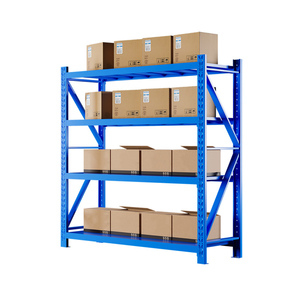
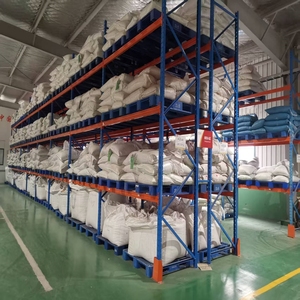
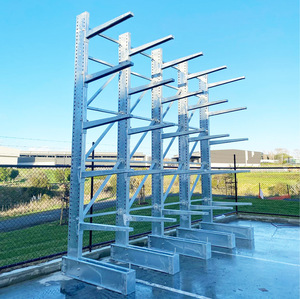
Select from our precision-engineered structural racking portfolio designed for maximum volumetric utilization.
Why Sourcing Direct from a Tier-1 Chinese Rack Manufacturer Controls Risk & Lowers TCO
Navigating the global supply chain for heavy-duty storage equipment requires more than comparing baseline quotes per steel ton. When procurement executives source from a premier China wholesale rack storage warehouse manufacturer & supplier, the objective is to harmonize strict load safety tolerances with economic efficiency. Our manufacturing infrastructure in China is tailored specifically for enterprise B2B buyers, third-party logistics (3PL) integrators, and material handling distributors across North America, Europe, Latin America, and Australasia.
Unlike local distributors who add 35% to 50% markups while white-labeling imported stock, our factory-direct model grants buyers complete structural transparency. Every upright frame profile, beam assembly, and floor anchor plate is engineered using prime certified cold-rolled structural steel (Q235B and Q355B grades).
Advanced Roll-Forming & Laser Precision
Our production floors feature 16 continuous automated roll-forming lines capable of handling steel thickness up to 3.2mm with ±0.5mm structural tolerances. Automatic CNC punching ensures identical pitch consistency along multi-meter upright columns.
Rigorous International Certifications
Fully compliant with European standard DIN EN 15512 (Pallet Racking Structural Design), DIN EN 15620 (Tolerances and Clearances), ANSI/RMI MH16.1 (US Specification), and Australian AS4084-2012 standards. Backed by ISO 9001 quality management systems.
Rapid 24-Hour Engineering CAD Layouts
Send your facility DWG architectural layout, slab load capabilities, and forklift turning radii. Our structural engineering team delivers optimized 2D/3D BIM rack designs within 24 hours, eliminating procurement bottlenecks.
Trusted Global Project Delivery & Corporate Partnerships
Our structural systems are deployed inside demanding industrial environments for market leaders including PepsiCo, Philips, Lenovo, Cepsa, and Fuyao Group. Whether outfitting cold storage facilities operating at -30°C or multi-tier mezzanine picking zones handling high-SKU e-commerce fulfillment, our enterprise delivery framework includes complete structural load calculation sheets, factory acceptance testing (FAT), and international packaging designed to prevent ocean transit oxidation.
Industrial Rack Systems Engineering Comparison Matrix
Choosing the optimal racking geometry requires balancing volumetric storage density, SKU selectivity, forklift aisle clearance, and capital cost per pallet position. The comparison table below highlights technical metrics verified by our engineering team:
| Racking System Type | Pallet Utilization (%) | Selectivity (Direct Access) | Aisle Width Requirement | Max Load Capacity / Tier | Ideal Application |
|---|---|---|---|---|---|
| Selective Pallet Racking | 40% - 50% | 100% (Immediate) | 3.0m - 3.8m (Standard Forklift) | Up to 4,500 kg | High-SKU diversity, general distribution, fast turnover. |
| US Teardrop Racking | 45% - 55% | 100% (Immediate) | 2.8m - 3.5m (Reach Truck) | Up to 4,000 kg | North American warehouse standards, interchangeable beams. |
| Drive-In / Drive-Thru | 75% - 85% | Low (LIFO / FIFO by Lane) | Integrated Racking Lane | Up to 1,800 kg / pallet | Cold storage, homogeneous batch goods, seasonal inventory. |
| Industrial Cantilever Rack | 60% - 70% | 100% (Linear Clearance) | Varies by Material Length | Up to 6,000 kg / Arm | Steel tubes, aluminum profiles, timber, sheet metal. |
| Radio Shuttle Racking | 85% - 90% | Medium (Automated Lane) | 1.5m (Charging/Access Aisle) | Up to 2,000 kg / Shuttle | High-density FMCG, automated warehouse expansion. |
| Very Narrow Aisle (VNA) | 65% - 75% | 100% (Immediate) | 1.6m - 1.9m (VNA Turret Truck) | Up to 3,500 kg | High-bay warehouses, footprint-constrained facilities. |
Future Procurement Trends in Warehouse Storage Racking (2025–2030)
The global warehousing landscape is undergoing a structural transformation driven by supply chain volatility, labor costs, land acquisition prices, and ESG (Environmental, Social, and Governance) compliance mandates. Industrial buyers procuring rack storage systems from wholesale manufacturers must align their capital expenditure with four macro procurement trends:
1. Modular Architecture for Automated Material Handling Integration
Traditional static pallet racks are rapidly giving way to hybrid systems designed to integrate seamlessly with Autonomous Mobile Robots (AMRs), Automated Guided Vehicles (AGVs), and Automated Storage and Retrieval Systems (ASRS). Future-proof procurement demands rack manufacturing tolerances as tight as ±1.0mm across total rack elevation heights to allow automated shuttle crawlers and optical guide sensors to navigate rack corridors without mechanical binding or sensor misalignment.
2. Low-Carbon Steel & Sustainability Certification
Multinational corporations are requiring Scope 3 carbon emission accounting from their suppliers. As a leading Chinese OEM manufacturer, we have integrated energy-efficient electric melt furnaces, closed-loop water recovery systems for surface pretreatment, and zero-VOC (Volatile Organic Compound) thermosetting epoxy polyester powder coatings. Future procurement contracts increasingly prioritize vendors who can provide certified environmental product declarations (EPDs) alongside standard metallurgical certificates.
3. Standardization of US Teardrop and European Metric Beam Connectors
To avoid supply chain lock-in, global enterprise buyers are standardizing on universal structural connection profiles. The US Teardrop punch design (with 2-inch vertical adjustment increments) and the European metric beam connector system (50mm/75mm pitch) dominate global demand. Chinese manufacturing facilities capable of running dual-standard roll-forming lines enable international enterprises to maintain unified procurement standards across disparate regional logistics facilities.
4. Total Cost of Ownership (TCO) Over Upfront Capital Expenditure
Smart procurement teams are shifting evaluation criteria from initial purchase cost per upright frame to lifetime TCO. This includes factoring in structural impact durability, column protector replacement costs, seismic bracing resilience, and local inspection compliance. Investing in heavy-duty heavy-gauge steel uprights (e.g., 2.0mm to 2.5mm wall thickness) with heavy baseplates reduces annual maintenance costs and prevents catastrophic rack collapse risks under dynamic forklift operation.
Industrial & Technological Development Trends in Storage Systems
The structural engineering behind industrial warehouse racking has evolved far beyond basic rolled steel channels. Recent technological breakthroughs in metallurgy, finite element analysis (FEA), and surface treatment chemistry have reshaped how modern storage systems perform under extreme load conditions.
Finite Element Analysis (FEA) and Seismic Load Simulation
Modern warehouse rack design relies heavily on 3D Finite Element Analysis (FEA) software to simulate linear elastic, non-linear buckling, and seismic shock conditions. In high-seismic zones (such as Pacific Rim territories and Latin American earthquake belts), structural frames must withstand lateral peak ground acceleration (PGA) without localized beam column connection failure. Our engineering department conducts simulated stress distribution testing to optimize frame bracing patterns, beam connector hook counts, and floor anchor bolt shear loads.
Cold-Formed High-Strength Steel (Q355B vs. Q235B)
The industry transition toward cold-formed high-strength Q355B micro-alloy steel allows manufacturers to produce lighter structural profiles that achieve equivalent or superior yield strength (fy ≥ 355 MPa) compared to traditional structural steel. This metallurgical advancement reduces structural rack self-weight, decreases ocean shipping freight costs per pallet position, and increases dynamic load capacities for high-bay warehousing exceeding 12 meters in height.
Advanced Anti-Corrosion Surface Coatings
For harsh operating environments—such as marine port warehouses, chemical storage facilities, and sub-zero cold rooms—traditional spray painting is obsolete. Advanced manufacturing technology utilizes multi-stage zinc phosphate pre-wash baths followed by automated electrostatic powder coating cured at 200°C. For extreme humidity or salt-spray exposure, Hot-Dip Galvanizing (HDG) in accordance with ISO 1461 provides a continuous zinc-iron alloy protective shell exceeding 65 to 85 microns, granting a rust-free service life of over 25 years.
Structural Health Monitoring (SHM) & IoT Sensor Integration
The cutting edge of warehouse racking technology involves embedding IoT strain gauges, tilt sensors, and impact accelerometers directly into critical rack upright columns. These real-time structural health monitoring systems transmit warning alerts to warehouse management software (WMS) when a forklift impact exceeds structural elastic limits or when localized beam deflection reaches unsafe ratios (e.g., L/200 deflection limits).
Procurement Guide: Frequently Asked B2B Sourcing Questions (FAQ)
Below are essential technical and operational answers for supply chain managers, warehouse directors, and procurement specialists considering factory-direct rack procurement from China.
Ready to Optimize Your Warehouse Capacity & Reduce Storage Costs?
Contact our structural engineering team today for a free warehouse CAD layout drawing, technical load capacity consultation, and factory-direct wholesale pricing within 24 hours.
Inquire Now