Featured Heavy-Duty Industrial Racking Systems
Engineered to ISO 9001, FEM 10.2.02, and DIN EN 15512 European structural design criteria for high-density logistics.
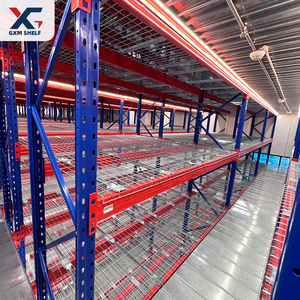
Warehouse Pallet Rack Shelving Industrial Heavy Storage System
Heavy-duty three-dimensional storage solution engineered for high-capacity warehouse operations requiring multi-tier structural rigidity.
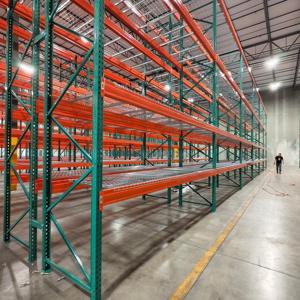
US Standard Warehouse Heavy Duty Pallet Racking System
Designed for high-throughput retail distribution hubs, accommodating standard US and Euro pallet configurations seamlessly.
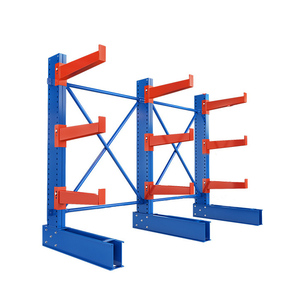
Structural Cantilever Racking for Timber & Profile Storage
Heavy structural steel arm cantilever system engineered for long loads, timber packages, and industrial steel tubing handling.
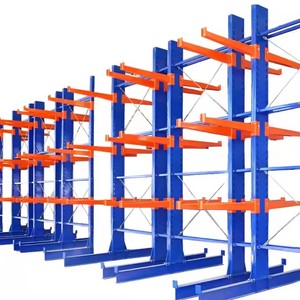
Heavy-Duty Cantilever Racks for Long Objects Storage
Unobstructed horizontal storage columns offering customized arm capacities and dynamic safety lock systems for heavy materials.
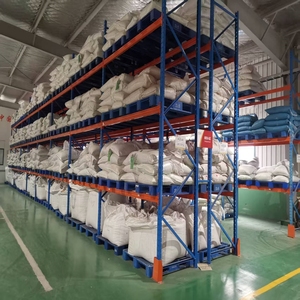
Custom 5-Layer US Teardrop Pallet Rack for Cold Storage
Punch-patterned teardrop racking custom-engineered for freezing conditions, high humidity, and intensive cold room logistics.
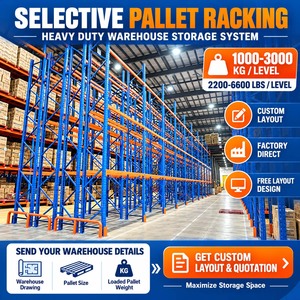
Heavy Duty Adjustable Steel Pallet Rack (1000kg-3000kg)
High-load beam adjustment system in 50mm pitch steps, built specifically to sustain intense forklift operations in commercial hubs.
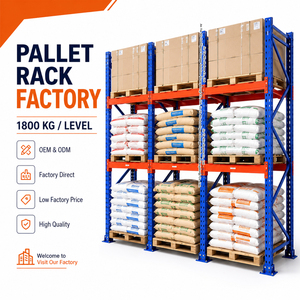
1800KG Capacity 3-Level Heavy Duty Beam Pallet Rack
Standardized structural beam assemblies engineered to carry up to 1800kg per level with minimal deflection tolerances.
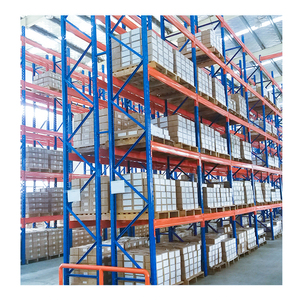
OEM Heavy Duty Steel Warehouse Pallet Shelving System
Factory-direct integrated industrial shelving solution, tailored for turnkey warehouse construction and expansion projects globally.
1. Kinematic Mechanics & Structural Physics of OEM Push Back Racking Systems
Push back pallet racking represents the apex of high-density Last-In, First-Out (LIFO) storage dynamics. Unlike static selective racking or friction-dependent gravity-flow systems, push back architecture relies on a series of nested, inclined cart assemblies that glide along structural steel rails anchored to load beams. When an initial pallet is deposited into a lane by a standard forklift, it rests on the top nested cart. As the operator loads a subsequent pallet, it physically pushes the first pallet backward, exposing the secondary cart beneath it.
From an OEM engineering perspective, controlling the coefficient of kinetic friction and maintaining structural equilibrium across a multi-lane, 2-to-6-pallet deep configuration requires micro-precision fabrication. The rail inclination is set precisely between 1.5° to 2.0° slope grade. This exact gradient ensures two critical operational parameters:
- Gravitational Velocity Control: When a front pallet is retrieved, gravity forces the trailing pallets forward to the pick face at a safe, controlled speed without requiring electric or pneumatic drives.
- Anti-Impact Safety Margin: The slope prevents excessive velocity accumulation (terminal velocity mitigation) that could otherwise destabilize high-stacked, unitized loads or damage the vertical upright columns.
OEM Engineering Rule: The nesting cart depth profile must be minimized vertically to preserve vertical cubic clear height, while retaining sufficient moment of inertia to resist torsional deflection under asymmetrical pallet placement.
2. Comparative Technical Matrix: High-Density Storage Evaluation
When procurement officers and warehouse logistics engineers evaluate storage technologies for fast-moving consumer goods (FMCG), cold storage facilities, or industrial manufacturing buffers, selecting the right system requires balancing storage density against SKU selectivity.
| Storage System Type | Volumetric Efficiency | SKU Selectivity | Operating Principle | Forklift Compatibility | Risk of Rack Damage |
|---|---|---|---|---|---|
| Push Back Racking (Nest Carts) | 75% – 85% | Medium (1 SKU per lane) | LIFO (Gravitational Push) | Standard Counterbalance / Reach | Very Low (Forklifts stay in aisle) |
| Drive-In Racking | 65% – 75% | Low (1 SKU per zone) | LIFO / FIFO | Specialized Narrow-Body Trucks | High (Forklifts enter rack structure) |
| Pallet Flow Racking (Rollers) | 80% – 90% | Medium (1 SKU per lane) | FIFO (Gravity Roller) | Standard Counterbalance / Reach | Low (Dedicated load/unload aisles) |
| Radio Shuttle Racking | 85% – 95% | Medium (1 SKU per lane) | LIFO & FIFO (Automated Shuttle) | Standard Counterbalance + Shuttle | Very Low (Minimal aisle interaction) |
| Selective Pallet Racking | 40% – 50% | 100% (Every pallet accessible) | Random Access | All Standard Forklift Types | Medium (High aisle traffic density) |
3. Modern Manufacturing & OEM Engineering Standards
As a global OEM/ODM manufacturer operating a 30,000 square meter production facility, our enterprise adherence to European and North American structural norms underpins every system exported worldwide. High-density push back systems demand far tighter manufacturing tolerances than conventional beam racking.
3.1 Steel Grade Selection & Cold-Roll Forming
Every upright column and structural cart rail is cold-roll formed from high-tensile structural steel (Q235B / Q355B grades, equivalent to S235JR and S355JR under EN 10025). The upright profile features a multi-ribbed cross-section designed to handle both axial compression forces and lateral bending moments induced by seismic events or accidental forklift contact.
3.2 Robotic Welding & Cart Alignment
Nesting cart frames must remain perfectly square across operating temperatures ranging from +40°C in ambient warehouses down to -30°C in blast freezing facilities. OEM automated robotic welding stations ensure 100% weld penetration along all structural joints. Precision bearing steel wheels equipped with sealed, low-temperature synthetic lubricants ensure smooth rolling performance without dynamic binding over long operational lifecycles.
3.3 Surface Finishing & Corrosion Prevention
All components undergo a 9-stage pre-treatment process, including phosphating and degreasing, followed by electrostatic thermosetting powder coating (average film thickness: 60 to 90 microns). For high-humidity or cold-room operations, hot-dip galvanizing (HDG) to ISO 1461 standards is available, providing sacrificial zinc protection that guarantees decades of maintenance-free service.
OEM Manufacturing Capability & Global Reliability
Combining factory-direct cost efficiencies with certified European structural compliance.
Factory-Direct Sourcing
Eliminate intermediary markups with direct access to our 30,000 m² automated manufacturing facility, achieving optimal cost per pallet position.
24-Hour CAD & 3D Engineering
Our structural engineers deliver initial 2D layout drawings, static calculations, and 3D simulation models within 24 hours of project intake.
Strict DIN EN & FEM Compliance
Designed strictly to DIN EN 15512, FEM 10.2.02, and ANSI/RMI MH16.1 specifications to guarantee safety and compliance during annual inspections.
Rapid 15-20 Day Lead Time
Streamlined supply chain logistics and high production volume capacity allow swift fulfillment of both standard and custom export orders.
4. Strategic Sourcing Trends & Future Evolution in Push Back Racking (2026–2030)
As global supply chains shift toward hyper-automation, sustainability compliance, and optimized cold-chain logistics, the specification criteria for push back racking systems are undergoing a technological transition. Procurement leaders and logistics directors must anticipate these key trends:
4.1 Integration with Autonomous Mobile Robots (AMRs) & AGVs
Traditional push back systems relied heavily on manual forklift driver placement, where the operator physically used the pallet load to push back preceding carts. Modern OEM designs incorporate sensor-guided cart alignment profiles and dynamic velocity dampers that seamlessly interface with automated guided vehicles (AGVs) and reach AMRs. Precise position alignment sensors prevent structural damage while enabling 24/7 dark-warehouse operations.
4.2 Cold-Chain Energy Optimization & High-Density Push Back Solutions
With energy costs for refrigerated and deep-freeze warehouses (-25°C to -30°C) rising globally, maximizing thermal cubic efficiency is a strategic imperative. Cold storage operators are replacing traditional drive-in racks with 4-to-6 deep push back cart systems. Push back racking eliminates vehicle entry heat contamination, decreases forklift transit times, and reduces cooling air volume per stored pallet by up to 40%.
4.3 Modular OEM Components & Eco-Steel Compliance
Future global tenders increasingly require proof of carbon footprint reduction and material circularity. Advanced OEM exporters are adopting green steel (produced via hydrogen-reduced sponge iron) paired with modular standard cart components. Standardizing cart frame dimensions across multiple rack depths enables rapid retrofitting, allowing warehouses to reconfigure 2-deep lanes into 4-deep systems as SKU profiles evolve.
4.4 Smart IoT Load Monitoring & Deformation Tracking
Next-generation OEM push back installations feature integrated IoT strain gauge sensors mounted on main load-bearing beams and slope rails. Real-time telemetry alerts facility managers to uneven load distribution, accidental dynamic impact over-stressing, or rail displacement, preventing catastrophic failures before they occur and simplifying compliance under DGUV 108-007 inspection protocols.
From Engineering Floor Plan to Site Handover
A transparent, documented 5-step process guaranteeing structural integrity and compliance.
Data & Site Audit
Analysis of hall drawings, slab load capacity, forklift specifications, and pallet dimensional profiles.
CAD & FEM Modeling
Generation of 2D engineering layouts, 3D cart clearance checks, and static deflection calculations.
Precision Roll-Forming
Automated manufacturing, robotic welding, and 9-stage powder coating under ISO 9001 audit.
Global Export Freight
Export packaging with protective strapping, corner guards, and container loading supervision.
Installation & Sign-Off
On-site assembly guidance, supply of load rating plaques, and DGUV inspection documentation.
Frequently Asked Questions on Push Back Racking Procurement
Direct technical answers addressing system mechanics, safety standards, and factory customization.
Optimize Your Warehouse Volumetric Efficiency Today
Send your floor plan, pallet specs, and storage capacity targets to our engineering team for a zero-cost 24-hour CAD layout and structural quotation.