High-Performance Custom Storage & Pallet Racking Systems
Precision-engineered cold-formed steel racking solutions manufactured for maximum volumetric efficiency, structural compliance, and dynamic heavy-duty payloads.
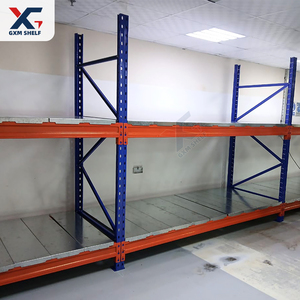
GXM Adjustable Stainless Steel Pallet Rack System Boltless Storage Shelving
- Grade 304/316 Stainless Steel
- Boltless Beam Pitch Adjustment
- Corrosion-Proof Cleanroom Finish
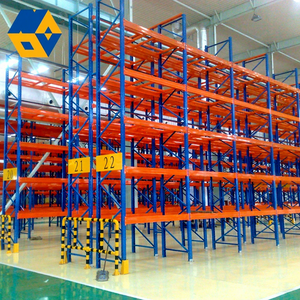
Customized Competitive Industrial Heavy Duty Steel Selective Pallet Rack
- High-Yield Q355B Structural Steel
- Load Capacity: Up to 4,500 kg/level
- ISO 9001 & FEM Certified
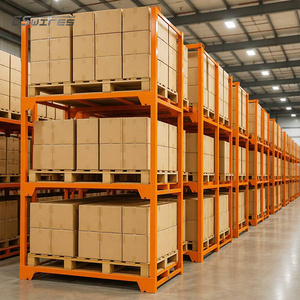
Heavy Duty Nestainer Metal Portable Steel Stacking Pallet Frames
- Stackable Nesting Configuration
- Bulk Bulk-Cargo Flexibility
- Hot-Dip Galvanized / Powder Coated
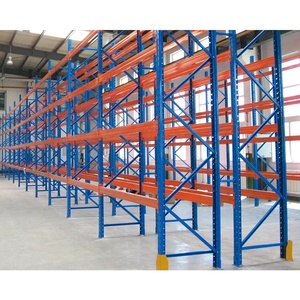
Customized Industrial Pallet Rack with Integrated Safety Protection Systems
- Integrated Post Protectors & Barrier
- DIN EN 15635 Inspection Ready
- Seismic-Reinforced Frame Footings
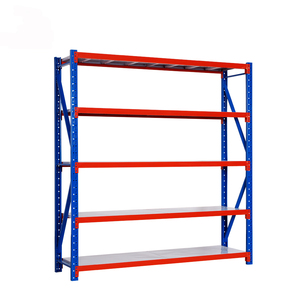
500kg Loading Capacity Medium Duty Longspan Warehouse Storage Rack
- 500 kg Payload Uniform Distributed
- Adjustable Step Beam Levels
- Ideal for E-Commerce & Manual Pick
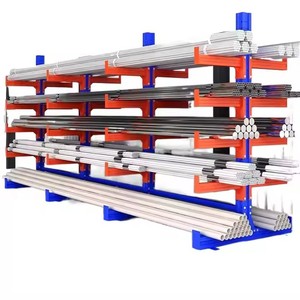
Heavy Duty Cantilever Racking System for Pipe & Lumber Storage
- Single & Double-Sided Columns
- Unobstructed Long-Goods Access
- Heavy Structural H-Beam Construction
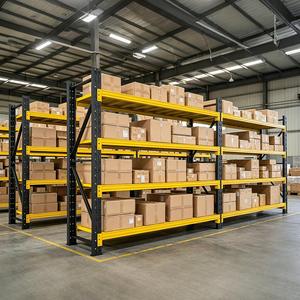
Adjustable Boltless 4-Layer Long Span Industrial Steel Shelving Unit
- Rapid Interlocking Assembly
- Steel or Particle Board Decking
- Modular Scalable Bays
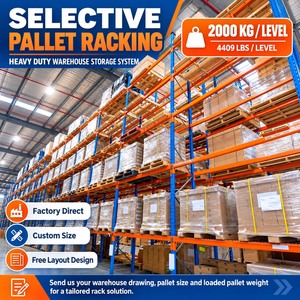
Industrial Heavy Duty Adjustable Storage Pallet Racking System OEM
- Tailored Upright Geometry & Profiles
- Automated Roll-Forming Precision
- TUV & ISO Standard Compliance
Engineering Architecture of Custom OEM Industrial Racking Systems
In modern high-bay logistics, procurement managers and supply chain directors must balance volumetric footprint maximization against structural engineering integrity. Custom OEM warehouse racking solutions represent far more than cold-rolled steel channels hooked onto vertical uprights; they constitute load-bearing structural ecosystems subjected to static payload stresses, dynamic mechanical impacts, environmental thermal fluctuations, and local seismic forces. As a leading manufacturer and exporter, our engineering methodology utilizes advanced Finite Element Analysis (FEA) software to calculate elastic-plastic deformation under maximum load limits according to international frameworks including FEM 10.2.02, DIN EN 15512, ANSI/RMI MH16.1, and AS4084-2012.
Selecting the correct steel composition forms the structural bedrock of industrial safety. Standard commercial racking frequently utilizes basic Q235 cold-rolled steel, which yields an approximate tensile yield strength of 235 MPa. However, for high-capacity selective pallet racking, deep-reach shuttle lanes, and self-supporting rack-clad buildings, our factory standard integrates premium Q355B (equivalent to S355JR structural steel), delivering a minimum yield strength of 355 MPa. This 51% increase in yield threshold permits thinner profile gauges without compromising load-bearing limits, effectively reducing overall shipping tare weight while augmenting structural stability factors up to 1.95:1.
Technical Knowledge Gain: Beam Connector Claw Engineering
The beam-to-upright connection geometry determines frame sway resistance and structural rigidity. Our proprietary OEM design utilizes a 4-hook or 5-hook cold-punched connector claw with a tapered wedge engagement. As payload increases, gravity forces the connector tighter into the teardrop or Omega upright slots, creating a semi-rigid joint that drastically mitigates longitudinal frame deflection under heavy forklift operation.
Structural Comparison & Metallurgical Integrity Parameters
When specifying structural racking for multinational distribution centers, understanding material properties and surface protection coatings is essential for total cost of ownership (TCO) evaluation. Below is an engineering parameter matrix comparing our OEM structural specs against conventional commodity racking.
| Engineering Metric | Standard Commodity Racking | StahlRack Custom OEM Engineering |
|---|---|---|
| Steel Yield Strength | Q235 / SS400 (235 MPa) | Q355B / S355JR (355 MPa) High-Yield |
| Beam Deflection Limit | L / 180 Max Deflection | L / 200 Standard (Up to L / 300 for AS/RS) |
| Coating Technology | Single-pass Dry Powder (40-50µ) | 26-Stage Pre-Treatment + Epoxy Electrostatic (70-90µ) |
| Safety Factor Metric | 1.35 to 1.50 Nominal | 1.65 to 1.95 Engineering Certified Safety Factor |
| Welding Compliance | Manual Spot Welding | Robotic OTC Pulse Welding (AWS D1.1 Compliant) |
Why Global Logistics Operators Partner with Our Manufacturing Hub
Operating a 30,000 square meter automated manufacturing facility since 1997, we provide direct exporter benefits, rapid turnarounds, and rigorous engineering compliance for international enterprise projects.
Direct Factory Cost Structure
Eliminate intermediary trading margins. By sourcing steel directly from state-owned steel mills in bulk coils, we pass 15-22% structural material savings directly to overseas project developers.
Rapid CAD & 3D Modeling (24h)
Our in-house structural engineering department generates full DWG layout schematics, 3D BIM models, and capacity calculations within 24 hours of receiving warehouse slab dimensions.
ISO 9001 & International Quality Audit
Every batch undergoes ultrasonic weld testing, coating thickness micrometer audits, and mechanical destruction tests to verify structural compliance under European FEM and American RMI guidelines.
Global OEM/ODM Customization
From custom powder-coating RAL colors to specialized post profiles, beam lengths, step heights, and OEM branded safety signage, we deliver fully customized white-label solutions.
Turnkey Export Logistics & Packing
Export-ready steel strapping, protective bubble wrap, wooden block cushioning, and containerized loading blueprints maximize freight volume efficiency and prevent ocean transit damage.
Complete Lifetime Project Warranty
We provide long-term structural warranties across our heavy-duty pallet racking and mezzanine lines, backed by accessible spare parts support and technical site guidance.
Future Procurement Trends & Racking Development Trajectory
Analyzing key technology shifts, automation integrations, and sustainability standards transforming global industrial warehousing procurement over the next decade.
1. Convergence with Autonomous Mobile Robots (AMR) & AS/RS
Traditional static racking is rapidly evolving into dynamic interface structures designed for Automated Storage and Retrieval Systems (AS/RS) and AMR fleets. Procurement teams are moving away from wide-aisle conventional selective racking toward millimeter-precision Radio Shuttle lanes and Very Narrow Aisle (VNA) systems. These designs require tighter installation tolerances (referencing DIN EN 15620 Class 300 standards) to ensure automated guide vehicles and shuttle carts operate without mechanical jamming.
2. Green Steel Sourcing & Zero-VOC Powder Coatings
Scope 3 carbon emission compliance is becoming a mandatory benchmark for enterprise buyers in Europe and North America. Procurement specifications now prioritize racking manufacturers utilizing electric arc furnace (EAF) green steel and non-toxic, Zero-VOC thermosetting epoxy powder coatings. Additionally, lightweight high-yield structural profiles (such as Q355B and Q460 steel grades) reduce raw steel volume requirements while maintaining certified structural payload capacity.
3. Advanced Seismic Engineering & Dynamic Load Resilience
Global logistics expansion in seismic zones across Europe, Latin America, and Asia-Pacific has driven strict adoption of Eurocode 8 and ANSI/RMI MH16.1 seismic design standards. Modern OEM procurement mandates dynamic response spectrum analysis to withstand horizontal ground acceleration. Custom upright footplates, heavy-duty floor anchor bolts, and reinforced diagonal frame bracing are now standard requirements rather than optional add-ons.
4. IoT Strain Sensors & Automated Safety Monitoring
The future of industrial racking incorporates smart structural health monitoring. OEM racking factories are integrating strain gauge sensors, laser deflection indicators, and micro-impact telemetry directly into upright post guards. These systems stream real-time structural health data into warehouse management software (WMS), alerting facility managers to forklift collision damage instantly in accordance with DGUV 108-007 and DIN EN 15635 inspection protocols.
Frequently Asked Questions on Custom OEM Racking Procurement
Direct technical answers to common questions raised by warehouse logistics managers, procurement directors, and structural engineers during project sourcing.
How does steel grade selection (Q235 vs Q355) affect structural payload and cost?
Q355 steel features a yield strength of 355 MPa compared to 235 MPa for Q235. Utilizing Q355 allows engineers to design upright profiles with thinner wall thicknesses while achieving higher allowable bending moments and load capacities. This reduces structural deadweight, lowers international shipping container costs, and provides superior resistance against permanent plastic deformation during operational impacts.
What international standards govern heavy-duty industrial pallet racking design?
Industrial pallet racking systems must comply with regional structural engineering standards. In Europe, key standards include DIN EN 15512 (structural design), DIN EN 15620 (tolerances and clearances), and DIN EN 15635 (application and maintenance). In North America, ANSI/RMI MH16.1 applies, while Australia enforces AS4084-2012. Our OEM factory produces racking certified to all four major standards.
What floor slab conditions are required before installing heavy-duty pallet racks?
Concrete floor slabs must possess adequate compressive strength (typically C20/25 or C25/30 grade minimum) and slab thickness (minimum 150 mm to 200 mm) to support point loads exerted by racking baseplates. Furthermore, floor levelness must conform to DIN 18202 or VDMA guidelines to prevent frame lean, especially in high-bay setups exceeding 6 meters in height.
What is the lead time for custom OEM manufacturing and export delivery?
Standard custom pallet racking and medium-duty longspan orders are manufactured within 15 to 20 days following final CAD layout approval. Custom OEM roll-forming or non-standard powder coat colors require approximately 20 to 25 days. Ocean freight lead times vary by regional port destination, typically ranging from 14 days (Southeast Asia) to 28-35 days (Europe and North America).
How do Radio Shuttle racks compare to traditional Drive-In racking?
Drive-In racking requires forklifts to physically drive inside the racking bays, increasing the risk of structural frame impact damage and limiting stock rotation to LIFO (Last-In, First-Out). Radio Shuttle racking uses automated shuttle carts inside storage channels, eliminating forklift entry, reducing retrieval times by up to 50%, enabling both FIFO and LIFO operations, and significantly extending racking lifespan.
What packaging protections are applied to prevent ocean freight corrosion?
All upright columns and step beams are bundled using high-tensile steel straps, backed by wooden dunnage cradles, corner protective edge boards, and heavy-duty VCI anti-corrosion stretch wrap. Steel components destined for high-humidity transit routes receive electro-galvanized or hot-dip galvanized surface treatments tested to ISO 9227 salt spray resistance standards.