Featured Industrial Pallet Racking & Heavy-Duty Shelving Systems
Structural Metallurgy & Mechanics of Pallet Shelving Systems
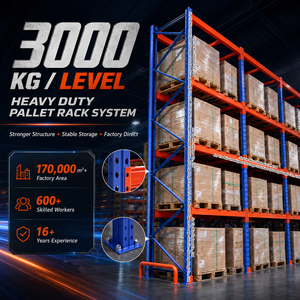
Selecting the correct warehouse pallet shelving system is not merely a purchasing exercise—it is a critical structural engineering decision that impacts total operational safety, inventory throughput, and long-term yield on capital investment. Industrial racking structures must withstand complex dynamic loads, asymmetric impact forces from material handling equipment (MHE), and localized seismic vibrations.
High-Tensile Steel Profiles: Q235B vs. Q355B Cold-Rolled Structural Steel
The structural integrity of heavy-duty pallet racks depends heavily on steel metallurgy. Standard commercial shelving often utilizes basic hot-rolled structural steel; however, top-tier pallet rack manufacturers employ high-tensile cold-rolled steel profiles (typically grade Q235B or Q355B, equivalent to European S235JR and S355JR). Cold-rolling enhances yield strength by inducing work hardening, allowing thinner profile walls to support significantly higher structural loads without sacrificing buckling resistance.
Upright profile geometry features continuous multi-ribbed section folds (up to 12-16 distinct bend radius points per column profile). This geometric stiffening drastically increases torsional rigidity and the critical Euler buckling load ($P_{cr} = \frac{\pi^2 E I}{(K L)^2}$). Beam-to-column connections utilize multi-claw teardrop or diamond connector brackets equipped with mechanical safety lock pins to prevent accidental dislodgement during vertical forklift maneuvering.
Engineering Excellence & Manufacturing Competency
Precision Roll-Forming
Automated continuous roll-forming lines with inline CNC punch punching ensure pitch tolerances within ±0.1mm, facilitating perfect beam engagement and modular adjustability.
Robotic Welding Systems
Dual-arm Panasonic robotic MIG welding stations produce continuous structural welds on beam end connectors, eliminating stress concentration points and material fatigue.
DIN EN 15512 Compliance
Calculated via advanced Finite Element Analysis (FEA) computer simulations to verify structural safety factors under dead loads, live loads, and seismic horizontal sway forces.
Racking System Selection Architecture & Technical Comparison
To assist warehouse planners and intralogistics procurement managers in identifying the optimal spatial utilization configuration, the matrix below details operational performance metrics across top structural racking classifications:
| Storage Racking System | Pallet Access Rate | Floor Space Utilization | SKU Selectivity | Stock Management Type | Recommended Application |
|---|---|---|---|---|---|
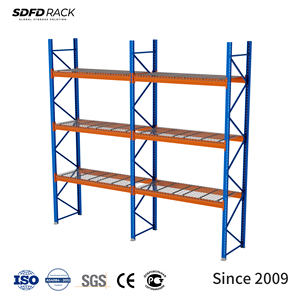
| Selective Pallet Racking | 100% Direct Access | 40% - 50% | Maximum (High SKU Diversity) | FIFO (First-In, First-Out) | General Distribution & FMCG Logistics |
| Double-Deep Pallet Racking | 50% Immediate Access | 55% - 65% | Medium SKU Diversity | LIFO (Last-In, First-Out) | Cold Storage & Batch Manufacturing |
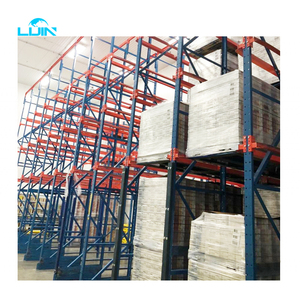
| Drive-In / Drive-Thru Rack | Lane Access Only | 65% - 75% | Low SKU / High Density | LIFO / FIFO Option | Bulk Homogeneous Goods & Seasonal Warehousing |
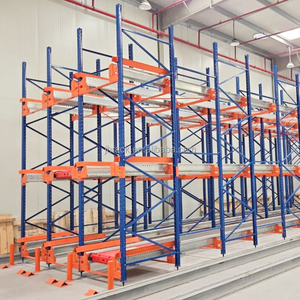
| Automated Radio Shuttle Rack | Automated Channel Access | 80% - 85% | High Density / Moderate SKUs | FIFO / LIFO Software Controlled | Deep-Freeze Warehouses & Automated Hubs |
| Very Narrow Aisle (VNA) Rack | 100% Direct Access | 60% - 70% | Maximum SKU Selectivity | FIFO | High-Bay Distribution Centers (>12m Height) |
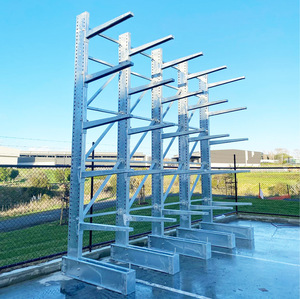
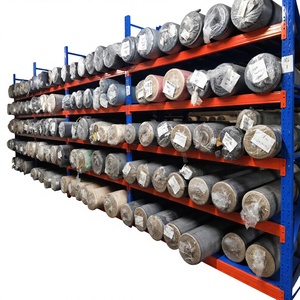
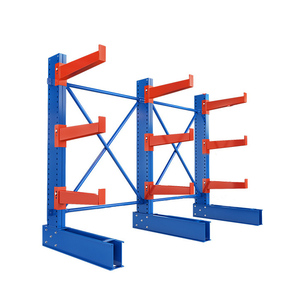
| Heavy-Duty Cantilever Rack | Direct Arm Access | N/A (Linear Storage) | Unrestricted Length Handling | Any Stock Strategy | Timber, Steel Pipes, Aluminum Profiles & Sheet Metal |
Future Procurement & Intralogistics Trends (2026–2030)
The industrial warehousing sector is undergoing a rapid transition toward automated, high-density, and smart digitalized infrastructure. Procurement teams must account for future scalability and technical compatibility with modern warehouse technology when procuring traditional racking hardware:
1. Integration with Autonomous Mobile Robots (AMR) & AS/RS Systems
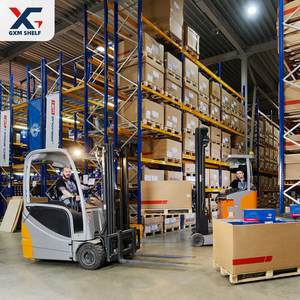
Manual forklift operation is increasingly augmented or replaced by Autonomous Mobile Robots (AMRs), Automated Guided Vehicles (AGVs), and Automated Storage and Retrieval Systems (AS/RS). Modern pallet racking systems require precise tolerances (±1.0mm vertical beam straightness) and floor anchoring specifications to accommodate laser guidance sensors and automated pallet shuttles.
2. Structural Telemetry & IoT-Enabled Rack Monitoring
Next-generation warehouse safety standards rely on integrated strain gauges, piezoelectric impact sensors, and wireless IoT nodes embedded directly within critical upright bases. These smart sensors alert facility operators in real-time to structural overload events or forklift collision damage before mechanical failure occurs, ensuring full compliance with European DIN EN 15635 rack maintenance directives.
3. Sustainable Steel Procurement & Low-VOC Powder Coating
Global ESG metrics mandate transparent carbon accounting across the supply chain. Leading manufacturers prioritize decarbonized green steel billets processed in Electric Arc Furnaces (EAF) powered by renewable energy. Furthermore, surface finishing lines utilize 100% heavy-metal-free, low-VOC electrostatic epoxy powder coatings that exceed 500-hour salt spray corrosion testing standards (ISO 9227).
Why Direct Global Sourcing from Our Factory Superiorates Competitors
With over 25 years of continuous manufacturing experience operating a state-of-the-art 30,000 square meter industrial complex, our engineering organization provides turnkey intralogistics manufacturing capabilities:
Factory-Direct Pricing Advantage
By eliminating middleman trading commissions and sourcing raw steel directly from tier-1 steel mills, we offer competitive direct unit pricing without compromising raw steel wall thickness or structural density.
Free 24-Hour CAD & 3D BIM Service
Our structural engineering team produces customized AutoCAD floor layouts, structural load safety calculations, and 3D BIM models within 24 hours of receiving warehouse floor specs.
Rapid 15–20 Day Production Cycles
Equipped with automated continuous roll-forming lines and robotic welding bays, standard container-load orders are manufactured and quality-inspected within 15 to 20 business days.
Warehouse Pallet Racking Procurement FAQ
Request Your Free Technical CAD Engineering & Quotation
Consult directly with our structural intralogistics engineers to receive customized AutoCAD layout drawings, static load calculations, and competitive direct factory pricing within 24 hours.