Engineered Industrial Racking & Heavy-Duty Storage Systems
Explore our export-ready, high-capacity racking solutions compliant with global standards including FEM 10.2.02, DIN EN 15512, and RMI MH16.1 specifications.
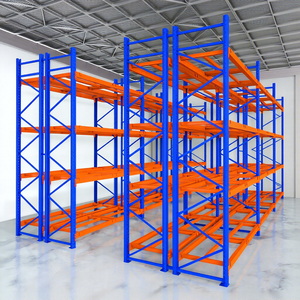
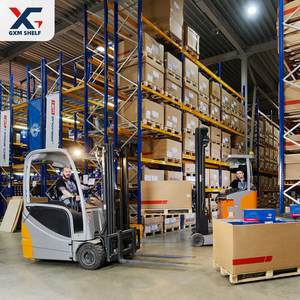
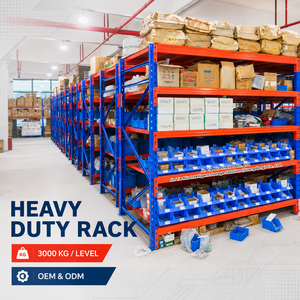
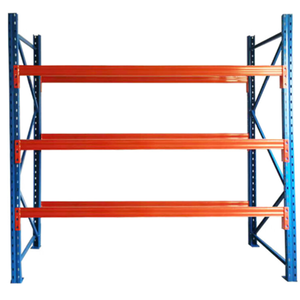
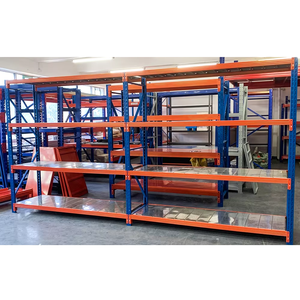
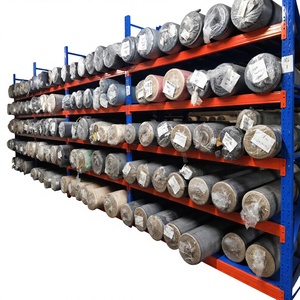
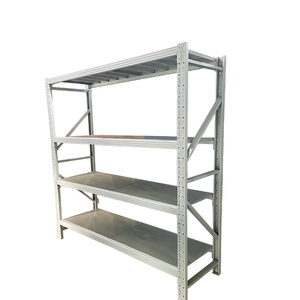
Strategic Evaluation Framework for Top Global Racking Exporters
When enterprise procurement officers and logistics operations directors source industrial warehouse racking systems globally, navigating the complex spectrum of engineering standards, cold-formed steel metallurgy, and structural safety parameters is paramount. The selection of a top-tier warehouse racking exporter extends beyond initial capital expenditure (CapEx) metrics—it directly impacts structural safety margins, inventory throughput efficiency, operational risk management, and long-term facility ROI.
Leading global manufacturers utilize advanced high-yield cold-rolled steel grades, such as Q235B and Q355B (equivalent to European S235JR and S355JR), featuring specialized stress-strain performance curves. Key structural evaluations must consider section modulus, frame buckling resistance under maximum vertical and seismic loading combinations, and structural connection dynamics. High-tier exporters engineer beam-to-column connectors with multi-claw safety locks to prevent accidental dislodgement caused by forklift impact.
FEA & Load Simulation
Advanced Finite Element Analysis modeling verifies structural integrity under static, dynamic, and seismic forces before physical roll-forming begins.
Tolerance Control
Automatic continuous roll-forming lines guarantee precision section geometries within ±0.5mm, eliminating structural eccentricity on multi-tier installations.
Surface Protection
Automated thermosetting electrostatic powder coating (60–80 micron thickness) provides superior chemical resistance and abrasion durability.
Furthermore, global compliance frameworks require full adherence to international structural standards. Tier-1 exporters design according to European FEM 10.2.02 and DIN EN 15512 guidelines, North American RMI (Rack Manufacturers Institute) MH16.1 standards, and Australian AS4084-2012 codes. Procurement teams must request third-party structural calculation certificates and mill test reports (MTRs) to verify raw material authenticity and yield strength compliance.
Comparative Matrix: Top Global Racking Exporter Engineering Capabilities
To assist supply chain managers in vendor shortlisting, the following structural performance and manufacturing capability matrix benchmarks premier global warehouse racking exporters across key industrial criteria:
| Manufacturer Attribute | Tier-1 Exporters (Our Benchmark) | Standard Regional Suppliers | Low-Cost Commodity Suppliers |
|---|---|---|---|
| Steel Grade Selection | Certified High-Yield Q235B / Q355B Cold-Rolled Steel | Standard Commercial Grade Q235 Steel | Uncertified Recycled / Scrap Steel Blends |
| Engineering Standards | FEM 10.2.02, DIN EN 15512, RMI MH16.1, AS4084 | Local Regional Codes Only | Non-Certified Proprietary Layouts |
| Structural Calculation | Project-Specific FEA & 3D Load Deflection Modeling | Generic Load Calculation Tables | No FEA Data Provided |
| Surface Treatment | 9-Stage Pre-treatment + Electrostatic Epoxy Powder (60-80μm) | Basic Spray Paint / Single-Pass Powder Coating | Air-Dried Synthetic Enamel Paint |
| Manufacturing Precision | Automated Robotic Welding & CNC Punching (±0.2mm) | Semi-Automated Machine Welding | Manual Welding & Hand Punching |
| Global Compliance | ISO 9001, CE, DGUV 108-007 Ready, Full Traceability | ISO 9001 Only | No Formal Quality Certifications |
Selecting a qualified vendor based on these rigorous metrics protects warehouse assets against progressive collapse risks, reduces annual maintenance expenses, and ensures compatibility with high-density automated handling equipment such as VNA trucks, Reach Trucks, and Radio Shuttles.
Future Procurement Trends in Industrial Storage & Intralogistics
The global warehouse management landscape is undergoing a massive paradigm shift driven by e-commerce velocity, supply chain volatility, land scarcity, and labor cost escalation. As logistics operators transition from traditional manual storage to fully automated, technology-driven intralogistics ecosystems, key procurement trends are defining the future of industrial racking export:
1. Convergence of AS/RS and Four-Way Shuttle Systems
High-density storage is moving rapidly beyond traditional selective racking toward fully automated 4-way radio shuttle systems and Automated Storage and Retrieval Systems (AS/RS). Modern racking frameworks serve as structural guides for high-speed autonomous vehicles, demanding millimeter-accurate rack tolerances (DIN EN 15620 Class 100/200). Exporters with integrated R&D teams capable of producing cold-formed rack structures specifically designed to withstand the rapid acceleration and dynamic braking loads of automated shuttles possess a decisive competitive advantage.
2. Sustainability & Green Steel Initiatives
Corporate ESG commitments are driving buyers toward suppliers operating carbon-neutral production processes. Future-focused racking manufacturers utilize energy-efficient continuous roll-forming systems, closed-loop water recycled pre-treatment lines, and low-VOC powder coatings. Furthermore, the sourcing of low-carbon "Green Steel" manufactured via electric arc furnaces (EAF) powered by renewable energy sources is rapidly becoming a key evaluation parameter in global tenders.
3. Modular Reconfigurability and Agility
Supply chain agility requires warehouse storage systems that can be rapidly modified, expanded, or relocated without structural degradation. Modern boltless adjustable racking systems engineered with 50mm pitch increment beam adjustment enable logistics managers to reconfigure shelf heights on demand, optimizing vertical space utilization as SKU velocity profiles change.
Why Industry Leaders Partner with Our Export Engineering Division
As a benchmark manufacturer and direct exporter of industrial warehouse racking, our enterprise combines state-of-the-art manufacturing automation with deep structural engineering expertise. Operating out of a modern 30,000m² manufacturing facility, we manage the complete value chain from hot-rolled coil slitting to precision cold roll-forming, automated robotic welding, electrostatic powder coating, and international container packaging.
Free 24h CAD & 3D Planning
Our certified structural engineers deliver customized 2D warehouse layouts, structural load calculations, and 3D spatial models within 24 hours of receiving floor plans.
15-Day Rapid Production
With high-speed automated roll-forming lines and raw material buffer stocks, standard pallet racking orders are manufactured and ocean-packed within 15–20 days.
Turnkey Global Service
From factory pre-assembly testing to export container packing, customs clearance support, and detailed installation manuals, we guarantee flawless project execution.
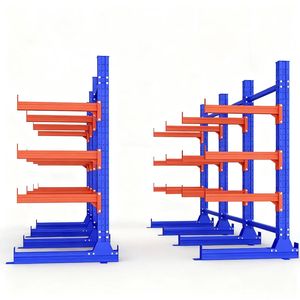
Whether designing high-bay pallet racking for Euro pallets (1200x800mm) or industrial pallets (1200x1000mm), medium-duty shelving for e-commerce picking, longspan heavy cantilever racks for pipe storage, or multi-tier mezzanine floors, our engineering team ensures optimized load distribution and maximum volumetric floor utilization.
Technical Procurement FAQ: Racking Engineering & Export Guidelines
Find authoritative engineering answers to the common questions raised by warehouse facility managers, structural consultants, and global procurement teams:
Our pallet racking systems are engineered primarily in accordance with European FEM 10.2.02 design rules, codified under DIN EN 15512 (Adjustable Pallet Racking Structural Design). Installation tolerances comply with DIN EN 15620. For American and Australian export projects, structures are designed to ANSI/RMI MH16.1 and AS4084-2012 specifications, respectively. Structural calculation documentation accompanies every major enterprise order.
Under full nominal static loading, standard beam deflection must not exceed L/200 (where L is the clear span length of the beam). For automated handling environments or sensitive loads, we engineer high-stiffness beam profiles restricted to L/300 deflection limits to prevent horizontal structural binding and ensure automatic positioning accuracy for automated guided vehicles (AGVs).
Safety regulations dictate mandatory annual inspections by qualified personnel. To minimize operational damage and pass inspections effortlessly, our systems feature heavy-duty floor-anchored column protectors, frame end barriers, beam safety lock pins, and high-visibility load signage clearly indicating maximum permissible bay load and shelf level capacities.
For standard dry distribution centers, electrostatic epoxy powder coating (60–80 microns) offers excellent corrosion resistance and color coding. For cold storage (-30°C), high-humidity environments, or outdoor chemical storage, hot-dip galvanizing (HDG) conforming to ISO 1461 is highly recommended to provide sacrificial zinc protection against corrosion and moisture degradation.
All racking components are bundled using specialized steel strapping, corner protectors, and protective plastic wrap. Frames and beams are nested to maximize container cube utilization and prevent metal-to-metal rubbing during sea transit. Hardware and small fittings are boxed and palletized for safe forklift unloading.
Optimize Your Warehouse Storage Capacity Today
Send your CAD drawing or pallet specification to our structural engineering team for a free layout optimization proposal within 24 hours.