Engineered Warehouse Racking & Pallet Shelving Range
Direct factory supply of heavy-duty, high-density industrial racking systems tailored for global warehouse distribution centers and cold storage logistics.

Why Partner with a Top China Pallet Shelving Exporter
Combining state-of-the-art steel rolling technology with international engineering standards to deliver high-yield intralogistics infrastructure worldwide.
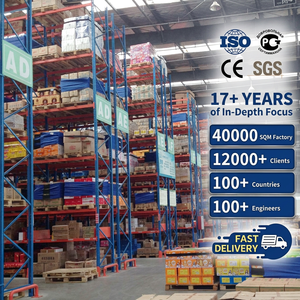
30,000 m² Manufacturing Facility
Equipped with fully automated continuous cold-roll forming lines, robotic welding stations, and automated powder coating lines capable of processing over 50,000 tons of high-tensile steel annually.
Strict Quality & International Standards
Engineered strictly to FEM 10.2.02, DIN EN 15512, ANSI/RMI MH16.1, and AS4084-2012 specifications. ISO 9001:2015 certified production ensures zero-defect structural integrity.
Rapid 15-20 Day Delivery Schedule
Streamlined supply chain management and standardized steel inventory ensure standard bulk order production completion within 15 to 20 days, backing urgent warehouse expansions.
24-Hour Free Engineering & CAD Planning
In-house structural engineers supply precise 2D CAD layouts, 3D structural models, and load-bearing calculations within 24 hours of site parameter submission.
Engineering Excellence: Structural Metallurgy and Design Metrics
When sourcing industrial pallet racking and heavy-duty shelving systems from China, evaluating structural integrity goes far beyond simple physical dimensions. Modern intralogistics facilities require engineered storage solutions capable of withstanding dynamic fork-truck impacts, seismic load transfers, and continuous peak-load operation without elastic deformation or structural fatigue.
Top China pallet shelving manufacturers utilize prime cold-rolled steel coils (typically grades Q235B and high-yield Q355B, equivalent to SS400 and S355JR). The mechanical yield strength of Q355B steel (355 MPa) enables engineers to design lighter yet structurally stiffer upright profiles, drastically lowering freight mass while increasing ultimate rack load capacities.
Information Gain Key Metric: Structural deflection limits under maximum allowable load should never exceed L/200 (where L is the clear beam length). Industrial racking certified to DIN EN 15512 incorporates a structural safety factor of 1.4 for live loads and 1.5 for material yield stress.
Comparison Analysis: Structural Racking vs. Standard Selective Racking
Choosing the correct rack architectural framework determines the Total Cost of Ownership (TCO) and long-term operating safety of your facility. Below is a technical comparison of standard industrial racking formats manufactured in China:
| Racking Architecture | Primary Steel Profile | Load Capacity per Level | Aisle Width Requirement | Ideal Logistics Scenario |
|---|---|---|---|---|
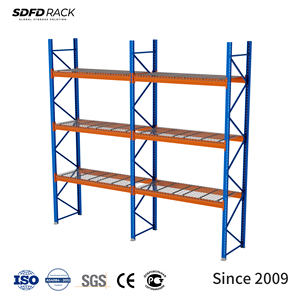
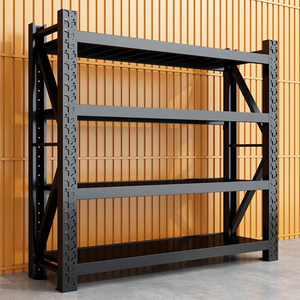
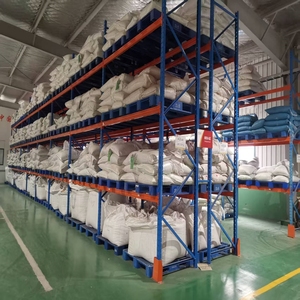
| Selective Pallet Racking | Cold-Formed Omega Upright & Box Beam | 1,000 kg – 4,500 kg | 3.0 m – 3.5 m (Standard Truck) | 100% direct selectivity; high-SKU operations. |
| US Teardrop Racking | Punch-Pattern Upright & Step Beam | 1,000 kg – 3,500 kg | 3.0 m – 3.5 m (Standard Truck) | North American standard compliance; universal compatibility. |
| Very Narrow Aisle (VNA) | Precision Heavy-Duty Upright Profile | 1,500 kg – 4,000 kg | 1.5 m – 1.8 m (VNA Turret Truck) | Maximum vertical space utilization; high cubic density. |
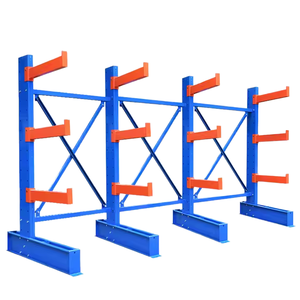
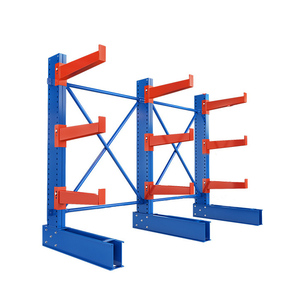
| Heavy Industrial Cantilever | Hot-Rolled H-Beam Column & Arm | 500 kg – 3,000 kg / Arm | Variable (Side Loader / Forklift) | Long, bulky items: timber, steel pipes, plastic extrusions. |
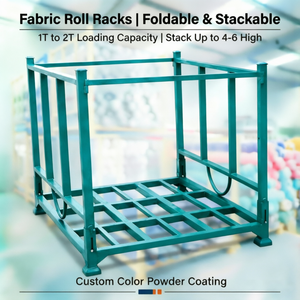
| Stackable Fabric & Specialty Racks | Tubular Steel Frame & Base Socket | 800 kg – 2,000 kg | Flexible Open Floor | Textile rolls, coils, seasonal overflow, stackable unit loads. |
Surface Finishing & Corrosion Protection Mechanics
The operational environment of a warehouse directly dictates the required surface protection. Leading Chinese exporters implement automated pre-treatment processes consisting of a 7-stage degreasing, zinc-phosphating, and deionized water rinsing line before applying electrostatic powder coating.
- Thermosetting Epoxy-Polyester Powder Coating: Applied at 80 to 110 microns thickness, heat-cured at 200°C. Delivers exceptional abrasion resistance against fork-tine impacts in standard ambient warehouses.
- Hot-Dip Galvanizing (HDG): Conforming to ISO 1461, structural steel components are immersed in molten zinc at 450°C, forming a metallurgical bond of zinc-iron alloy layers (minimum 65–85 microns thick). Crucial for cold storage facilities (-30°C), outdoor lumber yards, and corrosive chemical environments.
Future B2B Procurement Trends in Global Racking Sourcing (2026–2030)
As global supply chains navigate economic volatility, shift toward nearshoring strategies, and prioritize carbon footprint mitigation, the procurement landscape for warehouse storage equipment is undergoing a major transformation. Procurement teams must adjust their strategic playbooks to account for several key macro trends when sourcing racking from Chinese manufacturers.
Hybrid Sourcing & Supply Chain Resilience
Enterprise logistics operators are moving away from spot purchasing toward long-term framework contracts with tier-1 Chinese manufacturers. This strategy secures guaranteed steel mill pricing, locked production slots, and standardized engineering specs across global warehouse networks.
Total Cost of Ownership (TCO) Prioritization
Initial CapEx is no longer the sole decision metric. Sourcing managers evaluate total operational expenses, including rack installation speed, long-term structural maintenance costs, availability of standardized replacement components, and salvage/recycling value.
Digital Twin & BIM Integration
Top China exporters now provide fully integrated Building Information Modeling (BIM) files (Revit, IFC formats) alongside standard 2D CAD files. Sourcing teams use these digital twins to simulate automated material handling equipment clearance before steel fabrication begins.
Decarbonization & Green Steel Sourcing
With regulatory frameworks like Europe’s Carbon Border Adjustment Mechanism (CBAM) expanding, leading exporters are introducing EPD (Environmental Product Declarations) and sourcing steel from electric arc furnace (EAF) mills powered by renewable energy.
Next-Gen Racking Technology & Product Development Trends
The fast-paced growth of automated fulfillment centers, e-commerce mega-hubs, and micro-fulfillment nodes is reshaping product design standards for industrial racking. Future-proof pallet racking systems must seamlessly integrate with robotic automation and intelligent intralogistics ecosystems.
1. Automated Storage and Retrieval System (AS/RS) Compatibility
Conventional selective pallet racks are increasingly giving way to ultra-precise AS/RS structural frameworks. Key design adjustments include tighter manufacturing tolerances (upright straightness deviation within 1/1000 of length), specialized beam profile stiffness to minimize deflection during crane extraction, and integrated guide rails for stacker cranes and shuttle vehicles.
2. High-Density Radio Shuttle & Multi-Directional Pallet Runners
Radio shuttle racking represents the fastest-growing automated storage segment exported from China. Utilizing self-powered semi-automated shuttles that ride inside deep racking channels, these systems eliminate the need for forklifts to enter storage aisles. Advanced developments focus on multi-directional 4-way shuttles capable of navigating across horizontal racking tiers and vertical lifts, maximizing space utilization by up to 85%.
3. Integration with Autonomous Mobile Robots (AMRs) and AGVs
Modern warehouse layouts blend traditional racking with AMR fleet runways. Lower shelf levels are redesigned with flared bottom legs and high-clearance bottom beams, enabling low-profile AMRs to drive beneath stored loads for direct pallet pickup.
4. Structural Health Monitoring (SHM) & Smart Racking Sensors
Industry 4.0 integration has reached physical racking hardware. Top manufacturers are introducing IoT-enabled strain gauges, impact detection sensors, and tilt indicators mounted directly on critical upright frame bases. These smart sensors transmit live structural integrity alerts to warehouse management software (WMS) when a forklift collision or overloading event occurs.
Frequently Asked Questions: Global Sourcing & Structural Engineering
Here are expert answers to the most critical technical and logistical questions faced by warehouse facility managers, procurement officers, and logistics directors when importing racking systems from China.
What engineering parameters must be supplied to obtain an accurate CAD racking layout?
To produce an optimized CAD layout and exact structural calculation, our engineering team requires: (1) Warehouse architectural drawings showing floor dimensions, clear ceiling heights, column locations, and door positions; (2) Pallet specifications including width, depth, height, and gross load weight; (3) Forklift model data detailing max lift height, turning radius, and minimum operating aisle width; (4) Local seismic acceleration values and concrete floor slab thickness/psi strength.
How do Chinese pallet rack standards compare to European (DIN EN / FEM) and US (RMI) standards?
Tier-1 Chinese exporters engineer systems specifically tailored to the target market's compliance rules. Systems bound for North America feature teardrop connection designs compliant with ANSI/RMI MH16.1. Racking designed for European and UK buyers is manufactured according to FEM 10.2.02 and DIN EN 15512 specifications, complete with formal load capacity signage and safety factor verifications.
What is the typical production and export lead time for standard vs. customized racking orders?
Standard bulk production orders (such as standard selective pallet racking or teardrop racking) complete manufacturing within 15 to 20 business days. Highly customized systems (large-scale AS/RS structural racks, complex mezzanine floors, or custom automated shuttle channels) generally require 25 to 35 days, including rigorous pre-assembly quality inspections prior to container loading.
How are heavy steel racking components packaged to prevent damage during ocean transit?
Export packaging protocols utilize heavy-duty plastic wrapping, timber dunnage separators, corner steel protectors, and high-tensile PET strapping. Beams are stacked face-to-face in bundled packs, upright frames are nested or shipped disassembled (KD - Knocked Down format) to optimize 40ft HQ container cubic utilization, and hardware components are packed in reinforced wooden boxes.
Can we request OEM or ODM customizations for specialized storage applications?
Yes. As a primary manufacturer, we support complete OEM/ODM customization. We custom-engineer specialized beam connectors, specialized colors (RAL color matching system), hot-dip galvanized outdoor racks, fabric roll stackable cradles, and custom dimensioned longspan shelving to meet unique industry requirements.
What are the critical inspection points for annual safety compliance under DIN EN 15635 / DGUV 108-007?
Annual warehouse safety audits focus on: (1) Upright frame deflection caused by forklift strikes; (2) Missing or damaged safety beam locking pins; (3) Floor anchoring bolt tightness and concrete slab cracking; (4) Out-of-plumb vertical alignment tolerances; and (5) Intact, legible load capacity warning signs posted at the end of each aisle.
Transform Your Warehouse Logistics Efficiency Today
Connect with our senior intralogistics engineering team for free 24-hour CAD layout planning, custom structural load calculations, and direct factory pricing.
Contact Us