Industrial-Grade Warehouse Storage Systems
Explore our export-certified heavy-duty racking portfolio engineered for maximum volumetric efficiency and structural integrity.
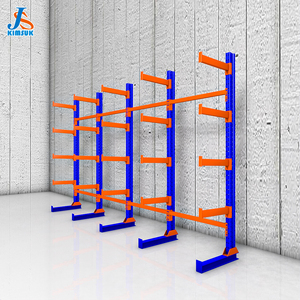
Electric Telescopic Cantilever Rack Heavy Duty Industrial Warehouse Racks Steel Rack Warehouse
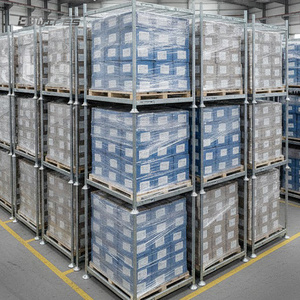
Sturdy Structure Mild Steel Q235 Heavy Duty Steel Detachable Type Stacking Post Pallet Rack
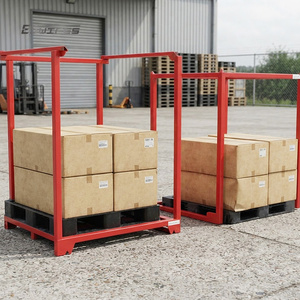
Powder Coating Nestable Warehouse Heavy Duty Detachable Steel Welded Pallet Stacker Rack
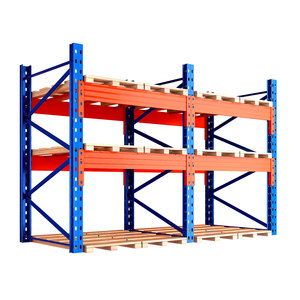
Heavy Duty Industrial Storage Shelves system Metal Rack Stacking Units Warehouse Steel Industrial Pallet Racking
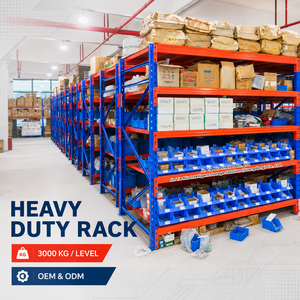
3000KG Per 5 Levels Warehouse Rack System with Steel Shelves for Parts Boxes and Bins Chinese Metal Shelves Storage Racks
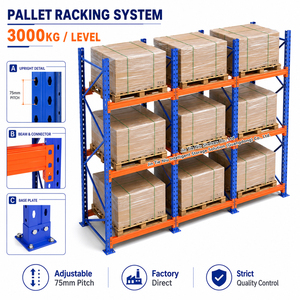
3 Pallet Levels Heavy Duty Steel Warehouse Rack Selective Pallet Racking System 3000KG
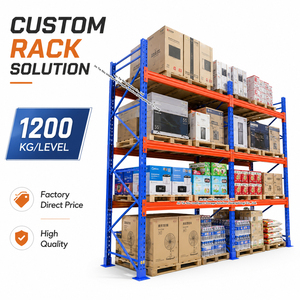
1200KG Steel Heavy Duty Rack Warehouse Pallet Storage Shelving System
Chinese Manufacture Heavy Duty Metal Pallet Rack Shelving Wood Pallet Racks and Shelves
Engineering Excellence in Push Back Pallet Racking Design
Push back pallet racking represents one of the most mechanically elegant, high-density storage methodologies available to modern intralogistics managers. Operating on a Last-In, First-Out (LIFO) inventory control principle, push back systems utilize nested, telescoping carts that ride on inclined steel rails mounted inside structural racking bays. As a forklift inserts a new pallet into a bay, it physically pushes the existing pallet back onto the next nested cart behind it. When retrieving, gravity smoothly advances the remaining pallets forward to the pick face.
As a leading China push back pallet racking manufacturer and global wholesaler, our engineering matrix focuses on eliminating the traditional trade-offs between storage density, operational speed, and structural safety. Unlike traditional drive-in racking where forklifts must navigate deep within structural bays—increasing collision risks—push back racking allows operators to perform loading and unloading entirely from the front aisle. This delivers picking efficiency gains up to 400% compared to drive-in configurations while dramatically lowering maintenance overhead from forklift impacts.
Nested Cart Kinematics
Precision-engineered low-profile carts configured in 2, 3, 4, 5, or 6-pallet deep designs. Carts nest neatly atop one another to conserve vertical pitch height.
Structural Q235B & Q355B Steel
Cold-rolled high-tensile steel uprights and beams manufactured strictly to ISO 9001 and European FEM 10.2.02 tolerances for heavy-duty operational loads.
Low-Friction Sealed Bearings
Heavy-duty steel wheels equipped with sealed, maintenance-free ball bearings engineered specifically for ambient, chilled, or sub-zero cold storage operations.
Structural Anatomy & Mechanics of Low-Pitch Push Back Carts
The mechanical core of a high-performance push back system lies within its track and cart geometry. Inferior push back racking often suffers from cart binding, uneven gravity glide, or excessive vertical profile consumption that starves the warehouse of vertical clear height. Our Chinese manufacturing plants utilize 3D parametric CAD modeling and automated laser-cutting processes to maintain rigid manufacturing tolerances on nested cart frames.
- Inclined Rail Assembly: Precision pitch setting (typically 2 to 3 degrees incline) calculated precisely against ambient friction coefficients to ensure seamless gravity acceleration without hazardous coasting speeds.
- Integrated Safety Stops: Heavy-gauge structural steel physical end-stops welded directly to the base rail structure prevent accidental derailment during aggressive forklift insertion.
- Pallet Centering Linkages: Specially contoured cart flanges guide misaligned pallets into perfect concentric alignment during loading, protecting vertical upright posts from lateral stresses.
- Multi-Dimensional Wheel Arrays: Heavy steel side-guide rollers absorb lateral thrust forces, mitigating frame flex even when storing off-center or unevenly weighted pallets up to 1,500 kg per position.
Looking for Customized Push Back Racking Layouts?
Our engineering team delivers full structural CAD drawings, load calculations, and OEM manufacturing quotes within 24 hours.
Get CatalogTechnical System Matrix: Comparing High-Density Racking Topologies
To assist logistics directors and procurement engineers in evaluating intralogistics capital investments, the table below provides a comparative analysis of push back racking against alternative high-density industrial racking configurations.
| Storage Architecture | Access Principle | Volumetric Efficiency | Selectivity | Forklift Aisle Requirements | Risk of Rack Damage |
|---|---|---|---|---|---|
| Push Back Racking | LIFO (Last-In, First-Out) | 75% – 85% | Medium (1 SKU per lane) | Standard Aisle (3.0m - 3.5m) | Very Low (No entry into bays) |
| Selective Pallet Rack | FIFO / LIFO | 40% – 50% | 100% Direct Access | Standard Aisle (3.5m - 4.2m) | Low |
| Drive-In Racking | LIFO | 65% – 75% | Low (1 SKU per bay) | Forklift Enters Rack Lane | High (Frequent upright impacts) |
| Radio Shuttle Racking | FIFO or LIFO | 85% – 95% | Medium-High (Automated) | Standard Aisle | Very Low (Automated shuttle) |
| Very Narrow Aisle (VNA) | FIFO | 60% – 70% | 100% Direct Access | Narrow Aisle (1.6m - 1.8m) | Low (Requires guided trucks) |
Note: Data presented above reflects baseline engineering standards. Actual throughput, selectivity figures, and volumetric gains depend on individual floor slab tolerances, ceiling clear heights, and material handling equipment (MHE) specs.
Future Sourcing & Procurement Trends (2025–2030)
The global warehousing and material handling industry is undergoing structural transformations driven by e-commerce fulfillment dynamics, cold-chain expansion, and carbon-neutral corporate initiatives. When sourcing push back pallet racking from Chinese manufacturers, wholesale buyers and enterprise logistics planners must align their procurement strategies with four key future trends:
1. Automated & Hybrid AMR/AGV Interoperability
As warehouses transition from manual counterbalanced forklifts to Autonomous Mobile Robots (AMRs) and Automated Guided Vehicles (AGVs), push back racking systems are evolving. Next-generation push back systems incorporate optical reflector targets, magnetic positioning sensors, and ultra-precise front-rail tolerances. This allows robotic forks to execute high-precision push-and-place operations without human intervention, maintaining flawless repeatability in dark warehouses.
2. Cold-Chain Resiliency & Sub-Zero Metallurgical Optimization
With global demand for frozen food logistics and pharmaceutical cold-chain storage surging, push back racking is replacing drive-in racking rapidly in refrigerated facilities. Because cold-room energy costs are exceptionally high per cubic meter, maximizing density is critical. Future sourcing dictates the use of micro-alloyed structural steels that retain high impact toughness at temperates down to -30°C, alongside specialized synthetic lubricants within sealed wheel bearings to prevent freezing and binding over extended operational cycles.
3. Sustainable Steel Sourcing & Decarbonized Manufacturing
Enterprise buyers in Europe and North America are increasingly evaluated on Scope 3 carbon supply chain emissions. Premium Chinese racking factories are transitioning to Electric Arc Furnace (EAF) steel processing, solar-powered powder coating lines, and zero-VOC electrostatic finish coats. Sourcing partners who provide verified Environmental Product Declarations (EPDs) and carbon footprint tracing will command significant competitive advantages during corporate procurement tenders.
4. Structural Health Monitoring (SHM) & IoT Integration
The integration of micro-strain sensors, piezoelectric accelerometers, and wireless IoT nodes directly onto heavy-duty racking columns represents the future of warehouse risk management. These sensors provide real-time telemetry regarding structural overload, lateral frame displacement, or unrecorded forklift impacts, enabling proactive maintenance before catastrophic structural failures occur.
Why Sourcing from China’s Premier Racking Wholesalers Delivers a Competitive Edge
China remains the powerhouse of global industrial racking fabrication, offering an unmatched combination of raw steel supply chain integration, advanced manufacturing automation, and economies of scale. However, establishing a competitive edge requires partnering with a manufacturer that bridges cost efficiencies with strict international engineering compliance.
Automated Roll-Forming Lines
Continuous automated profiling lines yield millimeter-accurate beam and upright cross-sections with zero internal stress concentration.
Strict QA Metallurgical Testing
Every steel batch undergoes tensile testing, yield point analysis, weld penetration ultrasonic verification, and powder adhesion cross-hatch tests.
Full OEM/ODM Export Packaging
Custom steel strapping, protective corner guards, and modular container stuffing layouts engineered to eliminate sea-freight transit corrosion and mechanical damage.
Our manufacturing footprint features state-of-the-art robotic welding cells that deliver 100% continuous weld seam integrity across heavy beam connectors, baseplates, and cart chassis. By maintaining direct contracts with top-tier steel mills (such as Baosteel and Shougang Group), we lock in raw material consistency and hedge pricing volatility—passing significant cost savings directly to global distributors and EPC contractors.
Comprehensive B2B Procurement FAQ
Technical guidance and commercial clarity for warehouse engineers, project managers, and global procurement officers.
Accelerate Your Warehouse Efficiency with Custom Racking Solutions
Partner with China’s premier push back racking manufacturer. Request your comprehensive product catalog, factory pricing, and free structural CAD layout today.
Get Catalog