In modern high-density intralogistics and supply chain management, selecting high-performance storage architecture is critical to optimizing operational efficiency, floor-space utilization, and workplace safety. As automated material handling, heavy-payload manufacturing, and omnichannel e-commerce fulfillment expand globally, industrial buyers require engineered structural systems that strictly comply with international stress standards, including DIN EN 15512, FEM 10.2.02, and ANSI/RMI MH16.1.
This technical white paper serves as an authoritative guide for warehouse directors, procurement officers, and structural project engineers evaluating premier industrial shelving manufacturers and factory-direct supply chains. Below, we review targeted industrial storage systems, detail structural material specifications, analyze global procurement shifts, and address essential technical engineering considerations.
Engineered Industrial Shelving & Racking Systems
Verified heavy-duty storage configurations manufactured for automated distribution hubs, bulk material warehouses, and specialized textile operations.
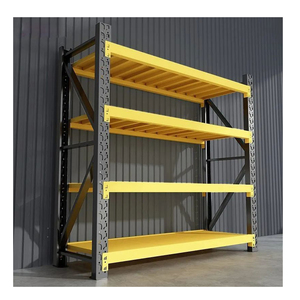
Light Duty 4-Tier Steel Metal Storage Rack Shelves Corrosion Protected Home and Garage Racking for Warehouse Use
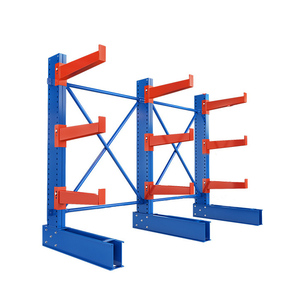
Manufactured in China Best Price Structural Cantilever Racking for Timber Storage Warehouse Rack for Sale
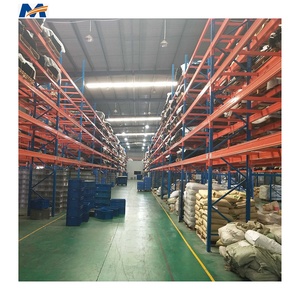
China Estantes Metalicos Heavy Duty Pallet Rack Beams Store Steel Shelving for Warehouse
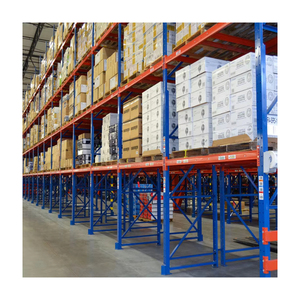
Wholesale Price Heavy Duty Storage Racks Warehouse Stacking Racks Selective Steel Pallet Rack Heavy-Duty Racking for Sale
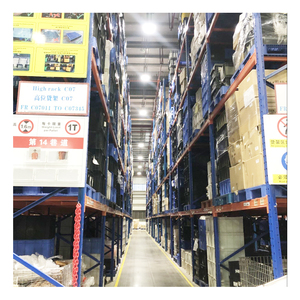
Industrial Heavy Load Beam Pallet Shelving Detachable Warehouse Steel Storage Rack for Distribution Center
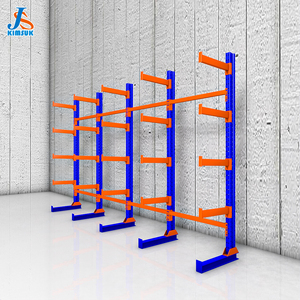
Electric Telescopic Cantilever Rack Heavy Duty Industrial Warehouse Racks Steel Rack Warehouse
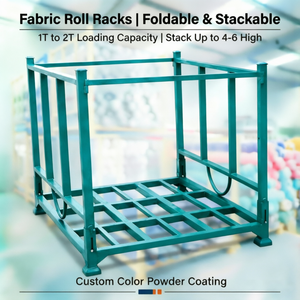
TER Customized Fabric Roll Storage Racking System OEM ODM Powder Coated Stackable Pallet Solution for Textile
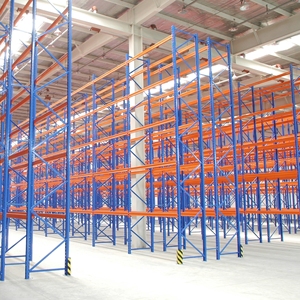
Low Price Custom 2-6 Level High Quality Pallet Racking Warehouse Storage Shelf System Industrial Stack Heavy Duty Pallet Racks
Why Global Enterprise Logistics Partners Trust Our Manufacturing
Rigorous quality assurance, end-to-end CAD/3D planning, and automated production pipelines engineered for international supply chain reliability.
Integrated 30,000 m² Manufacturing Facility
Operating dedicated cold-roll forming mills, continuous automatic powder-coating tunnels, and robotic welding cells. Factory-direct production eliminates intermediary markups while enforcing batch-level quality control on raw steel stock.
Free 24-Hour CAD & 3D Spatial Layouts
Our experienced structural engineering team provides complete warehouse simulation drawings, load-bearing distribution profiles, and aisle optimization maps within 24 hours of receiving site blueprints and forklift specifications.
Certified Structural Integrity (EN 15512)
All load-bearing uprights, box beams, and baseplates undergo rigorous finite element analysis (FEA) testing. Production strictly adheres to ISO 9001 quality protocols, fulfilling safety inspection demands under DGUV Regel 108-007.
Strategic Industry Analysis: Global Procurement Trends in Industrial Storage Architecture
The industrial storage landscape is undergoing a structural transition driven by global logistics automation, shifting labor dynamics, and carbon-footprint accountability. Procurement managers and facility planning teams must look beyond initial acquisition price, focusing instead on total structural life-cycle value, modular reconfigurability, and automated material handling compatibility.
1. Integration of High-Yield Structural Steels (Q355B and Beyond)
Modern warehousing requires higher load capacities at reduced dead weight. Leading industrial shelving factories are transitioning from legacy Q235 steel profiles to cold-formed high-strength Q355B and Q460 alloy steels. This material shift allows manufacturers to design thinner profile uprights without compromising buckling resistance or ultimate tensile strength, yielding material efficiency gains up to 18%.
2. Seamless Compatibility with AS/RS and AGV Logistics Systems
As logistics centers deploy Autonomous Mobile Robots (AMRs) and Automated Guided Vehicles (AGVs), structural racking tolerances must meet millimeter-level precision. Modern pallet racking systems require strict installation tolerances under DIN EN 15620 (Class 400 and 300) to prevent robotic pick collisions, standardizing guide rail alignment, specialized rack sensors, and reinforced bottom beam levels.
3. Circular Economy and Sustainable Anti-Corrosion Coatings
Environmental standards have reshaped surface treatment methodologies. Top trusted suppliers have phased out high-emission solvent paints in favor of closed-loop electrostatic epoxy-polyester powder coating systems. These thermosetting coatings deliver superior scratch resistance, chemical inertia in cold storage environments, and zero volatile organic compound (VOC) emissions during manufacturing.
4. Demand for Modular, Rapidly Reconfigurable Shelving Structures
The rapid shift in SKU profiles within e-commerce fulfillment centers demands modular racking architectures. Standard boltless beam-to-frame connections using multi-claw connectors enable facility managers to adjust level heights in 50 mm or 75 mm increments without specialized tools or operational shutdowns.
Industrial Storage System Comparison Matrix
Technical reference data for structural engineering assessment and facility specification planning.
| Racking / Shelving Type | Primary Material Grade | Max Capacity / Level | Design Standard | Surface Finish | Target Application |
|---|---|---|---|---|---|
| Selective Pallet Racking | Q235B / Q355B Steel | 1,000 – 4,500 kg | DIN EN 15512 / FEM | Epoxy Powder Coated | FMCG, High-Turnover Distribution |
| Structural Cantilever Rack | Hot-Rolled H-Beam / Q355B | 500 – 3,000 kg / Arm | FEM 10.2.09 / ANSI | Galvanized / Powder Coat | Timber, Tubing, Extrusions, Steel Bars |
| Longspan Storage Shelving | Cold-Rolled Sheet Steel | 300 – 800 kg | ISO 9001 / EN 16121 | Polyester Powder Coat | Hand-Loaded Parts, Spare Parts, E-Com |
| Electric Telescopic Rack | Structural Alloy Steel | 1,000 – 5,000 kg / Tier | CE Directives / EN 60204 | Industrial Enamel | Heavy Tooling, Crane-Loaded Stock |
| Fabric Roll / Stacking Rack | Tubular Steel Q235B | 1,000 – 2,000 kg | ISO 9001 Quality System | Hot-Dip Galv / Powder Coat | Textiles, Film Rolls, Coil Inventory |
Frequently Asked Questions by Industrial Buyers
Expert technical insights regarding safety compliance, floor slab load calculations, and lead times.
Industrial Procurement Framework: Key Evaluation Criteria for Factory Selection
When selecting a supplier for industrial style shelving and high-bay pallet racking systems, procurement teams should audit potential manufacturing partners against four structural criteria:
- Raw Material Traceability: Verify that the factory provides Mill Test Certificates (MTCs) confirming steel chemical composition and mechanical tensile limits ($f_y \ge 235 \text{ N/mm}^2$ or $f_y \ge 355 \text{ N/mm}^2$).
- Automated Welding Certification: Check for ISO 3834-2 robotic welding compliance to eliminate manual seam defects on load-bearing connector claws and baseplate joints.
- Comprehensive Accessory Options: Ensure the factory supplies column guards, frame corner protectors, pallet support bars, and wire mesh decking engineered to integrated safety factors.
- Export Packaging Standards: Industrial steel components must be bundled with plastic wrap protection, heavy steel strapping, and wooden skids to prevent flexural deformation during ocean transit.
Optimize Your Warehouse Capacity & Structural Safety Today
Submit your floor plans, ceiling clearance details, and load parameters. Our senior intralogistics engineers will return a complete, optimized CAD layout and structural quotation within 24 hours.
Get a Quote