Heavy-Duty Pallet Racking & Warehouse Storage Systems
Explore our engineering-validated pallet racking systems designed for high-density logistics centers, manufacturing facilities, and automated warehouses.
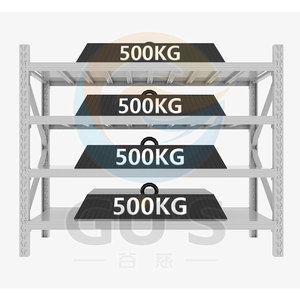
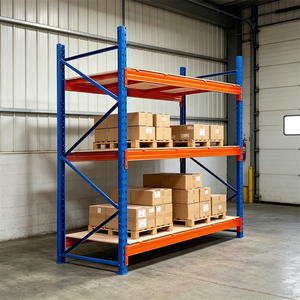
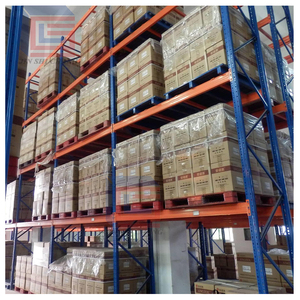
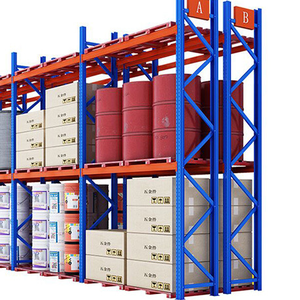
Structural Integrity, Load Dynamics, and Metallurgy in Heavy-Duty Pallet Shelf Racks
An authoritative engineering breakdown on structural steel selection, finite element analysis (FEA), and global regulatory compliance for high-bay intralogistics.
Modern intralogistics demands unprecedented performance from warehouse storage infrastructure. As vertical warehouse height utilization reaches up to 15 to 40 meters, selecting a premier pallet shelf rack factory & wholesaler becomes a foundational structural safety requirement rather than a standard commercial procurement decision. Steel racking systems operate under dynamic fatigue loads, continuous forklift impacts, and environmental thermal fluctuations. Achieving absolute structural reliability requires strict adherence to advanced metallurgic standards, structural cold-roll forming, and computerized Finite Element Analysis (FEA).
1. Metallurgy & Material Selection: Q235B vs. Q355B High-Yield Cold-Rolled Steel
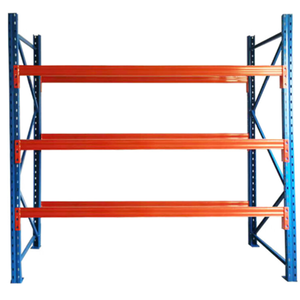
The structural backbone of any high-capacity selective pallet rack or drive-in system relies on high-grade structural carbon steel profiles. Leading rack manufacturers utilize cold-rolled coil steel certified to international yield specifications:
- Q235B Cold-Rolled Steel: Sourced from top-tier steel mills, featuring a nominal yield strength ($f_y$) of 235 MPa and ultimate tensile strength ($f_u$) of 375–500 MPa. Ideal for standard selective beams and light-to-medium upright profiles operating in ambient logistics environments.
- Q355B (SS500 / High-Tensile Grade): Formulated with micro-alloying elements, offering a minimum yield strength of 355 MPa. Essential for heavy-duty high-bay upright columns, heavy rack frames subjected to seismic dynamic loading, and cold-storage operations down to -30°C where ductile-to-brittle transition must be mitigated.
2. Cold-Forming Profile Geometry & Inertia Optimization
To maximize structural stiffness while optimizing steel mass per linear meter, advanced upright profiles feature up to 11 to 13 structural bends across their cross-section. This complex geometry enhances the section modulus ($Z_x, Z_y$) and moments of inertia ($I_x, I_y$), effectively preventing torsional-flexural buckling under axial compression loads reaching up to 25,000 kg per rack bay.
| Racking Component | Standard Material Grade | Manufacturing Process | Safety Standard Compliance | Typical Load Capacity |
|---|---|---|---|---|
| Upright Frame Columns | Q355B High-Tensile Steel | 13-Fold Cold Roll Forming & Automated Punching | FEM 10.2.02 / DIN EN 15512 | 8,000 kg – 24,000 kg per Bay |
| Box & Step Beams | Q235B / Q355B Steel | Continuous Double-C Interlocking Weld | ANSI/RMI MH16.1 / ISO 9001 | 1,000 kg – 4,500 kg per Level |
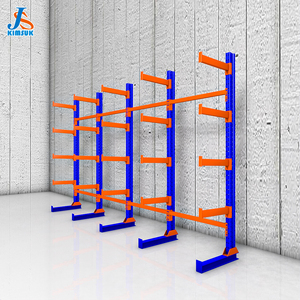
| Heavy Cantilever Arms | Hot-Rolled H-Beam / Q235B | Robotic MIG/MAG Structural Welding | EN 1993-1-1 (Eurocode 3) | 500 kg – 2,000 kg per Arm |
| Shuttle Guide Rails | Galvanized High-Yield Steel | Precision Roll Forming & Laser Notch Punching | DIN EN 15620 (Class 300/400) | Up to 1,500 kg per Pallet Unit |
3. Global Structural Compliance & Regulatory Frameworks
A reputable pallet shelf rack factory must comply with global structural engineering regulations to guarantee operational safety, legal liability protection, and insurance approval across key international jurisdictions:
- DIN EN 15512 (European Union): Defines specific structural design requirements for adjustable pallet racking, incorporating partial safety factors for actions and material resistance based on extensive physical laboratory testing.
- DGUV Regel 108-007 & DIN EN 15635: Regulates warehouse rack operation, structural deflection limits ($L/200$ maximum under full load), mandatory annual safety inspections by certified engineers, and damaged component replacement protocol.
- ANSI/RMI MH16.1 (United States): Standard for the design, testing, and utilization of industrial steel storage racks, establishing seismic design categories (SDC A through F) for high-risk earthquake zones.
Factory-Direct Capabilities & Engineering Edge
Eliminate middleman margins and secure direct access to custom warehouse engineering, massive raw steel purchasing power, and certified OEM production depth.
Direct-from-Manufacturer Pricing
Operate directly with our 30,000 m² automated production facility. We eliminate agency commissions, providing wholesale bulk pricing and low total cost of ownership (TCO).
Free 24h CAD & 3D Engineering
Our structural engineers deliver tailored 2D floor plans, elevation views, and 3D BIM models within 24 hours of receiving your floor plan, pallet dimensions, and forklift specs.
Robotic Welding & Epoxy Powder Coating
Automated robotic welding lines guarantee flawless structural seams, while our 180-meter continuous electrostatic powder-coating line provides superior corrosion resistance.
Turnkey Global Logistics & Lead Time
Standard bulk pallet rack orders ship in 15 to 20 days. We manage container packing, seaworthy bundle packaging, export customs clearance, and global door-to-door delivery.
Comprehensive OEM / ODM Customization
Custom beam profiles, special pitch dimensions (50mm / 75mm / 76.2mm), tailored color schemes (RAL palette), and OEM branding for regional rack distributors worldwide.
Full Inspection & Certification Pack
Every shipment is delivered complete with mill test certificates (MTC), load capacity signage, detailed assembly manuals, and finite element stress calculation reports.
Future Procurement Trends in Warehouse Storage Architecture (2026–2035)
How automation, AI-driven intralogistics, and sustainable steel manufacturing are reshaping industrial pallet racking procurement.
1. Transition to Automated Radio Shuttle & High-Bay ASRS Integration
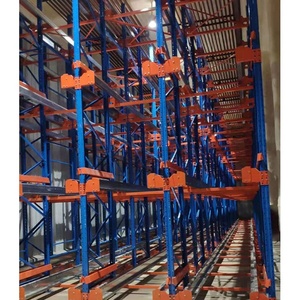
Traditional manual forklift racking is rapidly shifting toward semi-automated Four-Way Radio Shuttle systems and fully automated Automated Storage and Retrieval Systems (AS/RS). High-density shuttle systems boost cubic warehouse space utilization by up to 85% compared to standard selective racking by eliminating fork-truck aisles. Racking structures now require strict structural tolerance compliance (DIN EN 15620 Class 100/200) to ensure high-speed robotic shuttles travel smooth, laser-guided paths without mechanical jamming.
2. IoT-Enabled Structural Health Monitoring (Smart Smart-Racks)
As logistics hubs run 24/7 continuous operations, rack failure risks multiply due to unrecorded forklift collisions. Future-ready pallet racks are increasingly integrated with strain-gauge sensors and IoT acceleration meters installed directly on critical bottom upright columns. These smart sensors stream structural deflection data to warehouse management software (WMS), issuing instant structural alerts before microscopic steel fatigue transforms into catastrophic rack collapse.
3. Green Steel & Low-Carbon Sustainable Manufacturing
Global procurement teams prioritize ESG targets. Leading pallet rack wholesalers are adopting low-carbon "Green Steel" produced via Electric Arc Furnaces (EAF) powered by renewable energy, alongside zero-VOC (Volatile Organic Compounds) thermosetting powder coatings. Choosing recycled structural steel profiles reduces carbon footprint by up to 45% per pallet position without compromising yield capacity.
4. Modular Interoperability for AGV and AMR Fleets
Autonomous Mobile Robots (AMRs) and Automated Guided Vehicles (AGVs) require optimized floor clearances, magnetic guidance line integration, and specialized rack baseplate mounting systems. Modern heavy-duty racking systems are engineered with recessed anchor bolts and impact-resistant rubberized column protectors specifically designed to avoid interfering with AMR sensor fields.
Frequently Asked Questions for Warehouse Racking Buyers
Expert answers to critical structural engineering, lead time, regulatory compliance, and customization inquiries.
How do I determine the correct load capacity required per beam level?
Load capacity must be calculated based on the maximum gross weight of your heaviest palletized load multiplied by the number of pallets stored per beam level (typically 2 to 3 pallets). Always apply an operational safety factor of at least 1.5 to 1.9 under FEM / ANSI standards to accommodate dynamic shock loads caused by forklift placement.
What is the typical production lead time for bulk wholesale orders?
Standard heavy-duty selective racking orders are produced within 15 to 20 calendar days. Custom OEM orders requiring specialized roll-forming profiles, non-standard powder-coating RAL colors, or heavy structural shuttle systems generally require 25 to 30 days depending on total container volume.
Are your pallet racks compatible with European EPAL and US standard pallets?
Yes. Our rack designs accommodate standard European Euro-pallets (1200 x 800 mm EPAL 1), Industrial Pallets (1200 x 1000 mm), and standard US GMA pallets (48 x 40 inches). Beam spans of 2700mm, 3300mm, and 3900mm are configured specifically to maintain exact safety clearances required by local regulations.
Do your pallet racking systems satisfy European DIN EN 15512 standards?
Absolutely. All structural steel profiles undergo continuous quality testing and are engineered under FEM 10.2.02 / DIN EN 15512 calculation principles. Every completed installation includes structural load signage, technical compliance certificates, and maintenance guidelines.
What floor concrete specification is required for heavy-duty pallet racks?
High-bay heavy-duty racking requires a non-cracked reinforced concrete floor slab with a minimum compressive strength of C20/25 or C25/30 (25 to 30 MPa) and a floor thickness of at least 150mm to 200mm. Chemical anchor bolts are torque-tightened to certified depth values to resist vertical pull-out forces.
Can we request custom OEM profile dimensions and private label branding?
Yes. As a direct pallet shelf rack factory & wholesaler, we offer full OEM/ODM services. We can customize beam profiles, upright hole punching pitches (50mm, 75mm, 76.2mm), component colors, and print your private brand logo on all column protectors, load plates, and shipping packaging.
Transform Your Warehouse Storage Efficiency Today
Connect with our expert intralogistics engineering team. Receive free 24-hour CAD layout planning, structural load capacity calculations, and factory-direct wholesale quote.
Get Catalog