High-Performance Industrial Pallet Racking Systems
Explore our factory-direct heavy-duty storage configurations engineered in accordance with DIN EN 15512, FEM 10.2.02, and ISO 9001 global manufacturing standards.
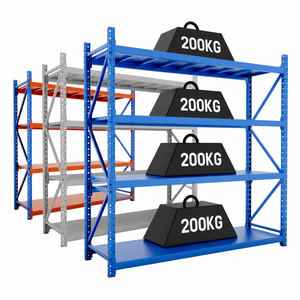
Factory Direct 4-Layer 100/200/300kg Medium Heavy Duty Pallet Racking System Steel Adjustable Long Span Warehouse Storage Racks
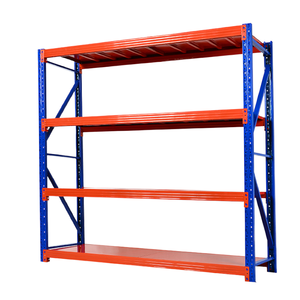
Adjustable Customizable Selective Pallet Racks Steel Metal Shelving for Garage Warehouse & Industrial Storage
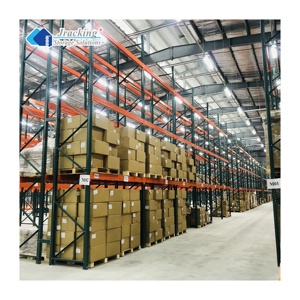
High-Capacity Warehouse Storage Selective Pallet Racks Heavy Duty Teardrop Pallet Racking System for Logistic Hubs
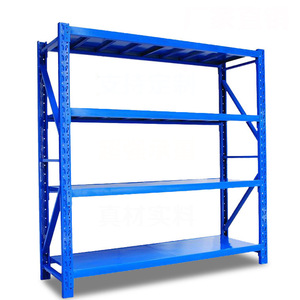
LIANGZO 5-Layer Steel Corrosion Protection Chrome Plated Storage Shelf for Warehouse Household Use Light/Medium Duty Display
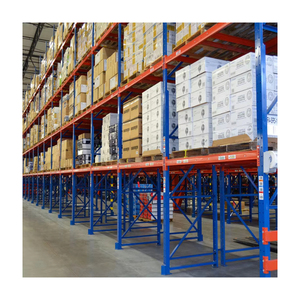
Wholesale Price Heavy Duty Storage Racks Warehouse Stacking Racks Selective Steel Pallet Rack Heavy-Duty Racking for Sale
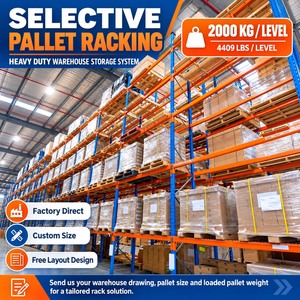
Industrial Warehouse Pallet Racking System Heavy Duty Adjustable Storage Rack Customized Pallet Racks for Factory Storage
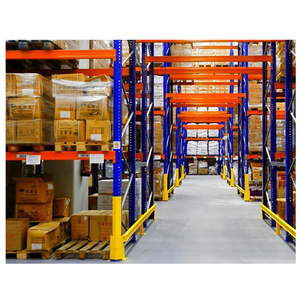
Heavy Duty Boltless Steel Pallet Rack System Industrial Warehouse Storage Shelves Metallic Heavy Duty Industrial Shelving
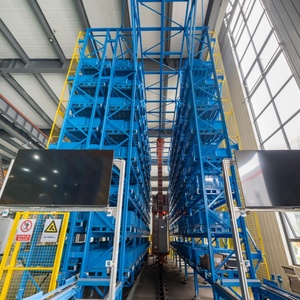
Fully Automated Warehouse Robot Unit Load Pallet Automation Miniload ASRS Storage Retrieval Picking System
Selecting a Top Trusted Pallet Storage Racking System Wholesaler
An authoritative analysis of load mechanics, European compliance standards, total cost of ownership (TCO), and automated structural execution for modern intralogistics managers.
1. Architectural Principles & Deflection Tolerances in Heavy-Duty Steel Storage
In modern industrial warehousing, evaluating a pallet storage racking system wholesaler requires moving far beyond superficial price-per-tier metrics. Structural integrity in high-bay logistics facilities is dictated by finite element analysis (FEA), structural yield strengths of high-grade Q235B and Q355B cold-rolled steel, and compliance with stringent international design codes. Chief among these is European Standard DIN EN 15512 (Steel static storage systems - Adjustable pallet racking systems - Principles for structural design), alongside FEM 10.2.02 and ANSI/RMI MH16.1 in North America.
When designing high-capacity selective or deep-reach pallet racking, beam deflection under maximum design load must strictly not exceed L/200 (where L is the clear beam span length). Overlooking these structural deflection limits compromises material handling equipment (MHE) clearance, increases frame buckling risk during seismic or impact events, and violates mandatory operational health and safety mandates such as Germany's DGUV Regel 108-007 and DIN EN 15635. Partnering with a verified manufacturer ensures every beam connector, upright frame profile (ranging from 80mm to 120mm face widths), and baseplate anchor is calculated with precise safety factors against elastic instability.
Information Gain Index: The True Benchmark of Racking Reliability
A reputable wholesaler does not merely sell cold-formed steel channels; they deliver verified structural safety packages including FEA load capacity charts, anchor pull-out torque specifications, dynamic impact protection ratings, and official safety signage complying with ISO 3864 safety color standards.
2. Comparative System Analysis: Selective vs. High-Density Racking Topologies
Selecting the optimal pallet racking architectural topology requires matching Stock Keeping Unit (SKU) velocity, pallet dimension profile (e.g., EPAL Euro pallets 1200x800mm or Industrial pallets 1200x1000mm), and Forklift Aisle Width requirements. Below is a engineering evaluation matrix comparing core warehouse storage systems:
| Racking Architecture | Storage Density | Pallet Selectivity | Operational Flow | Working Aisle Width | Primary Application Profile |
|---|---|---|---|---|---|
| Selective Pallet Racking | Standard (40-50%) | 100% Direct Access | FIFO / LIFO | 3.0m - 3.5m (Reach Truck) | High SKU count, fast picking logistics hubs, 3PL distribution centers. |
| Double Deep Racking | High (60-65%) | 50% Direct Access | LIFO | 3.1m - 3.3m (Deep Reach) | Multiple pallets per SKU, high density with controlled selectivity. |
| Drive-In / Drive-Through | Very High (75-85%) | Lane Dependent | LIFO (Drive-In) / FIFO | Aisle-less (Lane entry) | Homogeneous bulk cargo, cold storage, seasonal inventory buffer. |
| Very Narrow Aisle (VNA) | High (70-75%) | 100% Direct Access | FIFO / LIFO | 1.6m - 1.9m (Turret Truck) | High-bay space optimization, maximum vertical footprint utilization. |
| Radio Shuttle Automation | Maximum (85-90%) | Channel Dependent | Software FIFO / LIFO | Standard Main Aisle | Automated high-throughput deep-channel storage, cold chain facilities. |
| Automated Miniload / ASRS | Ultra High (90%+) | 100% Automated | Dynamic WMS Control | Integrated Crane Rail | Dark-warehouse automation, high-speed unit load robotic retrieval. |
Why StahlRack / Global Manufacturing Architecture Leads the Market
30,000m² Integrated Manufacturing
Equipped with fully automated continuous roll-forming lines, robotic arm welding cells, and eco-friendly electro-powder coating tunnels. Direct factory ownership eliminates intermediary markups and guarantees stringent batch-to-batch metallurgical control.
Free 24-Hour CAD & 3D BIM Engineering
Our certified structural engineers generate customized 2D layout drawings, spatial density reports, and 3D Building Information Modeling (BIM) files within 24 hours of receiving your warehouse architectural floor plan and load specifications.
Full DIN EN & ISO Compliance
All products are audited under ISO 9001 Quality Management Systems. Upright frames, teardrop configurations, and heavy-duty box beams come with complete static calculation sheets and legal compliance documentation required for annual DGUV 108-007 inspections.
Future Procurement Trends in Industrial Racking Systems (2026–2035)
As global supply chains transition toward Industry 4.0 paradigms, procurement strategies for warehouse storage systems are undergoing a fundamental transformation. B2B procurement managers and intralogistics directors must align their racking infrastructure with three key future vector trends:
1. Modular Automation-Ready Racking (ASRS & AMR Integration)
Static racking is increasingly giving way to hybrid infrastructure designed to accommodate Autonomous Mobile Robots (AMRs), Automated Guided Vehicles (AGVs), and pallet shuttles. Modern racking uprights are engineered with precise tolerances to integrate rack-guided crane rails, sensor arrays, and wireless charging dock bays directly within structural bays.
2. High-Strength Ultra-Thin Steels & Decarbonization
Procurement standards now emphasize environmental impact alongside load ratings. Advanced cold-forming techniques using high-tensile micro-alloyed steels allow manufacturers to decrease structural dead weight while increasing load capacity, directly reducing the embodied carbon footprint of warehouse buildouts.
3. Smart Digital Twin Rack Monitoring
Next-generation racking installations incorporate IoT strain gauge sensors and acoustic emission sensors along upright bases. These components continuously stream real-time deflection data to facility WMS systems, instantly flagging forklift impact structural stress before catastrophic failure can occur.
4. Galvanized & Hybrid Powder Coating Resilience
With cold-chain logistics and high-humidity FMCG distribution growing rapidly, pre-galvanized beam profiles combined with thermosetting epoxy-polyester powder coats have become the global benchmark for anti-corrosion protection, guaranteeing a 20+ year operational lifespan.
Warehouse Pallet Storage Systems Procurement FAQ
Comprehensive engineering insights and purchasing guidelines answered by certified intralogistics specialists.
What engineering parameters determine the maximum load capacity per pallet position?
Load capacity per level is dictated by beam profile height (e.g., 80mm to 160mm box beams), steel thickness (typically 1.5mm to 2.0mm), beam span length (such as 2700mm for 3 Euro pallets), and the mechanical properties of the steel alloy. Upright frame capacity depends heavily on the unbraced vertical distance between beam levels. Higher first-beam level elevations reduce overall frame load capacity due to altered slenderness ratios.
How do European DIN EN 15512 standards differ from US ANSI/RMI specifications?
While both standards aim to prevent structural failure, DIN EN 15512 utilizes limit state design (LSD) methodologies incorporating specific partial safety factors for material yield strength and characteristic actions (loads). ANSI/RMI historically utilized Allowable Stress Design (ASD) alongside Load and Resistance Factor Design (LRFD). Furthermore, DIN EN 15512 mandates explicit dynamic impact allowance testing for beam-to-column connector locks.
Are pallet racking systems required to undergo mandatory annual safety inspections?
Yes. Under European norm DIN EN 15635 and national regulations like Germany's DGUV Regel 108-007, warehouse operators must conduct routine visual inspections weekly and formal structural audits by a certified inspection expert (Befähigte Person) at least once every 12 months. All installed systems must feature visible load warning signage displaying maximum allowable level and frame capacities.
What floor slab specifications are required for heavy-duty pallet rack anchoring?
Concrete slabs should conform to minimum strength classes of C20/25 or C25/30 according to EN 206-1. The floor slab must have adequate thickness (typically 150mm to 250mm unreinforced or fiber-reinforced concrete) to handle punch-through forces from heavy upright footplates and accommodate expansion or chemical anchors with minimum embedment depths of 80mm to 120mm.
Why should warehouse planners install wire mesh decking over structural steel bars?
Welded wire mesh decking provides a superior safety surface that accommodates non-standard pallet sizes, prevents falling carton hazards, and features over 70% open area. This high open ratio allows overhead fire sprinkler water to penetrate down through racking levels, satisfying strict NFPA 13 and FM Global fire protection compliance standards.
What is the typical manufacturing lead time for standard vs. custom wholesale orders?
Standard pallet racking components (such as standard selective orange beams and blue upright frames) are typically manufactured and dispatched within 15 to 20 business days from layout drawing approval. Customized OEM/ODM configurations, specialized powder-coat color matching, or high-bay mezzanine structures generally carry a 25 to 35-day production timeline.
How do column guards and frame protectors impact structural lifecycle ROI?
Material handling equipment collisions represent over 90% of structural damage in active logistics hubs. Installing heavy-duty steel or poly-carbonate column protectors and row end barriers absorbs kinetic energy from forklift impacts, protecting upright legs from plastic deformation and avoiding costly structural frame replacement and downtime.
Can pallet racking systems be retrofitted for automated shuttle or AMR operation?
Yes. Standard selective or drive-in racking can frequently be converted into shuttle channel systems by replacing traditional load beams with engineered guide rails and installing high-precision alignment stops. However, automated conversions require rigorous verification of frame verticality and beam level tolerances to ensure smooth shuttle travel.
Request a Free 24-Hour Custom Warehouse CAD Design & Quotation
Optimize your volumetric storage density, verify structural compliance, and secure factory-direct wholesale pricing from certified intralogistics engineers.