Pallet Storage Unit Suppliers & Exporters in the Hamburg Market

Heavy-Duty Industrial Racking, High-Bay Pallet Systems & DIN EN Certified Intralogistics Solutions for Maritime, Logistics & Manufacturing Hubs in Northern Germany

High-Performance Industrial Hardware

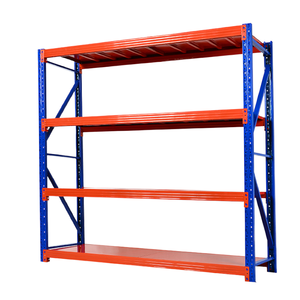
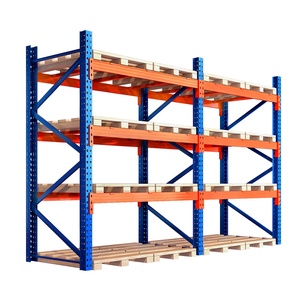
Featured Warehouse Pallet Racking & Storage Units

Engineered to strict European standards, our industrial racking systems provide maximum load capability, modular adjustability, and seismic stability for high-density Hamburg port logistics centers and regional distribution facilities.

Northern European Logistics Focus

Pallet Storage Architecture in the Port of Hamburg Ecosystem

Strategic procurement guidelines for enterprise warehouse managers, intralogistics planners, and third-party logistics (3PL) operators across the Metropolitan Region of Hamburg.

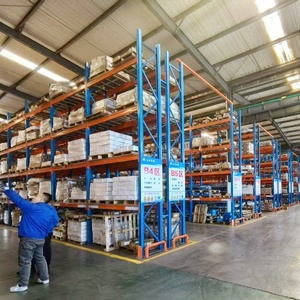
As Northern Europe’s premier maritime hub and the third-largest container port in Europe, Hamburg serves as the pivotal trade gateway connecting the German industrial hinterland, Scandinavia, and the Baltic States. Managing intralogistics within the Port of Hamburg (Hafen Hamburg) and surrounding industrial logistics zones—such as Altenwerder, Waltershof, Billbrook, and Harburg—requires high-density pallet storage units engineered to withstand severe operational cycles, strict German statutory safety standards, and challenging environmental factors.
In the Hamburg market, land scarcity and high commercial real estate values drive an urgent demand for vertical storage optimization. Logistics infrastructure must maximize volumetric efficiency without compromising throughput velocity. Whether storing fast-moving consumer goods (FMCG), automotive components, temperature-sensitive cold chain items, or heavy industrial machinery, selecting the correct supplier and structural design for pallet storage units is vital to achieving operational resilience and rapid capital payback.

Port Staging & Cross-Docking

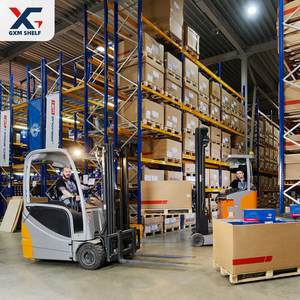
High-turnover selective pallet racks positioned near container terminals (CTA/CTB) engineered for rapid loading, unloading, and buffer storage of sea-freight containers.

Cold Storage & Deep Freeze

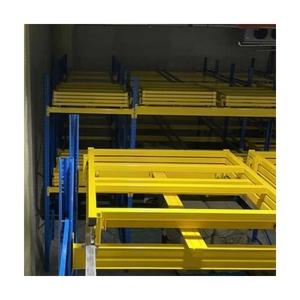
High-density Drive-In and Push-Back racking systems optimized for sub-zero temperature operational resilience in Hamburg seafood and food distribution hubs.

High-Bay VNA Automated Warehouses

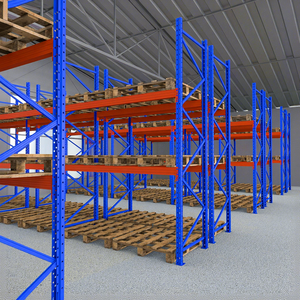
Narrow-Aisle (VNA) racking expanding up to 15 meters high, utilizing floor guidance to double storage density along the A7/A1 freight corridors.

Heavy Industrial & Maritime Engineering

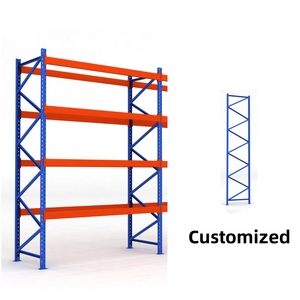
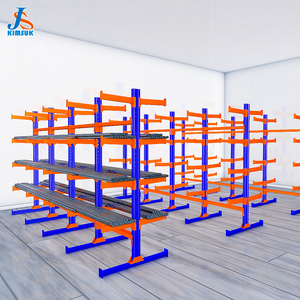
Custom heavy-load pallet racks and cantilever systems configured to store ship components, steel coils, and raw manufacturing materials for local shipyards.

Engineering Rigor & Compliance

Structural Standards & Compliance: DIN EN 15512 & DGUV 108-007

Understanding the regulatory, structural, and safety mandates required for industrial racking systems operated within Germany and the broader European Economic Area (EEA).

Procuring pallet racking systems in Germany requires strict adherence to mandatory European standards and local trade association safety regulations (*Berufsgenossenschaften*). Unlike non-regulated markets, industrial storage systems installed in Hamburg must comply with rigorous structural calculation models to ensure worker safety, prevent catastrophic structural collapses, and simplify mandatory annual safety audits (*Regalprüfung*).
Our pallet storage units are structural steel frameworks manufactured from high-tensile cold-rolled steel (Q235B / Q355B structural grade steel). Every rack component undergoes rigorous Finite Element Analysis (FEA) and physical stress testing to guarantee structural safety factors exceeding 1.5.
Standard / Regulation Scope & Engineering Application Compliance Mandate for Hamburg Buyers
DIN EN 15512 Steel static storage systems – Specification of adjustable pallet racking. Mandatory structural design calculation standard governing beam deflection thresholds ($L/200$) and upright bucking safety limits.
DIN EN 15620 Steel static storage systems – Tolerances, deformations, and clearances. Defines exact operational clearances between Euro-pallets, upright columns, and materials handling equipment (forklifts/VNA trucks).
DIN EN 15635 Application and maintenance of storage equipment. Governs operational safety guidelines, damage classification (Green/Yellow/Red risk levels), and user maintenance protocols.
DGUV Regel 108-007 German Social Accident Insurance regulations for warehouse equipment (*Lagereinrichtungen*). Requires mandatory annual inspections (*Regalprüfung*) performed by an accredited qualified inspector (*Befähigte Person*).
ISO 12944 (C3/C4 Coating) Paints and varnishes – Corrosion protection of steel structures by protective paint systems. Essential coating standard for coastal environments like Hamburg to prevent corrosion driven by high salt-humidity maritime air.
Furthermore, because Hamburg sits adjacent to maritime shipping corridors, indoor environmental humidity can accelerate metallic oxidation. Our standard racking components feature electrostatically applied epoxy powder coating cured at 200°C, or hot-dip galvanization options for external staging areas and cold storage units. This delivers high resistance to impact, mechanical abrasion, and marine air corrosion.
Enterprise Manufacturing Capabilities

Why Direct Importers & German Logistics Planners Partner With Us

Combining factory-direct cost structures with global logistics excellence and rapid 24-hour engineering design turnaround.

30,000 m² Advanced Manufacturing Facility

High-speed automated roll-forming mills, robotic welding cells, and continuous powder-coating lines operating under ISO 9001 certified quality controls.

Free 24-Hour CAD & 3D Engineering Layouts

Our structural engineering team produces detailed 2D floor plans, elevation drawings, and structural weight load calculations within 24 hours of receiving your floor plan.

Rapid Production & Port Shipping Execution

Standard project production cycle completed in 15–20 days. Direct containerized export routes scheduled directly to Hamburg sea terminals.

80% Referral Rate & Global Proven Quality

Over 28 years of manufacturing integrity since 1997. Trusted by multinational brands including PepsiCo, Philips, Lenovo, and major European 3PLs.

1997
Established Year
30,000m²
Production Base
15-20
Days Lead Time
80%
Repeat / Referral Rate
24h
CAD Project Drawing
Intralogistics Selection Matrix

Selecting the Right Pallet Storage Configuration

Comparing pallet racking structural architectures based on SKU diversity, inventory rotation dynamics, forklift aisle requirements, and volumetric space utilization.

Every warehouse layout in Hamburg demands a customized trade-off between Selectivity (100% direct access) and Storage Density (maximized floor utilization). The table below outlines the core technical metrics to assist procurement directors in identifying the optimal racking system for their facility.
Racking Architecture Direct Selectivity Volumetric Space Efficiency Pallet Management Method Aisle Width Requirement Ideal Hamburg Application
Selective Pallet Racking 100% Access Moderate (40–50%) FIFO or LIFO 3.0m – 3.5m (Standard Forklift) High-SKU 3PL warehouses, cross-docking terminals, automotive spare parts hubs.
Double-Deep Pallet Racking 50% Access High (60–65%) LIFO 3.0m – 3.3m (Specialized Reach Truck) Consolidated inventory staging with 2–4 pallets per SKU, reducing aisle count.
Push-Back Cart Systems 25–50% Access per lane High (70–75%) LIFO Standard Aisle Width Cold storage facilities near Hamburg harbor, high-turnover FMCG buffer storage.
Very Narrow Aisle (VNA) 100% Access Very High (75–85%) FIFO or LIFO 1.5m – 1.8m (Turret Truck / Wire Guided) Urban logistics centers around Hamburg with elevated roof heights (up to 15m).
Cantilever Racking Systems 100% Arm Access Variable (Optimized for Length) Flexible Truck Dependent Maritime timber exporters, metal pipe distribution, long profiles, and heavy plate steel.
All beam configurations are engineered specifically for standard European pallet dimensions, primarily EPAL 1 Euro-Pallets (1200 x 800 mm) and EPAL 2 Industrial Pallets (1200 x 1000 mm). Standard beam spans of 2700mm comfortably accommodate three EPAL 1 units per level with mandatory 100mm side clearances adhering to DIN EN 15620 safety tolerances.
Market Dynamics & Trends

Key Intralogistics Trends Shaping Northern Germany

How automation, decarbonization, and urban micro-fulfillment are redefining pallet storage unit procurement across the Metropolitan Region of Hamburg.

1. Integration with Autonomous Mobile Robots (AMRs)

Modern warehouses along the Elbe River are transitioning toward hybrid racking systems designed to accommodate Automated Guided Vehicles (AGVs) and AMRs. Upright frames require specialized baseplates and precise alignment tolerances to support automated pallet drop-off and retrieval.

2. Green Warehousing & Environmental Sustainability

In accordance with Germany’s stringent ESG criteria, warehouse operators favor suppliers utilizing low-emission steel production, recyclable packaging materials, and non-toxic, volatile organic compound (VOC)-free powder coatings to minimize environmental footprint.

3. Urban Micro-Fulfillment & Infill Logistics

Due to restricted land availability near Hamburg’s inner-city districts, last-mile e-commerce operators are converting brownfield spaces into multi-tier racking mezzanine units, doubling floor space without altering the building structure.

4. Dynamic Load Monitoring & Smart Rack Safety

Enterprise buyers are increasingly specifying heavy-duty column protectors, end-of-rack barriers, and IoT-enabled load sensors to protect structural steel uprights from accidental forklift collisions, reducing costly downtime and compliance fines.

Local Buyer Guidance

Frequently Asked Questions (Hamburg Procurement)

Direct answers to common technical, legal, and logistic queries raised by German purchasing departments and warehouse operations engineers.

Q1: What is the standard lead time for pallet racking delivery to the Hamburg market?

Standard pallet racking components and heavy-duty storage shelves are manufactured within 15–20 business days. Direct maritime container shipping from our factory port to the Port of Hamburg (CTA/CTB terminals) typically takes 28–35 transit days. Complete shipping schedules, customs paperwork (HS Code 730890), and door-to-door delivery to your warehouse site are confirmed in writing with your approved layout drawings.

Q2: Are your pallet racks designed specifically for EPAL Euro-pallets?

Yes. Our standard beam profiles (e.g., 2700mm clear entry length) are engineered precisely to carry three EPAL 1 pallets (1200 x 800 mm) per level, or two EPAL 2 industrial pallets (1200 x 1000 mm). Beam depth frames (typically 1100mm) ensure proper pallet overhang compliance adhering to DIN EN 15620 guidelines.

Q3: Do your storage systems pass DGUV 108-007 annual inspections in Germany?

Absolutely. Every racking system is engineered to European FEM / DIN EN 15512 static calculation standards. We supply full documentation packages with every project delivery—including certified load signage (*Belastungsschilder*), assembly instructions, structural weight capacity charts, and batch traceability documentation required by accredited German inspectors (*Befähigte Personen*).

Q4: Can you provide custom engineering drawings and floor layout planning?

Yes. Our internal engineering department provides free 2D CAD floor plan layouts and 3D conceptual modeling within 24 hours of receiving your floor plan, clear ceiling height metrics, floor slab load ratings, and forklift specifications.

Q5: What surface finishes do you recommend for Hamburg’s coastal climate?

For indoor dry climate warehouses, our standard electrostatically applied epoxy powder coat (cured to ISO 12944 C2/C3 standards) provides excellent protection. For exposed outdoor staging, high-humidity port zones, or cold storage environments, we recommend hot-dip galvanizing (HDG) to ensure long-term corrosion prevention against salt-mist air.

Q6: What concrete slab requirements are necessary for anchor bolt installation?

Heavy-duty pallet rack baseplates are fixed using structural chemical or mechanical expansion anchors. Floor slabs generally require reinforced concrete with a minimum structural compressive strength of C20/25 (in accordance with DIN EN 206-1) and a minimum slab thickness of 150mm–200mm, depending on total frame height and leg load specifications.

Accelerate Your Hamburg Warehouse Storage Project

Partner directly with a certified global manufacturer of heavy-duty pallet racking units. Receive high-density space planning, factory-direct OEM/ODM pricing, and certified European structural compliance.

Contact Us