Top Trusted Drive In Racking System Manufacturers & Wholesalers serving the Frankfurt market
Engineered High-Density Pallet Storage Solutions Designed for German DIN EN Standards, Cold Storage Logistics, and Industry 4.0 Efficiency across Hesse & the DACH Region.
Featured Heavy-Duty Warehouse Storage Systems
Explore our precision-engineered structural racking products, tailored for Euro-pallet standards, high load-bearing capacity, and optimized volumetric footprint.
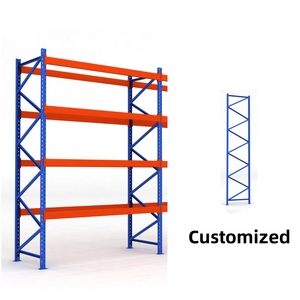
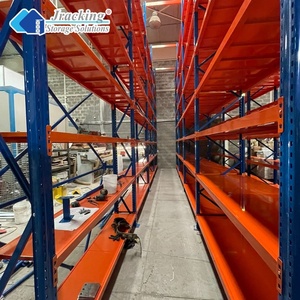
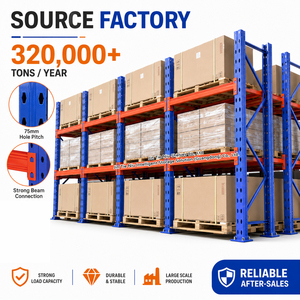
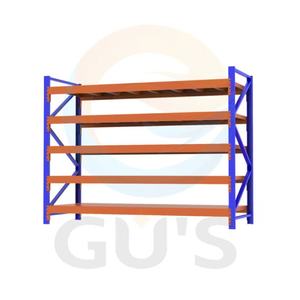
Engineering High-Density Drive-In Racking Systems for the Frankfurt Logistics Hub
As the primary financial and logistics nerve center of Central Europe, the Frankfurt am Main metropolitan region—anchored by Frankfurt Airport (CargoCity Süd), the Autobahn intersections (A3/A5), and the inland container hubs of Hesse—presents unique structural and economic challenges for warehouse managers. Industrial real estate values in Frankfurt consistently rank among the highest in Germany, with prime warehouse rents exceeding €7.50 to €9.50 per square meter monthly. Under these tight spatial constraints, optimizing cubic storage density while adhering strictly to European DIN EN safety regulations is not merely an operational goal; it is a critical requirement for bottom-line profitability.
Drive-In and Drive-Through Racking Systems represent the definitive structural engineering solution for high-density, high-volume pallet storage. By eliminating operational work aisles required in conventional selective racking, Drive-In systems transform up to 85% of total warehouse floor area into usable, revenue-generating storage space. Designed specifically for homogeneous, batch-produced goods, cold-storage logistics, pharmaceutical buffers, and fast-moving consumer goods (FMCG), our drive-in racking frames engineered for the Frankfurt market balance high structural rigidity with European compliance standards including DIN EN 15512, DIN EN 15620, and DGUV Regel 108-007.
Information Gain Metric: Transitioning from standard selective pallet racking to a certified Drive-In storage layout increases overall pallet capacity by 65% to 85% within identical hall footprints, while reducing cold-storage refrigeration overhead by up to 35% per stored pallet unit.
Structural Architecture & Mechanics of Drive-In Racking
Unlike standard selective pallet racks where cross-beams support horizontal pallet weight across front-to-back frames, Drive-In racking relies on continuous side-mounted cantilever load rails running along the depth of the lane. Material handling equipment (forklift trucks) enters the structural bays directly to deposit or retrieve unit loads. This unique operational dynamic introduces severe eccentric loading, dynamic lateral thrusts, and vehicle impact risks that mandate high-grade cold-rolled structural steel (Q235B / Q355B) and heavy-duty structural bracing networks.
1. Continuous Load Rail Geometry & Cantilever Arm Stability
The load rails form the core structural component of a drive-in channel. Manufactured from high-tensile formed steel (typically 2.0mm to 2.5mm thick profile sections), our rails feature an asymmetric lip design engineered specifically to guide forklift forks and prevent EPAL Euro-pallets (1200mm x 800mm) or Industrial pallets (1200mm x 1000mm) from misaligning. Cantilever support arms are drop-forged or heavy-gauge stamped steel welded onto heavy upright connectors, locked with safety pins to resist vertical dislodgement caused by accidental forklift lifting.
2. Top & Spine Bracing Systems for Lateral Rigidity
Because front horizontal beams are absent along the forklift entry lanes, lateral sway stiffness must be provided through top portal framing and vertical rear sway bracing (in single-entry Drive-In systems). Finite Element Analysis (FEA) modeling determines the exact distribution of diagonal X-bracing, top tie-beams, and anchor baseplates required to maintain structural equilibrium under full design load conditions, preventing unbraced buckling modes.
| Structural Parameter | Drive-In System Standard | Drive-Through System (FIFO) | Engineering Standard / Benchmark |
|---|---|---|---|
| Inventory Logic | LIFO (Last-In, First-Out) | FIFO (First-In, First-Out) | VDI 2692 / Logistics Design |
| Pallet Access Strategy | Single Access Aisle | Dual Access Aisles (Entry / Exit) | DIN EN 15620 Class 400 |
| Steel Grade Specification | Q235B / Q355B Cold Rolled Steel | Q355B High-Tensile Structural Steel | DIN EN 10025 Structural Steels |
| Surface Protection | Epoxy Powder Coat (60–80 µm) | Hot-Dip Galvanized (HDG ISO 1461) | DIN EN ISO 12944 C3/C4 Corrosion Class |
| Maximum Lane Depth | Up to 10–12 Pallets Deep | Up to 10–14 Pallets Deep | FEM 10.2.07 Drive-In Guidelines |
| Floor Anchor Requirements | M12–M16 Chemical/Expansion Anchors | Heavy-Duty Concrete Wedge Anchors | DIN EN 1992-4 Concrete Fastening |
Localized Application Scenarios across Frankfurt & Rhine-Main Region
The industrial infrastructure of Hesse and the Greater Frankfurt Region requires custom-engineered storage systems tailored to distinct sector demands. Our drive-in racking solutions are deployed across three critical commercial ecosystems:
Cold Chain & Deep-Freeze (Tiefkühllager)
Operating refrigerated warehouses in Frankfurt’s industrial parks involves intense electrical utility costs. Drive-In racking maximizes cubic density inside freezing chambers (-25°C to -30°C), eliminating ambient air voids. Hot-dip galvanized finishes prevent hydrogen embrittlement and corrosion caused by condensation cycles during defrosting.
Air Freight & CargoCity Süd Buffers
Cargo forwarding agents surrounding Frankfurt Airport process high volumes of standardized palletized cargo requiring temporary consolidation. Drive-In lanes provide high-density buffer storage for homogenous batch shipments waiting for air transport clearance, ensuring rapid truck loading and unloading.
Chemical & Pharmaceutical Storage
Frankfurt's chemical parks (Industriepark Höchst) mandate strict hazardous material containment and uniform storage batches. Our heavy-duty drive-in configurations include integrated floor guide rails (ground tracks) and heavy column protection to eliminate forklift impact risk in regulated zones.
Technical Comparison: Selecting the Right High-Density Architecture
Choosing between Drive-In, Radio Shuttle, Double-Deep, and Selective racking depends on SKU diversity, throughput velocity, and capital expenditure targets. Below is an engineering trade-off matrix evaluated by our intralogistics design team:
| System Type | Storage Density | SKU Selectivity | Operational Throughput | Relative CAPEX / Pallet |
|---|---|---|---|---|
| Drive-In Racking | Very High (80–85%) | Low (1 SKU per lane) | Moderate (LIFO driven) | Economical (€€) |
| Radio Shuttle System | Maximum (85–90%) | Moderate (Lane automation) | High (Automated carriage) | Capital Intensive (€€€€) |
| Double-Deep Racking | Medium-High (60–65%) | 50% Direct Access | High (Specialized MHE) | Moderate (€€€) |
| Selective Pallet Racks | Standard (40–50%) | 100% Direct Access | Maximum (Fast picking) | Baseline (€) |
While automated Radio Shuttle systems offer higher speed, Drive-In racking provides an exceptional return on investment (ROI) for enterprise clients seeking robust, zero-maintenance mechanical structures without expensive electronics or battery downtime.
Compliance Blueprint: German DIN EN Standards & DGUV Guidelines
Building and operating warehouse storage in Hesse requires strict adherence to German occupational safety laws and trade association regulations. Non-compliant racking installations risk immediate shutdown by local authority inspectors (Gewerbeaufsichtsamt) or voided insurance coverage under Berufsgenossenschaft requirements.
DIN EN 15512
Structural Calculations: Mandates limit-state design principles for adjustable pallet racking. Every system engineered by our factory includes comprehensive FEA load calculations, beam deflection limits (less than L/200 under load), and safety factors for vertical and horizontal action combinations.
DGUV Regel 108-007
Operator Safety Rules: German accident prevention rules require protective corner guards (Anfahrschutz) at all exposed aisle intersections, minimum height of 400mm, anchored independently of the racking uprights to absorb vehicle collision energy.
DIN EN 15635
Inspection Protocols: Establishes weekly visual inspection and mandatory 12-month expert inspection (Regalprüfung) by certified personnel (Befähigte Person). We provide standardized load plates (Belastungsetiketten) displaying max bay load and shelf elevation parameters.
Frequently Asked Questions for Procurement in Frankfurt & Hesse
Below are technical, logistical, and commercial inquiries routinely addressed by our engineering team for warehouse managers in Frankfurt:
Why Partner with Us: Manufacturing Capabilities & OEM Expertise
With over 30,000 m² of modern manufacturing space, fully automated robotic welding lines, and advanced continuous cold roll-forming mills, our factory serves as a global OEM/ODM production partner for premier intralogistics providers and industrial enterprise end-users in Germany.
24-Hour Free CAD Design
Submit your warehouse floor plan and pallet specifications to receive a complete 2D layout drawing and structural 3D proposal within 24 hours from our certified engineering team.
ISO 9001 Factory Quality
From raw steel coil verification to post-coating thickness testing (60–80 µm electro-powder coating), every production lot undergoes rigorous quality control to ensure flawless field assembly.
On-Site Installation Support
We offer turnkey installation management or send experienced erection supervisors to guide your local German assembly crews, guaranteeing strict compliance with structural tolerances.