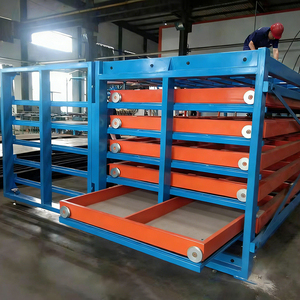
Stacking Racks Shelves Heavy Duty Steel Sheet Metal Drawer Storage System
Heavy-duty modular drawer unit engineered for heavy sheet metal, tool dies, and high-value industrial materials access.
Engineered for high-volume logistics hubs, third-party logistics (3PL) providers, and automated industrial warehouses across Germany and the DACH region. Complete precision systems with certified structural calculations.
Heavy-duty modular drawer unit engineered for heavy sheet metal, tool dies, and high-value industrial materials access.
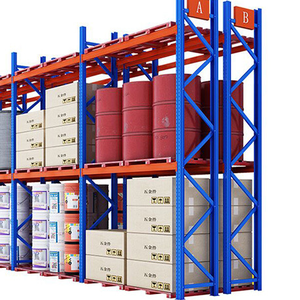
Versatile selective rack system configured specifically for EPAL Euro-pallets (1200 x 800 mm) with customizable beam heights.
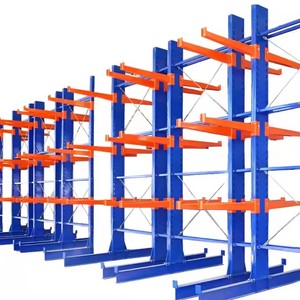
Freestanding robust column design tailored for timber, aluminum profiles, steel pipes, and oversized construction stock.
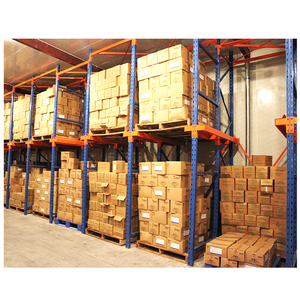
High-capacity frame profile with cold-rolled upright columns engineered for cold-storage and high-bay distribution centers.
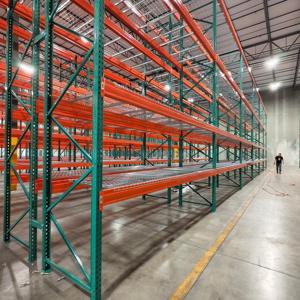
Teardrop and structural beam configurations suitable for multinational supply chain hubs and retail fulfillment hubs.
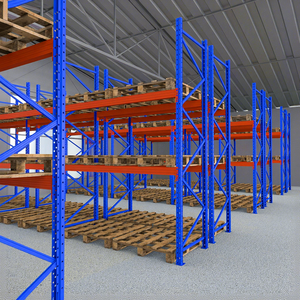
Boltless connection design featuring 50mm pitch adjustments for fast operational layout changes and scalability.
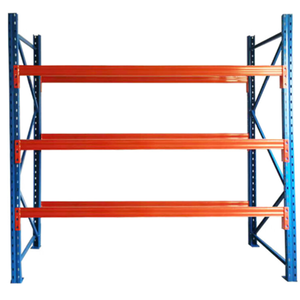
Comprehensive multi-tier and high-bay structural system optimized for intense pallet turnover and safety barrier accessories.
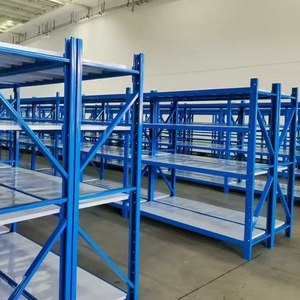
Economic, versatile 4-tier shelving structure perfect for manual carton picking, archive boxes, and maintenance parts.
In Germany's major logistics hubs—ranging from the Rhine-Ruhr region and Frankfurt/Rhine-Main to Munich and Hamburg—industrial real estate costs per square meter have scaled rapidly. For logistics managers, supply chain directors, and warehouse engineers, simple expansion is rarely cost-effective. Maximizing vertical density through advanced Pushback Pallet Racking Systems has emerged as the definitive solution.
Pushback racking (known in Germany as Einschubregale or Drahtgitter- / Rollen-Einschubsysteme) is an accumulator storage system designed for high-density, multi-pallet depth storage. Utilizing a series of nested, inclined carts that ride on structural steel rails inside standard rack bays, pushback systems operate on a Last-In, First-Out (LIFO) inventory rotation strategy.
When the first pallet is loaded by a standard forklift, it sits on the top nested cart. As the second pallet is inserted, the forklift operator pushes the first pallet backward, exposing the secondary cart beneath it. This dynamic action can be repeated for up to 6 pallets deep per aisle bay.
| System Depth | 2, 3, 4, 5, or 6 Pallets Deep |
| Load Capacity | Up to 1,500 kg per pallet position |
| Standard Rail Inclination | 1.5° to 2.5° structural slope |
| Steel Profiles | High-tensile S355JR cold-rolled uprights |
| Surface Finish | Electrostatic Epoxy Powder Coating (80-100µm) or Hot-Dip Galvanized |
| Structural Codes | DIN EN 15512 / FEM 10.2.02 / ISO 9001 |
| Operating Temp Range | -30°C (Cold Storage) to +40°C (Dry Logistics) |
Selecting the optimal intralogistics system requires balancing selectivity, footprint utilization, initial capital expenditure (CapEx), and operational speed. The matrix below compares Pushback Racking against standard German storage options.
| Racking Architecture | Floor Space Utilization | Pallet Selectivity | Stock Rotation Strategy | Risk of Forklift Collision | Estimated CapEx / Pallet (€) |
|---|---|---|---|---|---|
| Pushback Pallet Racking | High (75-80%) | 1 SKU per lane (50-75%) | LIFO (Last-In, First-Out) | Low (Aisle Only) | Medium (€75 - €120) |
| Standard Selective Racking | Low (40-45%) | 100% Direct Access | FIFO or LIFO | Low (Wide Aisles) | Baseline (€45 - €65) |
| Drive-In Racking | High (70-85%) | Very Low (1 SKU per Bay) | Strict LIFO | High (Truck Enters Bay) | Low-Medium (€60 - €85) |
| Radio Shuttle Racking | Very High (85-90%) | 1 SKU per Channel | FIFO or LIFO (Automated) | Very Low | High (€140 - €220) |
| Double Deep Racking | Moderate (60-65%) | 50% Immediate Access | LIFO | Low-Medium | Low-Medium (€55 - €75) |
Senior Engineering Insight: Pushback racking bridges the critical gap between simple selective racks and expensive automated Radio Shuttle systems. For German operations handling 2 to 6 pallets per SKU, Pushback provides maximum pallet density while maintaining faster loading/unloading throughput than traditional Drive-In structures.
Our factory-engineered racking systems directly support Germany’s primary economic hubs, complying with rigorous regional building codes (Landesbauordnung) and industry-specific throughput requirements.
Automotive supply chains require rapid buffer storage for identical component containers (KLTs and Euro-mesh pallets). Pushback racking systems engineered with 3-deep nested carts enable lean sequencing, buffer staging, and zero-collision safety near assembly lines.
Refrigerated warehouse space (Tiefkühllager) carries immense operating energy costs. Pushback racking operating at temperatures down to -30°C maximizes internal air volume usage, reducing heat-loss footprint and expanding pallet capacity without building expansion.
Handling hazardous chemical drums and raw materials demands strict structural integrity. Our heavy-duty racking features hot-dip galvanized finishes and impact protection accessories certified to meet DGUV safety requirements in chemical storage logistics.
High-turnover consumer goods benefit from fast loading and unloading cycles. Multi-lane pushback systems allow third-party logistics operators to allocate dedicated lanes to fast-moving SKUs, accelerating order picking efficiency.
Exporting industrial pallet racking to Germany requires strict alignment with European standards and national safety codes. As an experienced exporter, our manufacturing processes deliver complete compliance documentation.
Specifies structural design requirements for cold-formed steel adjustable beam pallet racking. Our engineers perform finite element analysis (FEA) to ensure load capacities meet rigorous safety factors under dynamic loading conditions.
German Social Accident Insurance regulations stipulate mandatory rack end protection, column guards (Anfahrschutz), load indicators (Belastungsetiketten), and annual inspection compliance under DIN EN 15635 standards.
Systems engineered precisely around standard EPAL-1 pallets (800 x 1200 mm) with beam clear spans of 2700 mm (3 pallets) or 3600 mm (4 pallets), eliminating overhang hazards and uneven weight distribution.
German logistics buyers increasingly evaluate suppliers based on Scope 3 carbon emissions and material efficiency. Our production facilities utilize high-tensile structural steel that reduces overall steel volume while preserving dynamic strength, supported by eco-friendly powder coating processes compliant with REACH and RoHS standards.
Combining 30,000 m² of modern manufacturing capacity with specialized international exporting expertise to ensure seamless delivery to your project site in Germany.
Our state-of-the-art production base employs continuous automatic roll-forming lines, laser cutting, and robotic welding work cells. Every upright profile, box beam, and pushback cart assembly undergoes continuous dimensional and load testing under ISO 9001:2015 quality control.
Everything you need to know about lead times, structural standards, floor slab anchoring, and custom configurations for pushback racking imports.
Standard pallet racking orders are manufactured in 15 to 20 days. Container shipping from our export port to major German ports (such as Hamburg or Bremerhaven) typically takes 28 to 35 days. Complete door-to-door delivery timelines are confirmed in writing with approved CAD drawings.
Yes. All structural load-bearing calculations, upright column selection, and beam deformation limits follow European standard DIN EN 15512 (FEM principles). We provide project-specific structural sign-offs to support local building authority approvals.
Our pushback carts feature heavy-duty steel frame construction with full-width bottom support plates. This design prevents pallet runner trapping, allowing safe operation even if a wooden EPAL pallet has minor runner imperfections or bottom board damage.
Yes. Under DIN EN 15635 and DGUV Regel 108-007, warehouse operators in Germany must perform annual safety inspections with an authorized inspector (befähigte Person). We supply official load warning plates (Belastungsetiketten) and layout documentation to facilitate inspection compliance.
Standard installation requires a concrete floor slab with a minimum compressive strength class of C20/25 according to DIN EN 206-1, with a minimum thickness of 150-200 mm. Heavy-duty expansion anchors or chemical anchors are supplied based on structural engineer calculations.
Yes. We specialize in custom manufacturing tailored to unique clear height limits, building column grid lines, sprinkler clearance rules, and automated forklift guided systems.
Get direct factory pricing, certified structural engineering calculations, and a complete 2D/3D CAD layout within 24 hours. Partner with an established global racking exporter.