Enterprise Heavy-Duty Range
Featured Industrial Storage & Racking Systems
Engineered for max throughput, seamless FIFO dynamics, and full compliance with European safety standards (DIN EN 15512 / CE Directives).
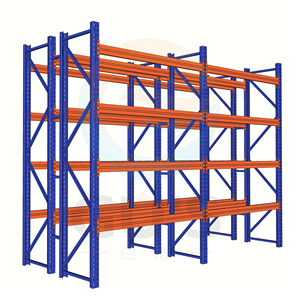
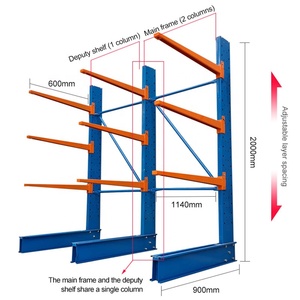
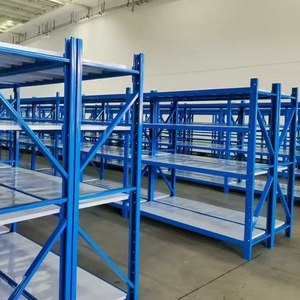
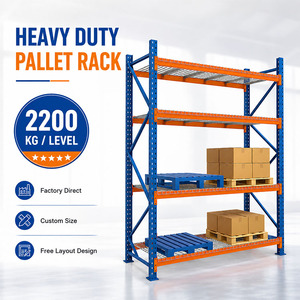
Engineering Whitepaper
Pallet Flow Racking Mechanics & Strategic Intralogistics Architecture
Understanding the dynamic mechanics, safety controls, and structural integrity of high-density gravity flow storage systems.
Gravity-Driven Dynamic Flow
Pallet flow racks leverage a sloped track pitch (typically 3% to 4%) engineered with heavy-duty roller beds. Pallets loaded at the charge end automatically glide under kinetic gravity toward the discharge face, establishing a flawless First-In, First-Out (FIFO) inventory rotation model.
Controlled Braking Systems
Integrated centrifugal speed controllers and magnetic friction brakes prevent line pressure build-up and excessive kinetic velocity. By governing pallet speeds strictly below 0.3 m/s, the structural framework guarantees maximum protection for fragile cargo and warehouse personnel.
Safety Separator Mechanisms
To eliminate back-pressure during offloading, automated mechanical pallet separators isolate the lead pallet from the following queue. Forklift drivers can safely lift the front pallet without interference or binding forces from up to 20 lane-deep pallets.
Regulatory Compliance & E-E-A-T Standards
CE Certification Criteria for Pallet Flow Rack Wholesalers
When sourcing pallet flow systems for European, North American, or global logistics hubs, structural certification isn't merely a checkmark—it is a mandatory legal framework ensuring life-safety compliance, operational uptime, and total liability coverage under international industrial codes.
A genuine CE Certified Pallet Flow Rack Supplier rigorously aligns structural engineering with the Machinery Directive 2006/42/EC (where automated feed or discharge systems are present) and DIN EN 15512 (Steel static storage systems — Adjustable pallet racking systems — Principles for structural design). Furthermore, compliance with DIN EN 15620 governs structural tolerances, beam deflection limits (L/200 standard), and clearance safety profiles.
Finite Element Analysis (FEA) Verification
Every upright frame profile, horizontal beam connection, and roller mounting rail undergoes computerized FEA simulation. This guarantees static strength, dynamic shock-load tolerance, and resistance to localized buckling under extreme operational loads up to 1,500 kg per pallet position.
Cold-Rolled High-Tensile Steel Integrity
Utilizing prime Q235B and Q355B structural steel, components are roll-formed with custom multi-point ribbing. Surface treatment includes automated shot-blasting followed by thermo-set epoxy powder coating (70-90 microns thick) or hot-dip galvanization for cold storage applications (-30°C).
Decision Matrix
Pallet Flow Racking vs. Alternative High-Density Systems
Compare operational metrics, space utilization rates, and throughput velocities across mainstream warehouse storage architectures.
| Storage System Type | Inventory Logic | Floor Space Utilization | Selectivity Rate | Throughput Speed | Forklift Aisle Requirement |
|---|---|---|---|---|---|
| Pallet Flow Racking | Strict FIFO | 85% – 90% | 100% per Lane | Very High (Dedicated Loading/Picking) | 2 Aisles (Charge & Discharge) |
| Selective Pallet Racking | FIFO / LIFO | 40% – 45% | 100% Immediate | Medium | Multiple Wide Aisles (3.0m - 3.8m) |
| Drive-In Racking | Strict LIFO | 75% – 80% | Low (Block Storage) | Low (Forklifts enter lanes) | 1 Outer Loading Aisle |
| Push-Back Racking | Strict LIFO | 70% – 75% | Medium (per Lane) | Medium-High | 1 Single Service Aisle |
| Radio Shuttle Racking | FIFO / LIFO | 80% – 88% | High (Automated) | High (Robotic Shuttle driven) | 2 Aisles or Single Aisle |
Strategic Market Intelligence
Future Procurement & Development Trends in Pallet Flow Racking
How intralogistics automation, IoT connectivity, and sustainable manufacturing are revolutionizing modern high-density warehouses.
1. Integration with Autonomous Mobile Robots (AMRs) & AGVs
Procurement managers are increasingly transitioning from manual forklift loading to AMR/AGV automated interfaces. Modern Pallet Flow Racks now incorporate hyper-precise funnel entry guides, magnetic alignment sensors, and optical reflector points at loading faces. This allows robotic forklifts to execute high-speed loading with millimeter accuracy without human oversight.
2. Cold-Chain Energy Conservation Initiatives
With global energy costs rising, temperature-controlled cold storage facilities (-25°C to -30°C) prioritize dynamic gravity flow. By maximizing volume utilization up to 90%, facilities dramatically minimize refrigerated air space loss. Advanced polymer roller compositions and synthetic low-temperature lubricants now prevent roller freezing and structural embrittlement.
3. Smart Roller Monitoring & Predictive Maintenance
Industry 4.0 has introduced smart wireless sensors embedded within speed controller rollers. These micro-sensors track rotation count, friction temperature, kinetic impact forces, and pallet dwell times, transmitting telematics directly to Warehouse Management Systems (WMS). Procurement teams can schedule preventive maintenance prior to system component failure.
4. Modular Eco-Coating & Circular Supply Chains
Future procurement mandates lean heavily toward carbon-neutral rack manufacturing. Modern suppliers utilize zero-VOC powder-coating processes, 100% recyclable structural steel, and modular roller tracks that allow individual roller replacement without dismantling structural upright frames, drastically extending asset lifespans.
Enterprise Advantage
Why Global Supply Chain Leaders Partner With Our Factory
From raw material sourcing to turnkey installation support, we offer total end-to-end quality assurance.
Direct-from-Manufacturer Scale
Operating a massive 30,000 m² modern manufacturing facility established in 1997, we eliminate intermediary trading costs. Automated roll-forming lines and robotic welding clusters ensure precision structural tolerances and robust production capabilities.
Free Technical CAD & 3D Planning
Our certified structural engineering team delivers initial 2D floor plans and 3D BIM models within 24 hours of receiving your hall layout, pallet dimensions, and forklift parameters. Custom OEM/ODM requests are handled seamlessly.
Rapid Production & European Delivery
With standard bulk orders completed in 15–20 days, our global logistics network coordinates seamless door-to-door or port-to-port freight. Full installation guidance or supervisor assistance on site ensures commissioning according to schedule.
Procurement Knowledge Hub
Frequently Asked Questions (FAQ) for Pallet Flow Racks
Essential technical guidance for warehouse logistics managers, procurement officers, and engineering leads.
Q1: What is the recommended pitch gradient for Pallet Flow Racks?
The industry standard gradient is between 3.5% and 4.0% (approximately 7/16 inch pitch per foot). However, the exact incline depends heavily on pallet bottom construction (skids, runners, or mesh), pallet weight range (e.g., 300kg to 1200kg), and roller material. Our engineers conduct empirical gravity testing for custom pallet batches prior to shipment.
Q2: How do speed controllers function within gravity flow lanes?
Speed controllers (indirect or direct friction brakes) are mounted at calculated intervals along the roller track—typically one brake every 1 to 2 pallet positions. As a pallet glides over the brake roller, internal centrifugal gears create resistance relative to velocity, keeping pallet speed safe and uniform down the entire lane.
Q3: Can damaged or defective wooden pallets be used in Pallet Flow systems?
Defective wooden pallets with broken bottom runners, protruding nails, or missing boards pose a severe hazard of jamming inside deep flow lanes. For maximum reliability, we recommend standardized EPAL Euro-pallets (1200x800mm), GMA pallets, plastic pallets, or solid slave boards. Plastic pallets require custom textured rollers to maintain friction traction.
Q4: What CE and ISO safety certifications apply to your racking systems?
Our rack production processes are certified under ISO 9001 quality management systems. Static structural designs strictly comply with European FEM 10.2.02 and DIN EN 15512 standards. Mechanical components (such as automated speed separators) comply with European CE Machinery Directives, accompanied by full load signage and operating documentation.
Q5: What is the maximum lane depth for a Pallet Flow installation?
Pallet Flow lanes can technically range from 2 pallets deep up to 20+ pallets deep. In deep-lane applications (over 10 pallets), heavy back-pressure accumulates at the discharge face. Therefore, installing heavy-duty mechanical safety separators is mandatory to detach the pick pallet from trailing line pressure.
Q6: How often should Pallet Flow Racks undergo safety inspections?
Under European standard DIN EN 15635 and local safety regulations (e.g., DGUV Regel 108-007 in Germany), storage racking must undergo regular visual checks by the safety officer, alongside a formal annual inspection performed by a certified expert ("befähigte Person"). We supply comprehensive maintenance protocols and inspection logs with every project.
Q7: What lead time can we expect for standard vs. customized wholesale orders?
Standard pallet rack profiles and shelving components ship within 15–20 manufacturing days. Fully customized solutions requiring engineered dynamic flow test beds, specialized powder coating colors, or custom heavy-duty cantilever layouts typically ship within 25–30 days from final CAD sign-off.
Optimize Your Warehouse Density with CE Certified Flow Systems
Consult with our senior intralogistics engineers today for custom CAD layouts, static structural calculations, and direct factory wholesale pricing.