Top-Engineered CE Certified Pallet Racking Systems
Rigorous load-tested racking structures designed for high-bay logistics, cold storage, and heavy industrial distribution centers.
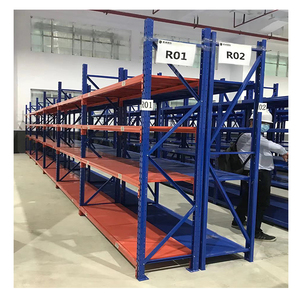
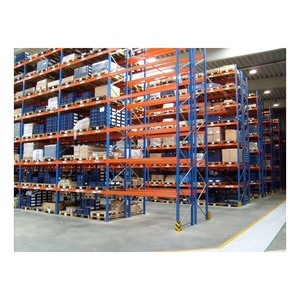
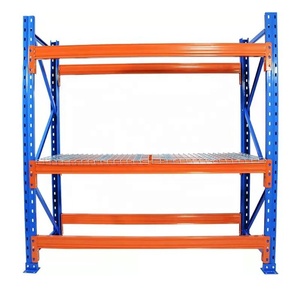
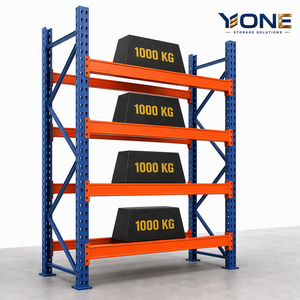
Engineering Excellence & Compliance in CE Certified Pallet Racking Systems
In modern industrial logistics, selecting certified racking pallet systems transcends simple asset procurement—it represents a foundational structural decision impacting operational safety, vertical cube storage optimization, and long-term capital protection. As premier CE certified racking pallet system suppliers and wholesalers, we manufacture heavy-duty steel rack solutions designed strictly in accordance with European FEM 10.2.02 and EN 15512 design standards. Our production facility integrates high-yield structural steel alloys (primarily Q235B and Q355B grades) with precision roll-forming manufacturing to yield high strain resistance under dynamic warehouse loading conditions.
The global demand for reliable, high-density industrial racking is driven by increasing supply chain speeds and strict warehouse safety regulations. Certified systems guarantee that structural upright profiles, load-bearing box beams, and interlock connector hooks are rigorously calculated to resist local buckling, lateral displacement, and accidental forklift impact loads. Below, we examine the core structural metallurgy, manufacturing capabilities, and quality control systems that distinguish our enterprise-grade storage racks in the international B2B market.
Structural Integrity Mandate: EN 15512 vs. Traditional Structural Design
Unlike basic structural steel fabrication, racking systems designed under EN 15512 require finite element analysis (FEA) accounting for non-linear beam-to-upright joint stiffness, baseplate floor anchor shear strength, and global frame stability under partial loads. Every batch of profile cold-formed steel undergoes tensile testing to verify yield strength (fy ≥ 235 N/mm² to 355 N/mm²).
Metallurgical Superiority and Cold-Formed Profile Precision
Our heavy-duty racking frames utilize advanced multi-stage cold roll-forming lines that eliminate internal stress concentrations during profile bending. Upright columns feature continuous teardrop or diamond punching at 50mm, 75mm, or 76.2mm pitch intervals, enabling precise vertical adaptability without compromising vertical column stiffness. Box beams are fabricated from two interlocking C-sections continuous-welded using automated robotic MIG systems, ensuring torsional resistance under maximum flexural load.
- High Tensile Upright Columns: Formed with up to 13 structural bends to maximize the radius of gyration and load-bearing cross-sectional area.
- Robotic Welded Connector Jaw: 3 or 4-hook heavy-duty steel connector jaws equipped with mechanical automatic safety locking pins to prevent accidental dislodgement during high-speed pallet extraction.
- Electrostatic Powder Coating: Pre-treated through a 7-stage chemical washing and phosphating process, followed by thermal-cured epoxy-polyester powder coating (minimum 60–80 microns), delivering salt-spray resistance exceeding 500 hours.
- Galvanized Cold-Chain Resilience: Pre-galvanized or hot-dip galvanized finishes designed specifically for sub-zero cold storage facilities down to -30°C.
Why Logistics Leaders Partner With Our Factory Direct Channel
From single-bay extensions to multi-level high-bay automation, our manufacturing plant delivers unparalleled structural engineering and wholesale value.
Direct Factory OEM/ODM Scaling
Operating a 30,000m² manufacturing facility equipped with automatic roll-formers and robotic welding cells, we eliminate intermediary markups, offering direct mill pricing and high-capacity monthly output for global distributors.
Full CE & ISO Quality Compliance
Certified under ISO 9001 and CE standards, our storage solutions satisfy rigorous European regulations (DIN EN 15512, DIN EN 15635, DGUV 108-007), ensuring effortless annual safety audits and compliance verification.
Rapid 24-Hour CAD & 3D Engineering
Our in-house structural engineers utilize advanced CAD software to deliver accurate layout schemes, structural load calculations, and 3D floor renderings within 24 hours of project parameter submission.
Comprehensive Technical Selection Matrix: Pallet Racking Architecture
Selecting the optimal pallet racking configuration requires balancing access selectivity against space utilization efficiency. The comparison table below highlights key parameters across primary heavy-duty storage configurations to assist procurement directors and logistics engineers in system evaluation.
| Racking Architecture | Space Utilization | Direct Selectivity | Stock Rotation | Typical Aisle Requirement | Target SKU Density |
|---|---|---|---|---|---|
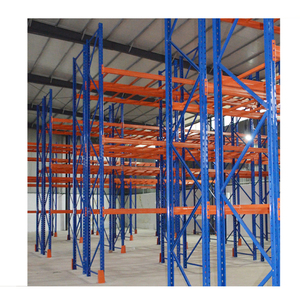
| Selective Pallet Racking | 40% - 50% | 100% (Immediate) | FIFO / LIFO | 3.0m - 3.5m (Reach Truck) | High Variety / Low Volume |
| Double Deep Racking | 55% - 65% | 50% (Special Forklift) | LIFO | 3.0m - 3.3m (Pantograph) | Medium Variety / Medium Volume |
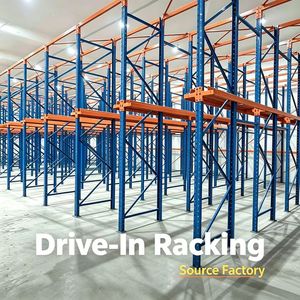
| Drive-In Pallet Racking | 75% - 85% | Low (Per Lane) | LIFO | Dedicated Drive-In Lanes | Low Variety / Bulk Volume |
| Narrow Aisle (VNA) | 65% - 75% | 100% (Immediate) | FIFO / LIFO | 1.5m - 1.8m (Turret Truck) | High Variety / High Vertical Space |
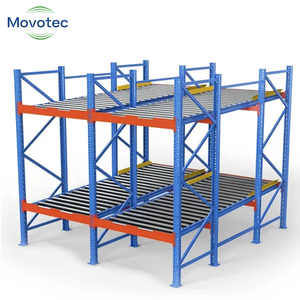
| Gravity Roller Flow | 70% - 80% | High (Per Channel) | Strict FIFO | Loading & Unloading Aisles | Fast-Moving Consumer Goods / Perishables |
| Electric Mobile Racking | 85% - 90% | 100% (On-Demand Aisle) | FIFO / LIFO | Single Convertible Aisle | High Value / Cold Storage Optimization |
*Note: Technical metrics presented serve as engineering benchmarks; exact dynamic load capacities and frame clearances are calculated per project floor slab specifications and forklift turning radii.
Future Procurement Trends in Enterprise Pallet Racking Systems
As global supply chains transition toward higher automation, decarbonization, and digitized inventory control, purchasing strategies for pallet racking systems are undergoing a paradigm shift. Enterprise B2B buyers are no longer focusing solely on upfront material cost per pallet position; procurement decisions are increasingly dictated by Total Cost of Ownership (TCO), material sustainability, and automated intralogistics system integration.
1. Automated Guided Vehicle (AGV) & AMR Integration Compatibility
Traditional manual forklift aisles are rapidly giving way to Autonomous Mobile Robots (AMRs) and Automated Guided Vehicles (AGVs). Procurement specifications now require extreme dimensional tolerances on bottom-level guide rails, floor anchoring flushness, and column spacing accuracy. Pallet racking systems must accommodate laser-guided navigation paths and precise photoelectric sensor reflectors to ensure seamless robotic retrieval without positioning errors.
2. Sustainable Cold-Rolled Steel Sourcing & Low-Carbon Manufacturing
Corporate ESG (Environmental, Social, and Governance) mandates are shifting procurement priorities toward steel manufacturers utilizing electric arc furnace (EAF) steel production with reduced carbon footprints. Furthermore, volatile organic compound (VOC)-free powder coatings and energy-efficient roll-forming lines are becoming key criteria in vendor qualification scorecards for European and North American buyers.
3. Modular & Reconfigurable Storage Architectures
With market volatility shortening product life cycles, modern distribution centers demand modular racking components that can be quickly expanded, reconfigured from selective to double-deep, or converted into mezzanine floors. Standardized beam connectors and universal upright punching patterns allow enterprises to reconfigure their warehouse layout with minimal downtime and zero scrap waste.
4. Predictive Maintenance via IoT Structural Sensors
The integration of digital strain gauges, wireless tilt sensors, and impact monitors embedded directly inside upright column guards represents the next frontier in procurement. Smart racking arrays alert operations managers in real time to structural overloads or accidental forklift collisions, preventing catastrophic rack collapses and facilitating proactive safety compliance audits.
Global Industry Development Trends Driving Modern Storage Architecture
The intralogistics and material handling market is experiencing significant structural growth, fueled by global e-commerce expansion, rapid urbanization, and the consolidation of third-party logistics (3PL) networks. Understanding these macro trends enables warehouse directors to future-proof their facility investments.
Vertical Space Maximization & High-Bay Racking Systems
As industrial real estate costs rise across prime logistics hubs, warehouses are extending vertically rather than horizontally. High-bay pallet racking systems reaching heights of 15 to 40 meters—often integrated as Rack-Supported Buildings (clad-rack structures where the racking frames support the roof and side cladding)—are becoming the industry benchmark. These systems maximize volumetric efficiency, significantly reducing floor footprint requirements per stored pallet.
Cold Chain Expansion & High-Density Mobile Racking Adoption
The global surge in refrigerated food, pharmaceutical, and biological storage has created intense demand for energy-efficient cold store storage setups. Because cooling an open warehouse aisle incurs massive electricity overhead, high-density systems like automated electric mobile racking and radio shuttle systems are growing rapidly. By consolidating storage aisles into a single moveable corridor, cold storage facilities reduce operating footprint volume by up to 45%, delivering dramatic utility cost savings.
Rigorous International Safety Harmonization
Cross-border supply chain operations are driving the global adoption of harmonized safety guidelines. Standards previously restricted to Europe (EN 15512) or North America (ANSI/RMI MH16.1) are now becoming standard procurement requirements in Asia-Pacific, Latin America, and the Middle East. Wholesale buyers are enforcing strict compliance verifications, including third-party mill test certificates, seismic calculations (EN 16681), and certified factory audits before placing volume contracts.
Frequently Asked Questions (FAQ) for Racking Buyers
Expert technical insights addressing common questions raised by warehouse managers, project engineers, and supply chain procurement officers.
Q: What does CE Certification mean for a warehouse pallet racking system?
CE Certification confirms that the steel racking system satisfies European health, safety, and environmental protection standards. For structural steel racking, it guarantees compliance with EN 1090 (execution of steel structures) and EN 15512 structural design codes, ensuring the system safely handles specified static and dynamic loads under certified factory production controls (FPC).
Q: How do I determine whether Q235B or Q355B steel is required for my racking project?
The choice depends on beam spans, load per level, and total frame loading. Q235B steel (yield strength ~235 MPa) is ideal for standard selective racking loads up to 2,000kg per level. For extra heavy loads (3,000kg to 4,500kg per level), high-bay frames, or seismic zones, Q355B high-strength steel is specified to minimize profile wall thickness while increasing structural load capacity.
Q: What documentation is required to pass annual DIN EN 15635 & DGUV racking safety inspections?
Qualified inspectors require as-built structural layout drawings, manufacturer load plaques clearly mounted on every aisle end, structural engineering load calculation certificates, profile material test reports, and initial installation safety sign-off records—all of which are standard deliverables with our CE-certified system shipments.
Q: Can your racking systems be customized to fit existing third-party rack brands?
Yes. We specialize in custom OEM roll-forming and teardrop/speedlock connectors, matching existing column pitches, beam hook configurations, and footprint dimensions. Our engineering team can analyze your existing rack components to ensure seamless compatibility and safety compliance.
Q: What floor slab specifications are needed for heavy-duty pallet racking installation?
Concrete slabs generally require a minimum compressive strength of C20/25 to C25/30 under EN 206-1, with a slab thickness between 150mm and 250mm, reinforced against point-load punching forces. Anchoring bolts (M10 to M16 expansion or chemical anchors) are specified based on calculated baseplate tension and shear forces.
Q: What is the typical lead time for production and delivery of wholesale orders?
Standard selective pallet racking orders are manufactured within 15 to 20 business days following final CAD layout approval. Custom automated shuttle components, complex cold storage mobile bases, or custom powder color runs typically require 25 to 35 days, supported by global ocean freight logistics.
Optimize Your Storage Footprint With CE Certified Engineering
Submit your facility floor plan, pallet dimensions, and unit load metrics to our engineering team today. Receive a complete 2D/3D layout proposal and factory-direct quotation within 24 hours.
Inquire Now