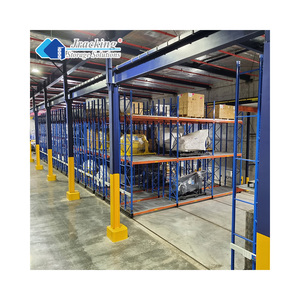
- Automated Mobile
- High Density
- PLC Controlled
Direct-from-factory high-density racking units, heavy-duty beam systems, mobile automated storage, and modular boltless shelving engineered to ISO 9001, FEM 10.2.02, and ANSI/RMI specifications.
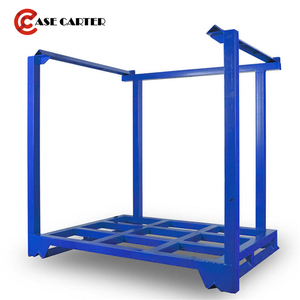
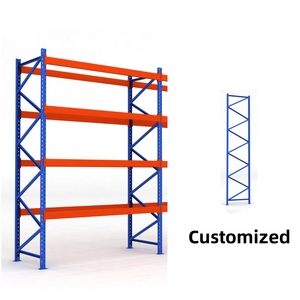
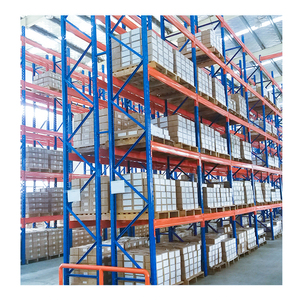
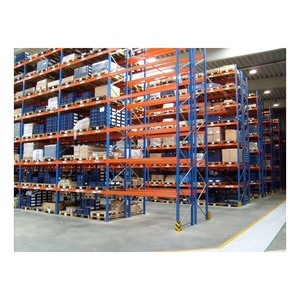
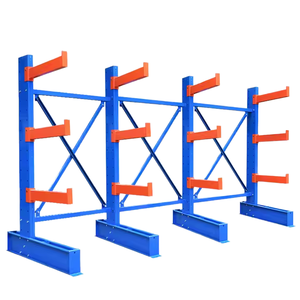
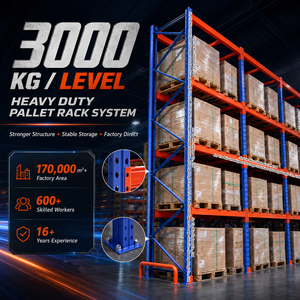
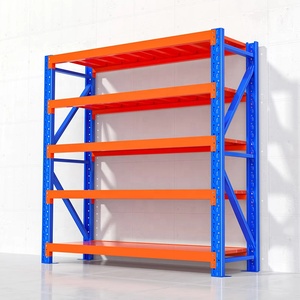
Combining a 30,000 m² state-of-the-art manufacturing plant, automated cold-roll forming, robotic laser welding, and rigorous metallurgical engineering to deliver structural integrity that exceeds DIN EN 15512 and FEM standards.
Eliminating broker markups through integrated raw steel procurement (Q235B/Q355B structural grades). Our high-speed continuous roll-forming lines drastically decrease manufacturing overhead per pallet frame.
In-house structural engineering teams deliver comprehensive 2D CAD layout schematics and 3D building models within 24 hours, guaranteeing exact beam clearances, seismic safety calculations, and floor slab load distribution.
Certified manufacturing workflows complying with European FEM 10.2.02, German DIN EN 15512/15620, DGUV 108-007, and American RMI MH16.1 specifications, verified by rigorous destructive load testing.
End-to-end B2B fulfillment featuring export packaging, custom steel container loading, door-to-port ocean freight handling, and structural installation supervision across 60+ countries worldwide.
High-grade industrial racking relies heavily on the yield strength ($f_y$) of structural carbon steel. Standard commercial shelving often utilizes Q195 or low-grade Q235, which risks permanent beam sagging under sustained point loading. Our factory standardizes on Q355B cold-rolled steel (minimum yield strength of 355 MPa), delivering a 40% higher load-bearing ratio without adding excessive dead weight to the floor slab.
The profile geometry of rack uprights uses up to 13 distinct cold-forming folds, creating structural rigidity against torsional bending and column buckling under axial compression loads.
Corrosion protection directly influences the operational lifespan of industrial steel shelving units, particularly in cold-storage environments and humid coastal logistics hubs. Our production line incorporates a 9-stage pre-treatment wash (including degreasing, zinc phosphating, and deionized water rinsing) followed by automated electrostatic thermosetting epoxy-polyester powder coating.
This achieves a consistent film thickness of 70–90 μm, complying with ISO 12944 C3 anti-corrosion benchmarks and providing zero-VOC environmental performance.
The structural heart of heavy-duty pallet racking resides in the connector-to-upright joint. Unlike bolted shelf systems that suffer from connection looseness over operational vibration cycles, our systems feature cold-stamped 3 to 4-tooth drop-in claw connectors with automatic safety lock pins.
This creates a moment-resisting semi-rigid frame structure. Under heavy loads, the tapered claw design wedging action increases joint stiffness, preventing shear failure and resisting accidental forklift displacement.
How automation, carbon taxation, and supply chain decentralization are transforming warehouse infrastructure specifications for industrial buyers worldwide.
Rising warehouse real estate costs per square meter are accelerating procurement shifts away from static selective racking toward Automated Electric Mobile Racking (Jracking systems) and Automated Storage and Retrieval Systems (AS/RS). Buyers are prioritizing rack systems pre-engineered for floor guide-rail embedding, sensor integrations, and PLC automated rack travel.
Next-generation industrial shelving units are integrating IoT-enabled strain gauges and deflection sensors. Procurement teams from major 3PL logistics networks now specify pre-drilled channels for smart sensors to detect micro-deflections, frame tilt, and forklift impact overload in real-time before structural failure occurs.
European and North American buyers are implementing Scope 3 carbon footprint reporting. Future factory tenders require mills that utilize scrap-recycled Electric Arc Furnace (EAF) steel and zero-emission powder coating lines, accompanied by Environmental Product Declarations (EPD) and ISO 14040 Life Cycle Assessment documentation.
To offset escalating ocean container freight rates, procurement officers are requesting knock-down, high-nesting ratio structural designs. Unassembled frame uprights and snap-in wire mesh decking maximize sea container volume utilization, lowering shipping cost per pallet position by up to 35%.
Selecting the optimal shelving architecture based on SKU variety, floor area efficiency, stock rotation mechanics, and load capacities.
| Racking System Type | Storage Density | Direct Selectivity | Stock Rotation | Typical Load Capacity | Primary Industrial Application |
|---|---|---|---|---|---|
| Selective Pallet Racking | Standard (40-50%) | 100% Direct Access | FIFO / LIFO | 1000 – 4500 kg / level | High SKU count distribution hubs, retail fulfillment |
| Electric Mobile Racking | Very High (85-90%) | 100% (When Opened) | FIFO / LIFO | Up to 24,000 kg / bay | Cold storage freezers, high-cost warehouse floor space |
| Cantilever Storage Racks | Medium (50-60%) | 100% Long Goods | FIFO / LIFO | 500 – 3000 kg / arm | Steel pipes, timber bundles, extrusions, plastic tubing |
| Stacking Tire Racks / Palletainers | High (Portable) | Selective by Stack | LIFO Stacked | 1000 – 2000 kg / rack | Automotive tire storage, seasonal overflow, freight transport |
| Boltless Medium Duty Shelving | Medium (Hand Load) | 100% Hand Pick | FIFO / LIFO | 200 – 800 kg / shelf | Automotive spare parts, e-commerce bins, archive storage |
| Wire Mesh Deck Racking | High (Safety Added) | 100% Direct Access | FIFO / LIFO | 500 – 2000 kg / deck | Fire safety compliance (sprinklers), broken pallet safety |
DIN EN 15512 governs the structural design principles for adjustable pallet racking systems in Europe. Our engineering calculations account for global safety factors, material tolerances, pattern punching reductions, and beam-end connector stiffness ($k_b$), ensuring full compliance with European warehouse safety inspectors (DGUV Regel 108-007).
For exports to North America and Australasia, our engineering team designs according to RMI (Rack Manufacturers Institute ANSI MH16.1) and Australian Standard AS4084-2012. Upright frames are subjected to finite element analysis (FEA) to verify flexural-torsional buckling resistance under high seismic zone coefficients.
Quality control is reinforced through batch testing in our factory laboratory. Beam connectors undergo tensile shear testing, welded joints are examined via ultrasonic flaw detection, and cold-formed upright profiles undergo compression stub tests to guarantee structural reliability under 1.95x overload testing factors.
Essential answers covering factory lead times, engineering compliance, custom OEM/ODM parameters, minimum order quantities, and ocean container delivery.
Standard industrial pallet racking and medium-duty shelving orders are manufactured within 15 to 20 business days following CAD drawing sign-off. Highly customized automated electric mobile rack projects or specialized high-bay racking systems typical take 25 to 35 days depending on component automation and PLC integration testing.
Every project layout undergoes structural calculation modeling based on FEM 10.2.02 and DIN EN 15512 rules. We supply complete Load Capacity Signage (LBO) and structural calculation reports detailing maximum permissible beam deflections ($L/200$) and ultimate limit states (ULS).
Yes. As a direct manufacturer, we offer full OEM/ODM customization. Upright frame heights can reach up to 15 meters, beam lengths can be tailored to exact pallet sizes, and surface powder coating colors are matched to any RAL palette color code requested by the client.
Our standard MOQ is one 20-foot sea container (approx. 12-15 tons of structural steel). However, for initial trial orders or warehouse trial expansion phases, we accept smaller MOQs to allow clients to verify material quality, finish, and structural tolerances before rolling out complete logistics facilities.
While not strictly mandatory in all jurisdictions, welded wire mesh decking is highly recommended for safety compliance. It prevents non-standard pallets or loose items from falling between beams and allows overhead fire sprinkler water to penetrate through racking levels in accordance with NFPA 13 regulations.
In seismic zones, baseplates are engineered with expanded surface areas and anchor hole patterns. High-tensile expansion anchor bolts or chemical anchors are specified based on the concrete slab thickness ($h \ge 150\text{ mm}$) and compressive strength ($C20/25$ grade minimum), ensuring seismic shear forces are effectively dissipated.
Uprights and beams are bundled using heavy-duty steel strapping, protective plastic film wrapping, corner protectors, and heavy wooden dunnage blocks. Uprights are nested to maximize container loading density while ensuring forklift unloading at your destination port is safe and efficient.
We provide comprehensive installation manuals, exploded assembly diagrams, and step-by-step video tutorials. For large turnkey warehouse projects, we can dispatch certified structural engineers to supervise site installation, floor level shimming, alignment verification, and safety pin inspection.
In sub-zero freezer warehouses (-25°C to -30°C), standard carbon steel can suffer from low-temperature embrittlement. We specify specialized impact-resistant steel grades, hot-dip galvanizing, or low-temperature epoxy powder coatings to prevent micro-cracking and material fatigue over time.
Simply send your warehouse architectural floor plan (PDF or DWG file) showing column grid locations, clear ceiling height, door locations, along with your pallet dimensions ($W \times D \times H$), unit load weight, and forklift model specifications. Our team will return a detailed 2D/3D layout within 24 hours.
Consult with our senior racking engineers today. Receive a custom 2D CAD layout, 3D model, and factory-direct price quote within 24 hours.
Send an Inquiry